




PUGALENTHI
Updated on
30-07-2026
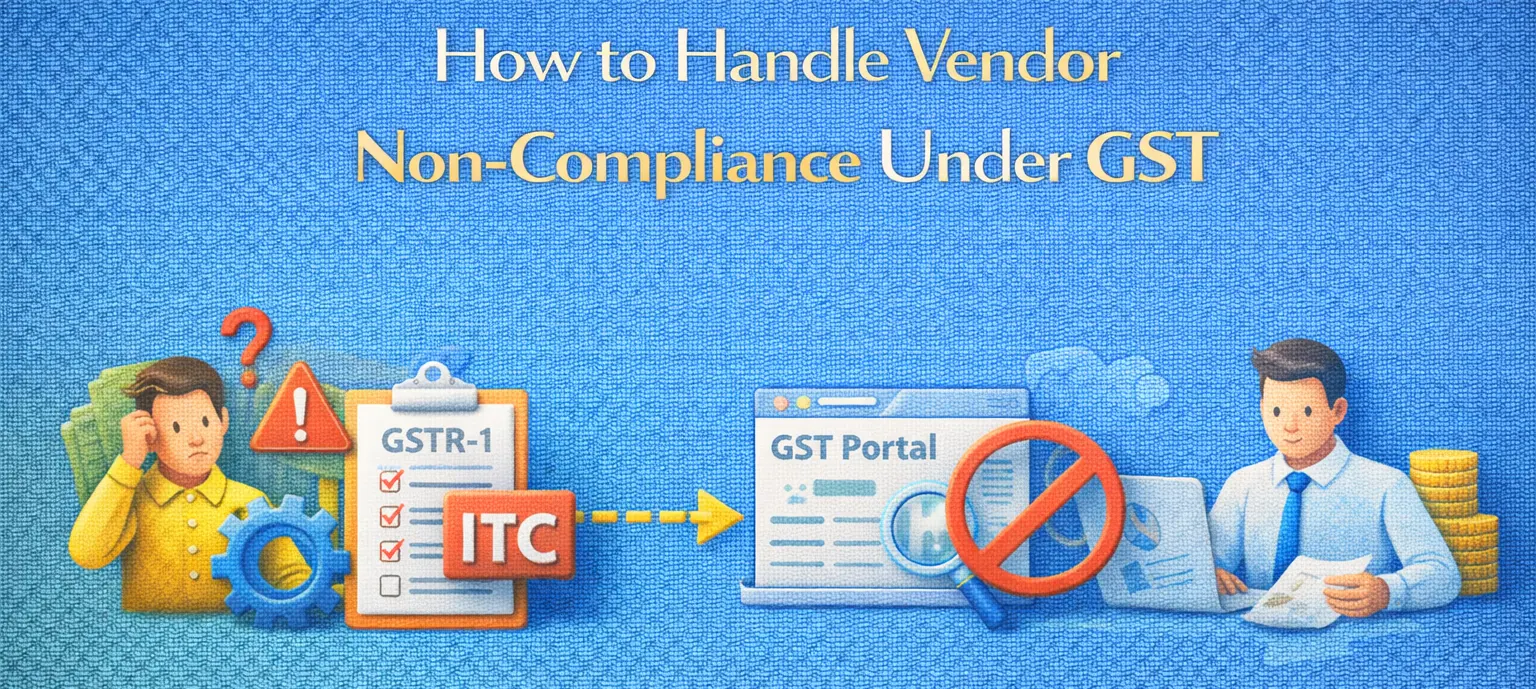
How to Handle Vendor Non-Compliance Under GST
Managing vendor relationships under India's GST framework is crucial for seamless business operations. Vendor non-compliance can disrupt processes, particularly affecting areas such as Input Tax Credit (ITC), invoice reporting, and GST return reconciliation. This guide provides practical steps and insights, ensuring you stay informed and proactive.
Understanding Vendor Non-Compliance
Vendor non-compliance occurs when suppliers fail to adhere to GST regulations, leading to issues such as delayed filings, incorrect invoice details, or errors in GST Identification Numbers (GSTIN). Such lapses can significantly affect businesses, making it essential to tackle them effectively.
Impact of Non-Compliance on Businesses
Vendor non-compliance can have several ramifications:
- Input Tax Credit (ITC) Claims: Non-compliance hinders your ability to claim ITC effectively. Accurate ITC claims rely on timely and accurate vendor reporting.
- GST Return Reconciliation: Delays and errors complicate the reconciliation of GST returns, affecting compliance ratings.
- Invoice Reporting: Inaccurate or unreported invoices disrupt the financial flow and transparency between businesses and tax authorities.
Common Situations of Non-Compliance
Suppliers Not Filing GSTR-1
GSTR-1 filing is critical for businesses because it summarizes outward supplies of goods and services. Non-filing by your vendors means possible mismatches in your own filings.
Delayed Return Filings
Timely GST return filings maintain compliance and avoid penalties. Delayed filings from vendors disrupt your reconciliation process and ITC claims.
Incorrect Invoice Details
Errors in invoice details, such as mismatches in amounts or descriptions, can also lead to compliance issues and affect your financial records.
GSTIN Errors
Errors in GSTIN can lead to transaction rejections and inaccuracies in tax credits. Ensuring vendor GSTIN details are correct is paramount.
Actionable Steps to Handle Vendor Non-Compliance
Identify Non-Compliance
A systematic approach to identifying non-compliance involves:
- Regularly monitoring GSTR-2A and GSTR-2B statements for mismatches.
- Cross-verifying ITC claims with invoices received.
- Utilizing GST software solutions for automated reconciliation.
Communicate Effectively with Vendors
Clear communication is vital to resolving non-compliance issues:
- Establish a dedicated compliance team to interact with vendors.
- Use formal communication channels to discuss compliance expectations.
- Share regular feedback with vendors on observed discrepancies.
Track ITC Risks
Proactively managing ITC risks can help mitigate financial impact:
- Segregate ITC claims based on compliance status of vendors.
- Adjust procurement strategies for non-compliant vendors.
- Consider seeking professional advice to manage high-risk ITC claims.
Maintain Proper Reconciliation Practices
Robust reconciliation practices ensure ongoing compliance:
- Conduct periodic audits to ensure alignment between GST returns and financial records.
- Regularly update vendor databases to reflect accurate GSTIN and compliance history.
- Leverage technology for real-time tracking of invoices and compliance metrics.
Conclusion
Vendor non-compliance under GST can pose serious challenges to business operations, but with proactive management and clear strategies, businesses can mitigate risks and maintain compliance. By understanding common issues, communicating effectively, tracking ITC risks, and adhering to robust reconciliation practices, you can handle vendor non-compliance efficiently and keep your business on track.
Empower your business by taking actionable steps today and stay compliant under the GST regime.
LEDGERS
LEDGERS assists with compliance relating to GST through the integration of reconciliations into your accounting processes to allow the speedy identification of errors in records prior to incurring any penalties or interest. LEDGERS allows you to automate the process of synchronizing your GSTN data and tracking invoices on an invoice-by-invoice basis eliminating the need for manual corrections and the time-consuming process of verifying transactions at the end of a reporting period through the use of automatic validations from the system to facilitate revenue compliance activities.