
Jyothishwar M
Updated on 30-07-2026
In every organization, the HR payroll function plays a pivotal role in ensuring employees are paid accurately and on time while meeting all compliance requirements. It bridges the gap between human resource management and financial operations of a business. From processing salaries to managing tax deductions, HR payroll responsibilities directly impact employee morale and experience.
What Stakeholders Do in the HR Payroll Process
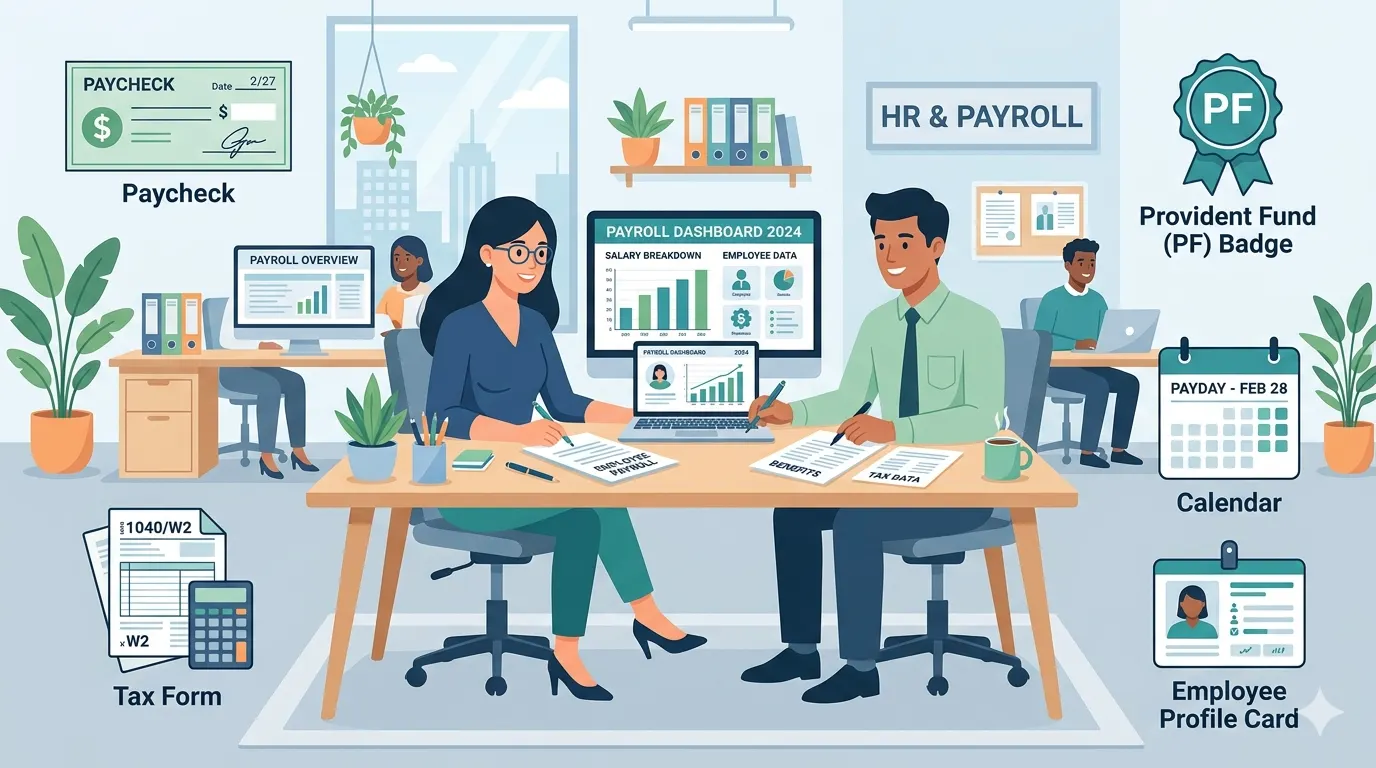
The HR and payroll departments work closely to ensure employees are onboarded and paid on time. While HR focuses on employee well-being, training, and development, the payroll team ensures employees are accurately compensated for their contributions.
Simply put, HR oversees policies and practices that employees must follow, while payroll handles the actual processing of salaries. Together, these departments ensure a smooth and efficient employee compensation process within the organization.
Functions of HR Within a Business
Recruitment HR managers handle the recruitment process, from conducting interviews to selecting candidates who align with the organisation's goals. They also oversee the onboarding process, ensuring new employees have a seamless start and feel supported during their initial days.
Employee Relations HR managers play a pivotal role in creating a harmonious workplace. They address employee grievances, resolve conflicts, and implement disciplinary actions to maintain a positive and productive environment.
Training and Development Programmes To keep the workforce skilled and aligned with organisational goals, HR arranges relevant training and development programs. These sessions not only upskill employees but also improve team collaboration and build a culture of continuous learning.
Compliance HR is responsible for ensuring the organisation complies with labour laws and regulations. They develop policies that adhere to legal standards, helping the company stay compliant and avoid potential legal issues.
Compensation and Benefits In some companies, HR professionals oversee employee CTC and manage benefits like health insurance and flexible benefit plans. By aligning these with industry standards and employee expectations, they help create a great workplace.
Employee Performance HR monitors employee performance to identify and reward exceptional contributions. Reward and recognition programs boost morale and foster a culture of appreciation, ultimately improving productivity and retaining top talent.
Payroll Processing Responsibilities
Developing Payroll Policies and Procedures The payroll team is responsible for defining policies that govern employees' salaries. This includes deciding the components such as basic pay, house rent allowance (HRA), leave travel allowance (LTA), and variable pay. Establishing clear payout procedures is also essential to ensure compliance with regulations.
Calculating Monthly Salaries Payroll staff calculates gross salaries by factoring in statutory deductions such as income tax, provident fund, and other applicable deductions. They also ensure unpaid leave is accurately reflected in salary deductions.
Ensuring Compliance The payroll team ensures compliance with labour laws by calculating and deducting contributions such as PF (Provident Fund), professional tax, Labour Welfare Fund (LWF), and TDS (Tax Deducted at Source). Timely remittance of these amounts helps organizations stay compliant and avoid penalties.
Supporting Audits Companies conduct periodic audit checks to assess their business performance. The payroll department plays a vital role in facilitating these audits by maintaining accurate records of employee expenses and providing actionable insights.
Resolving Queries Payroll staff addresses employee and management queries related to salary, deductions, taxes, and other payroll matters. Timely resolution of these queries ensures transparency and prevents communication gaps.
Cross-Departmental HR and Payroll Functions
While HR professionals handle onboarding and hiring, the payroll team ensures salaries are disbursed on time. Here's how this collaboration benefits employers:
For more details ledgers.cloud
