
MONISHA D
Updated on 30-07-2026
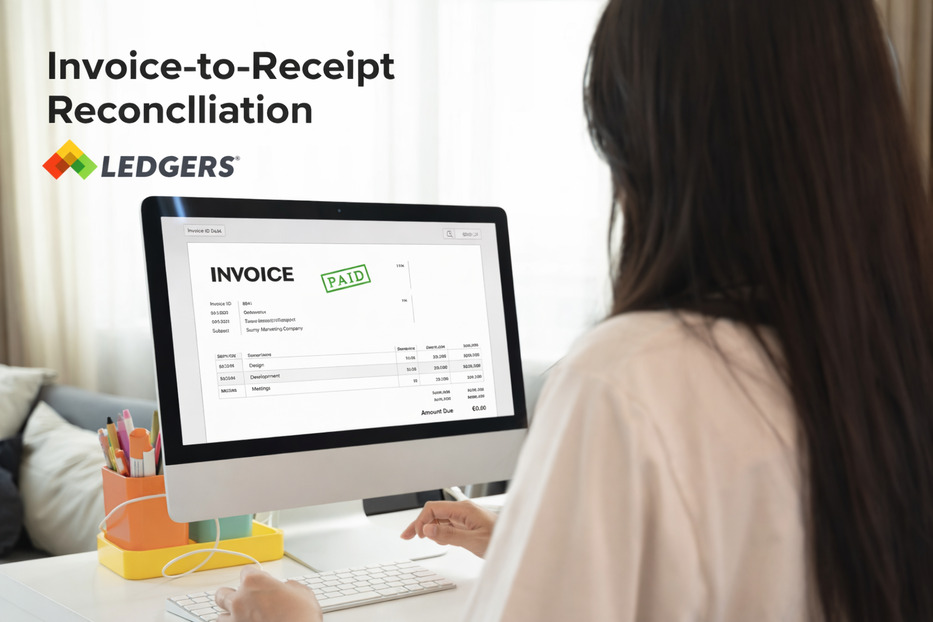
In today’s fast-paced business world, it is very important to have proper control over your finances. Whether you are an entrepreneur or an accountant, it’s imperative to have the capability to reconcile your invoices with your receipts effortlessly with the help of ledgers. Not only will you be assured of having sound financial reporting, but you will be in compliance with all financial regulations, laws, and bylaws. In this piece, we shall show you how you can accomplish this with ease.
The process of reconciliation entails the comparison of two different sets of financial statements for their accuracy. In the case of a business, this entails the matching of the flow of payments made to the payments received, as well as the confirmation of the receipt of purchased goods.
Reconciling invoices and receipts is not just about keeping your books in order. It is about maintaining financial health and operational efficiency:
Reconciling invoices and receipts doesn't have to be a daunting task. By following a systematic approach and using Ledgers, you can simplify and automate the entire process:
Before beginning the reconciliation process, make sure you have collected all relevant financial documents. This includes:
Ensure that your financial ledger is up-to-date. A ledger is a complete record of your financial transactions, and keeping it updated with each invoice generated and every receipt acknowledged will streamline the reconciliation process.
Check your ledger entries against the invoices and receipts. Confirm that the amounts, dates, and parties involved match across documents. Any discrepancies should be investigated and corrected promptly.
Compare the bank statement balance with your ledger balance. Any differences might indicate missing transactions, unrecorded invoices, or pending payments. Reconcile these to ensure both records reflect the same amounts.
Consider leveraging financial management software. Platforms like QuickBooks or Xero can automate parts of the reconciliation, saving you time while reducing human error. These tools often integrate with your bank to provide real-time transaction reports and alerts.
And if you happen to be consistent and particular about reconciling your bills and receipts, it would be fairly easy to handle your finances. In fact, you would be able to balance your statements and develop a much healthier bottom line through the effective use of Ledgers. Making this process a regular routine helps you save time, reduces errors, and helps you understand where your business currently stands in terms of finances. This also helps you remain ready for the future, aids in taking informed business decisions, and helps you manage your business with even more confidence. By being proactive and taking the right approach, this process remains an easy task for you.
