




VAIRAVAN K
Updated on
09-02-2026
UIN Holder Under GST: Eligibility, Invoicing Rules, Returns & Refund
If you ever had to raise an invoice for an embassy, a UN body, or a notified international organization based out of India, you might even be asked for this identifier instead of a regular GSTIN. This identifier is referred to as a UIN under GST and extends to other organizations solely for the following reason: to allow them to claim a refund on the GST charged to them for purchases made during the course of business.
The person holding the UIN under GST is not like any normal business taxpayer because they do not collect GST on outward supplies like normal registered taxpayers. Instead, they use the UIN to track their inward supply invoices properly under GST.
What is a UIN under GST?
UIN is an abbreviation for Unique Identification Number. It is granted to such notified entities that are entitled to a refund of GST on inward supply, though the issuance is at the discretion of the concerned authorities. Think of it as a GST identity created particularly for refund tracking and not for routine tax collection, like a GSTIN. In other words, UIN is a GST identifier that allows qualified institutions to obtain a refund of GST payments on purchase.
Who can be a UIN holder under GST?
UIN registration is available only to notified categories, typically including:
- Embassies and Consulates
- High Commissions
- United Nations (UN) bodies
- Multilateral financial institutions and other notified organizations
- Any other persons/organizations specifically notified under GST rules
These entities often operate under international obligations and are not intended to bear local indirect tax costs on eligible procurements.
Why UIN registration matters
UIN registration is required to:
- Receive proper tax invoices with UIN details
- Report inward supplies in the prescribed return
- Claim GST refunds on eligible purchases
- Reduce mismatches and delays by creating a clear audit trail inside the GST system
Without a UIN on invoices, refunds often become slow, disputed, or simply not possible for those purchases.
UIN holder invoicing under GST: what suppliers must do
Invoicing is the make-or-break part of UIN compliance. Most refund issues trace back to invoice mistakes, so it’s worth getting this right.
1) Mention the UIN on the tax invoice (correctly)
When you supply goods or services to a UIN holder, the invoice should clearly capture the recipient’s UIN in the GSTIN/UIN field, along with the recipient’s legal name and address. Even a small typo can lead to mismatches when the UIN holder files their return.
Practical tip: Ask the recipient for their UIN in writing (email/PO) and store it against the customer record to avoid repeated errors.
2) Charge the correct GST (IGST vs CGST/SGST)
UIN status does not automatically mean tax-free billing by the supplier. You still apply GST based on normal place-of-supply rules:
- IGST for inter-state supplies
- CGST + SGST/UTGST for intra-state supplies
The UIN holder later claims the refund (subject to conditions), so accurate tax determination on the invoice is essential.
3) Report the invoice correctly in your GST returns
For suppliers, UIN invoices should be reported accurately in the relevant sections of GST returns (commonly treated similar to B2B reporting because the recipient has an identifier). If invoice details don’t match what the UIN holder reports, the refund process may get delayed.
4) Follow e-invoicing rules if applicable to you
If your business falls under e-invoicing applicability (based on turnover and government notifications), then invoices issued to UIN holders should also follow the e-invoice process just like other eligible B2B invoices. This creates a clean digital trail and reduces disputes.
5) Keep your documentation clean
UIN transactions are often audited more closely. Maintain:
- Invoice copies
- Purchase orders/work orders (where relevant)
- Payment proofs
- Delivery/performance proofs (as applicable)
Return filing for UIN holders: GSTR-11
UIN holders file GSTR-11, which is a statement of inward supplies received. This return is crucial because it links invoices to refund eligibility.
Typically, GSTR-11 captures:
- Supplier GSTIN
- Invoice details
- Taxable value and GST paid
- Amendments/corrections (if any)
If the invoice data is wrong, the return won’t match cleanly—leading to refund delays.
GST refund for UIN holders: how it works
Once inward supplies are properly invoiced and reported, the UIN holder can apply for a refund of GST paid on eligible inward supplies. Refund approval depends on:
- Entity eligibility and notification status
- Correct UIN on invoices
- Timely and accurate filing of GSTR-11
- Supporting documentation as required under GST procedures
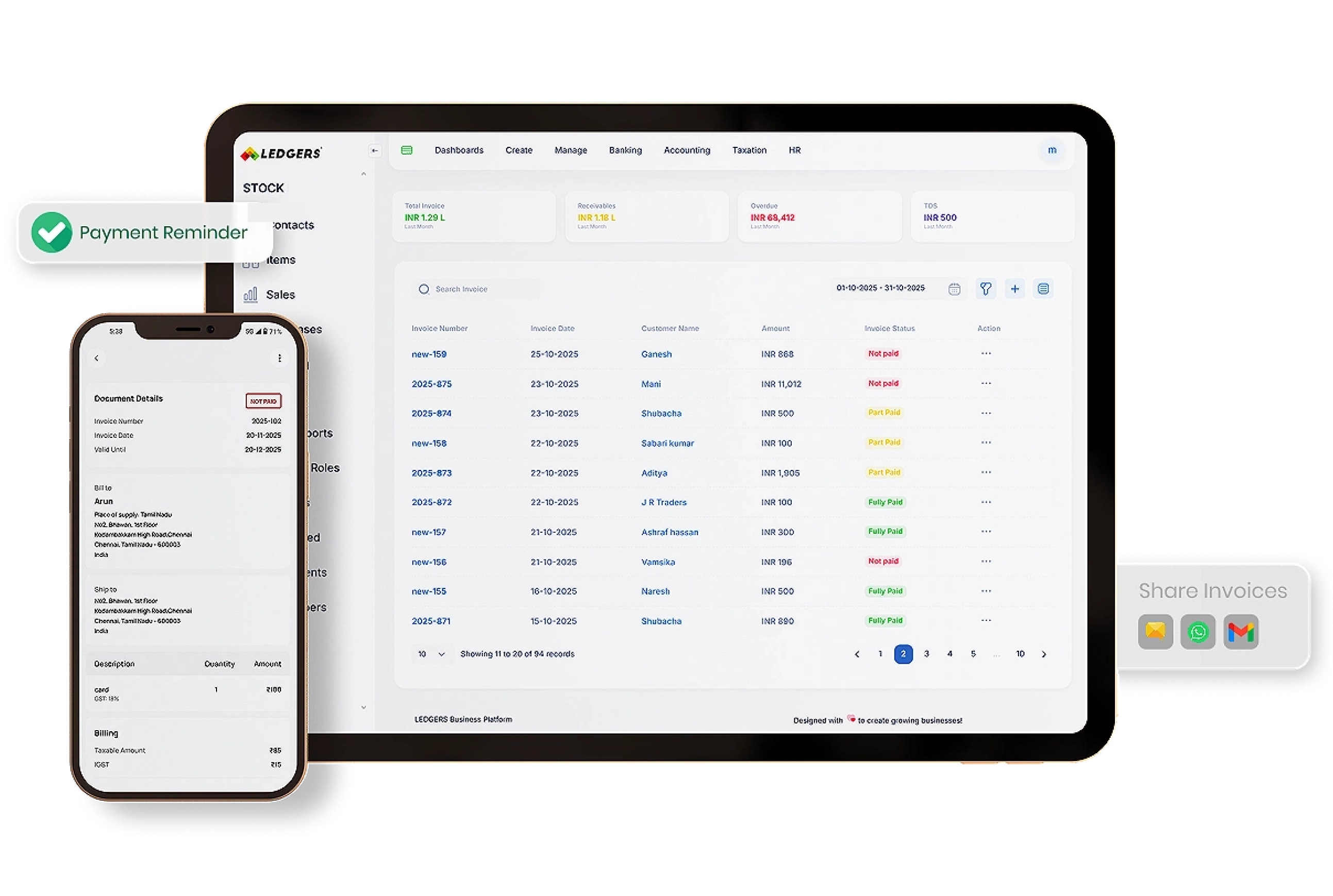
How Ledgers.cloud helps in UIN holder invoicing
If you regularly invoice embassies, consulates, UN bodies, or other notified organizations, manually managing UIN details can get messy, especially when you’re issuing multiple invoices, dealing with tax variations, and preparing GST reports.
Ledgers.cloud helps you streamline UIN holder invoicing by making the process structured and error-resistant:
- UIN-ready customer profiles:Store the UIN once in the customer master, so each invoice automatically includes the correct UIN.
- Accurate Tax Computation: You can determine whether it is IGST or a combination of CGST/SGST.
- Clean GST reporting support: Maintain a consistent invoice register for easier reconciliation and smoother return preparation.
- Audit-friendly records: Keep invoice history, edits, and supporting notes in one place—useful during internal reviews and tax audits.
If you want to make UIN invoicing faster and cleaner, you can explore the workflow here: Ledgers.cloud