




RAGU M
Updated on
30-07-2026
What is Reconciliation in Accounting and Why It Matters?
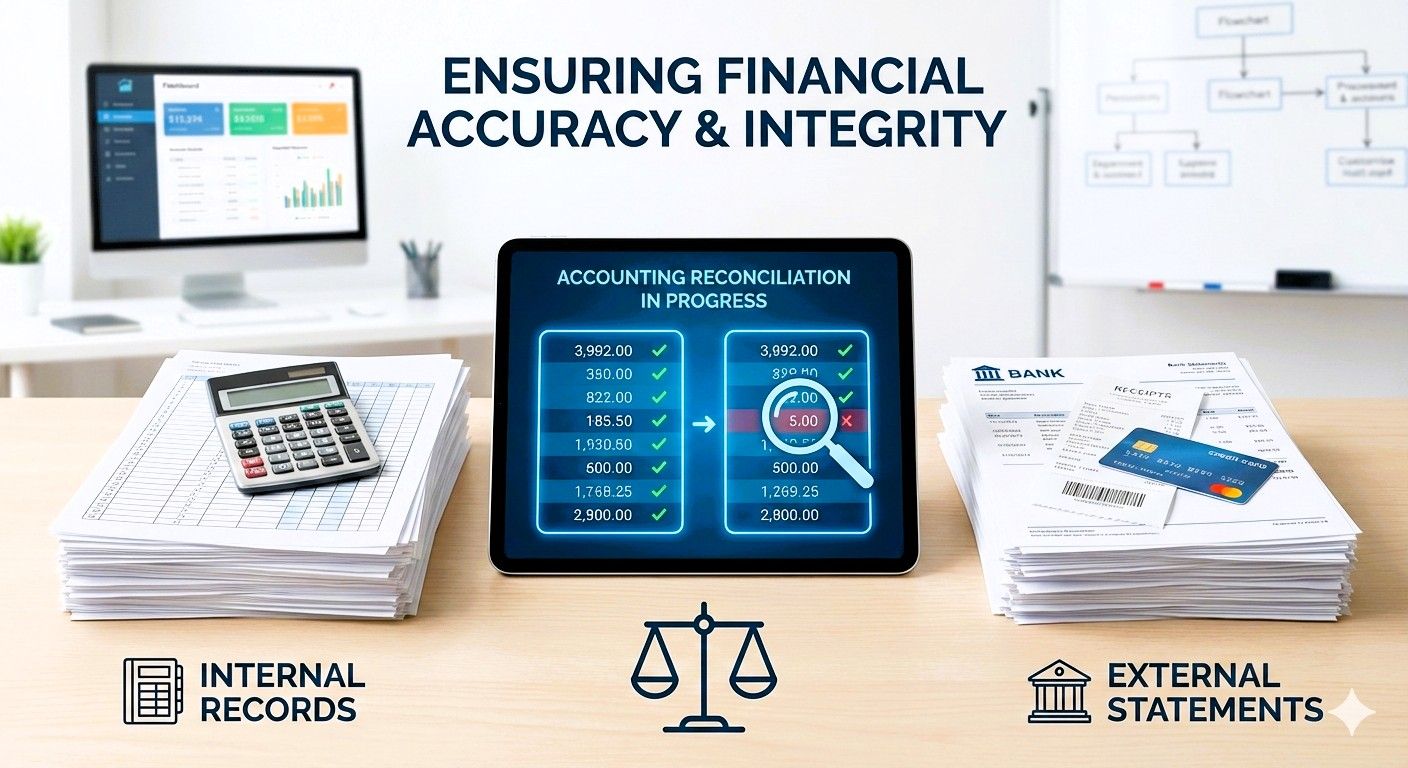
Accounting Reconciliation is an intensely important accounting process that guarantees consistency and integrity of accounts. It entails comparing accounts records and coordinating them with supporting documentation, for example, bank statements. Through careful process comparison, any form of misappropriation of funds gets averted, and company integrity is maintained.
Within this article, we will be examining what reconciliation in accounting is all about and why it is an absolute necessity in any business, be it big or small. We will also be highlighting all the advantages as well as all the requirements that are needed in making reconciliations in account-related tasks effective.
Understanding Reconciliation in Accounting
At its core, reconciliation in accounting involves comparing two sets of financial records to ensure they are consistent and accurate. This process is typically conducted monthly, though quarterly or annual reconciliations are also common. The primary aim is to confirm that the recorded amounts match the actual funds, identifying any differences and addressing them promptly. Reconciliation is crucial in various contexts, including:
- Bank Reconciliation
- Credit Card Reconciliation
- Vendor Reconciliation
- Intercompany Reconciliation
Why Reconciliation Matters
Reconciliation is pivotal for several reasons that directly affect a business's operational efficacy and financial stability. Here's why it matters:
* Ensures Financial Accuracy:
Regular reconciliation verifies that all financial transactions are correctly recorded, reducing errors and omissions in financial statements.
* Prevents Fraud:
Scrutinizing records through reconciliation can expose fraudulent activities, protecting the company from financial loss and reputational damage.
* Enhances Cash Flow Management:
Understanding discrepancies allows for better management of cash flows, ensuring funds are optimally utilized.
* Facilitates Regulatory Compliance:
Many financial regulations require businesses to maintain accurate records to comply with legal standards and audits.
* Aids in Financial Decision-Making:
With accurate and up-to-date financial information, businesses can make informed decisions that drive growth and profitability.
Impact on Business Performance
The repercussions of neglecting reconciliation can be significant. Companies might face financial penalties, diminished trust from stakeholders, and even reputational damage. Conversely, consistent reconciliation demonstrates financial diligence and responsibility, bolstering confidence among investors, customers, and partners alike.
Latest Developments and Tools
In today's digital era, reconciliation has levelled up thanks to automation wizards and smart software. Cloud-powered platforms like Ledgers and AI-driven smarts slash errors, speed things up, and deliver real-time tracking, instant discrepancy alerts, and razor-sharp analytical reports—transforming clunky financial chores into seamless, efficient wins for your business.
Staying abreast of these technological advancements is crucial. By leveraging these tools, businesses can enhance accuracy, save time, and allocate resources more strategically.
Challenges in Reconciliation
However, the reconciliation process still faces difficulties resulting from technological advancements. Enterprises could be faced with slow transaction clearances, insufficient standardization of the process, or even problems with the integrity of the data. It is necessary to have a strong reconciliation system and constantly inspect and improve the associated processes to overcome these obstacles.Tech has come a long way, but reconciliation roadblocks—like delayed clearances, patchy standardization, and data glitches—still plague businesses. The answer lies in a bulletproof framework with ongoing tweaks. Ledgers delivers it all: lightning-fast clearances, standardized workflows, and ironclad data integrity, so you conquer challenges effortlessly and keep your finances flawless.
Conclusion
Reconciliation in accounting is far more than a routine task. it's a fundamental pillar that underpins financial health and operational success. By ensuring accuracy, preventing fraud, and facilitating regulatory compliance, reconciliation contributes substantially to a company's credibility and efficiency. Adopting modern tools and addressing process challenges can further refine this critical activity.
Ultimately, businesses that prioritize timely and accurate reconciliation are better positioned to navigate the complexities of financial management, make strategic decisions, and sustain long-term growth. As the financial landscape continues to evolve, embracing best practices in reconciliation is not just advisable; it is essential.