




PREMNATH P
Updated on
30-07-2026
Streamlining Workflows by Effectively Managing Ledger-PRO CRM Engagements
The management of CRM engagements (Customer Relationship Management) is critical to being successful in a business environment focused on service-level quality. Being able to use a structured system for tracking engagements allows businesses to monitor timelines to completion, hold employees accountable, and provide the necessary support for both clients and employees from start to finish.
The Role of CRM Engagement Management
CRM engagement management supports a business in the organization and execution of client work within an acceptable timeframe. With established engagement procedures, businesses gain the ability to:
- Track the progress of engagements from inception to completion
- Clearly define responsibility by assigning a dedicated Relationship Manager
- Provide transparency for clients and internal teams
- Minimize missed opportunities and follow-up delays
- Increase overall operational efficiency and service quality
By using CRM-based engagement management to track engagement status, teams achieve greater control and consistency in execution.
Primary Elements of Engagement Management
Creation of Engagements
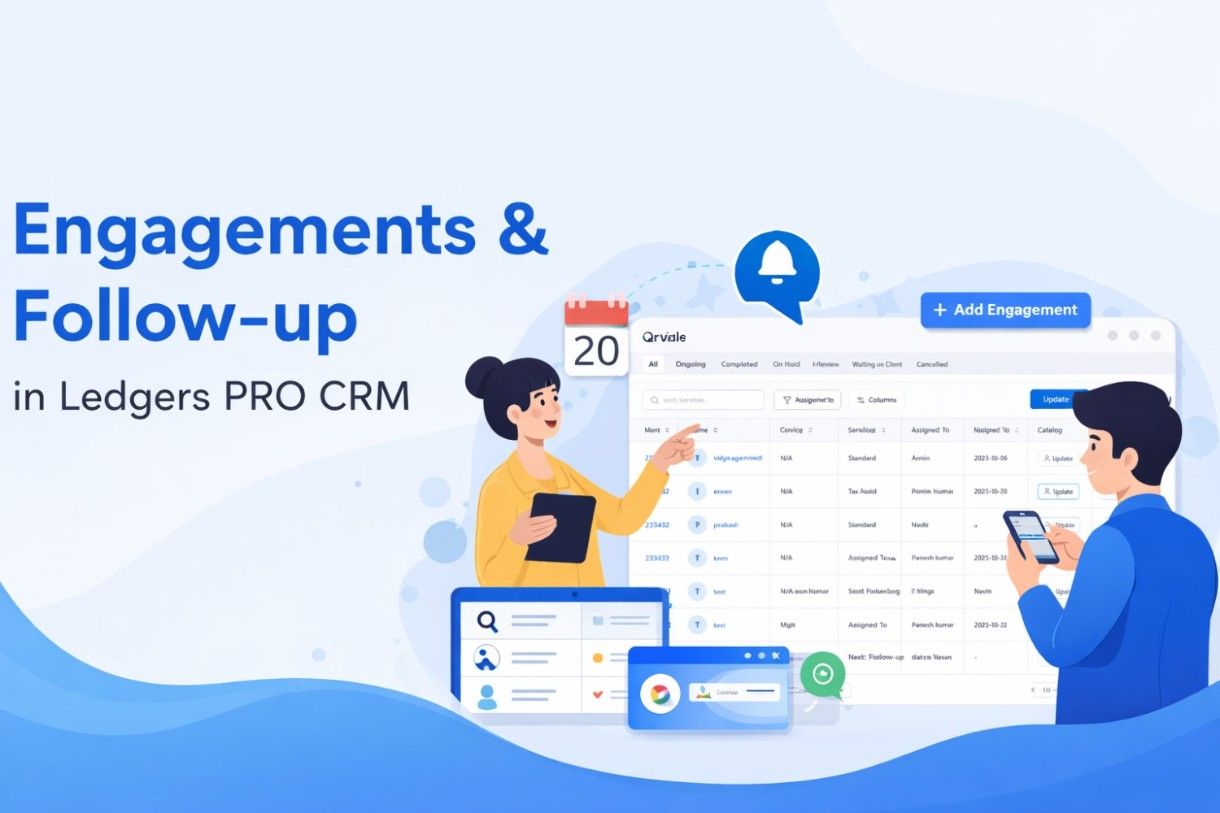
With the use of the CRM, teams can easily create engagements and initiate work efficiently. Each engagement serves as a central repository for client requirements and enables ongoing updates throughout the engagement lifecycle.
This approach reduces ambiguity and improves overall workflow clarity.
Assignment of Engagements to Relationship Managers
Engagements can be assigned to a dedicated Relationship Manager (RM), establishing a clear ownership structure with defined responsibilities. This ensures consistent client engagement while enabling predictable management of timelines from assignment to completion.
Status-by-Status Follow Up
Engagement follow ups are managed through structured status updates. Status tracking provides visibility into current progress, highlights pending activities, and reduces the need for manual follow ups by the team.
Centralization of Progress Tracking
Engagement updates across multiple clients are tracked from a single central location. This allows teams to manage multiple engagements simultaneously, identify potential delays early, and maintain control over delivery timelines.
Increased Visibility and Accountability
All engagement updates are tracked through assigned ownership and structured status movement. Teams can clearly identify:
- The owner of each engagement
- The current status of the engagement
- Outstanding actions required for completion
This structured process improves accountability and enhances operational efficiency.
Conclusion
Effective engagement management is essential for delivering reliable and well-structured client services. A CRM that supports engagement creation, RM assignment, status-based follow ups, and centralized tracking helps streamline workflows and improve transparency.
With a systematic approach to managing engagements, businesses can maintain clear responsibilities, control execution timelines, and deliver consistent, high-quality services.