




PUGALENTHI
Updated on
10-02-2026
Managing GST Compliance During Business Expansion
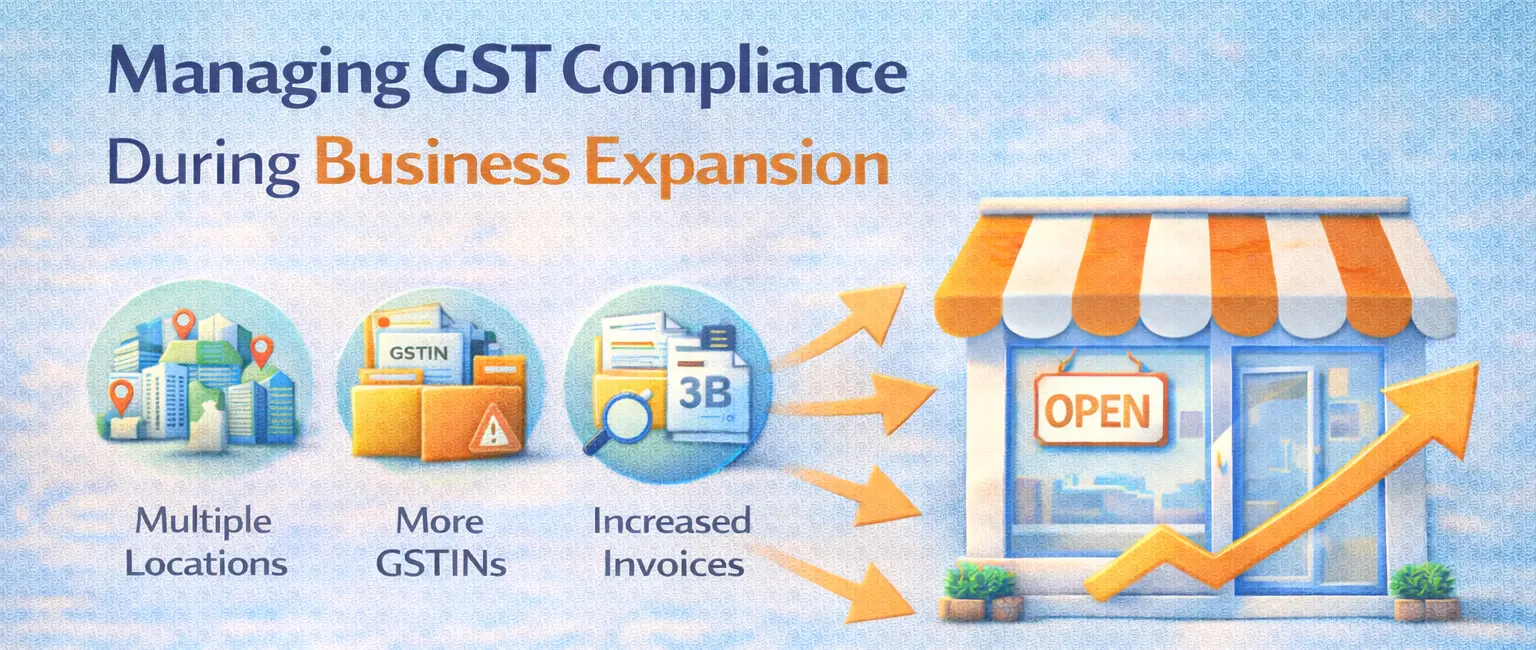
While growing your enterprise globally can be an adventure full of new opportunities, it can also create additional burdens around the responsibility of managing your GST compliance. With growth comes new locations, new GSTIN(s), more invoices to generate, and greater levels of reconciliation and return filing processes. As such, ensuring GST compliance while managing all of the other complexities that accompany the growth of a business will be more complicated. This guide will offer practical strategies for managing GST compliance effectively amidst the challenges of business expansion – thereby helping keep your GST compliance organized and under control.
Why GST Compliance Becomes Complex During Expansion
When a business grows, GST compliance complexity often follows due to several factors:
- New Locations: Expanding to new regions requires obtaining multiple GST registrations and managing compliance across different states.
- Additional GSTINs: Each new branch needs a separate GSTIN, multiplying the compliance tasks.
- Increased Invoice Volumes: More transactions mean more invoices to process and more opportunities for errors.
- Complex Reconciliation: Ensuring that the GST returns reconcile with invoices across all locations is more challenging with a larger volume of data.
- Diverse Tax Rates: Different products might fall under different GST rates, complicating computations and filings.
Actionable Practices for Managing GST Compliance
Streamline Invoice Management
Efficient invoice management is crucial for staying compliant:
- Automate Invoicing: Use accounting software to automate invoice creation, ensuring accuracy and consistency.
- Consistent Record-Keeping: Develop a standardized process for documenting invoices and related transactions.
- Regular Audits: Conduct monthly audits to ensure that invoices match what's recorded in ledgers.
Consolidate GST Registrations
Managing multiple GSTINs can become cumbersome. Here's how to handle them:
- Centralize Tax Operations: Have a centralized team or department overlook all GST registrations to streamline communication and processes.
- Maintain a GSTIN Master File: Keep an updated record of all GSTINs associated with your business, including related details and changes.
- Use a Compliance Calendar: Track important GST filing dates to avoid missed deadlines.
Enhance Reconciliation Processes
Reconciliation ensures accuracy in your GST filings:
- Automated Reconciliation Tools: Leverage technology to match invoices automatically with GST returns, minimizing errors.
- Regular Reconciliation Checks: Perform reconciliation checks quarterly to address discrepancies promptly.
- Staff Training: Train your accounting staff on reconciliation processes and tool usage for better data management.
Stay Informed and Adaptive
Keeping abreast of GST regulations is imperative:
- Engage GST Advisors: Consultation with GST experts can provide insights tailored to your business needs.
- Update Accounting Systems: Modern systems will typically have updates that reflect the latest GST regulations.
- Staff Workshops: Organize regular workshops to discuss new GST rules and their business implications.
Scenarios in Business Expansion and GST Compliance
For Example: A retail business headquartered in Mumbai expands to Delhi and Bangalore. With new locations, the business faces multiple invoice flows and varying tax rates. Using central management for GST filings ensures that even regional tax complexities are handled promptly. They invest in robust accounting software for real-time data analysis and reconciliation, significantly reducing filing errors and delays.
Conclusion
Business expansion can indeed complicate GST compliance mechanisms, but with the right strategies, companies can manage these increasingly complex responsibilities efficiently. From automated invoicing to robust reconciliation processes, the focus should be on creating a structured yet flexible compliance environment. Staying informed of GST changes and preparing staff through regular training will equip businesses to handle compliance challenges effectively amidst growth.
As you grow, remember that navigating GST compliance doesn't have to be daunting. With the outlined practices in place, businesses can not only maintain accuracy and transparency in their records but also bolster their ability to thrive in a competitive, expanding marketplace.
LEDGERS
LEDGERS simplifies GST compliance by embedding reconciliation directly into the accounting workflow, helping businesses identify mismatches early and address them before they lead to interest or penalties. With automated GSTN data synchronization, invoice-level tracking, and system-driven validations, LEDGERS enables seamless, reliable compliance without last-minute corrections or manual follow-ups.