




SHANJU A
Updated on
30-07-2026
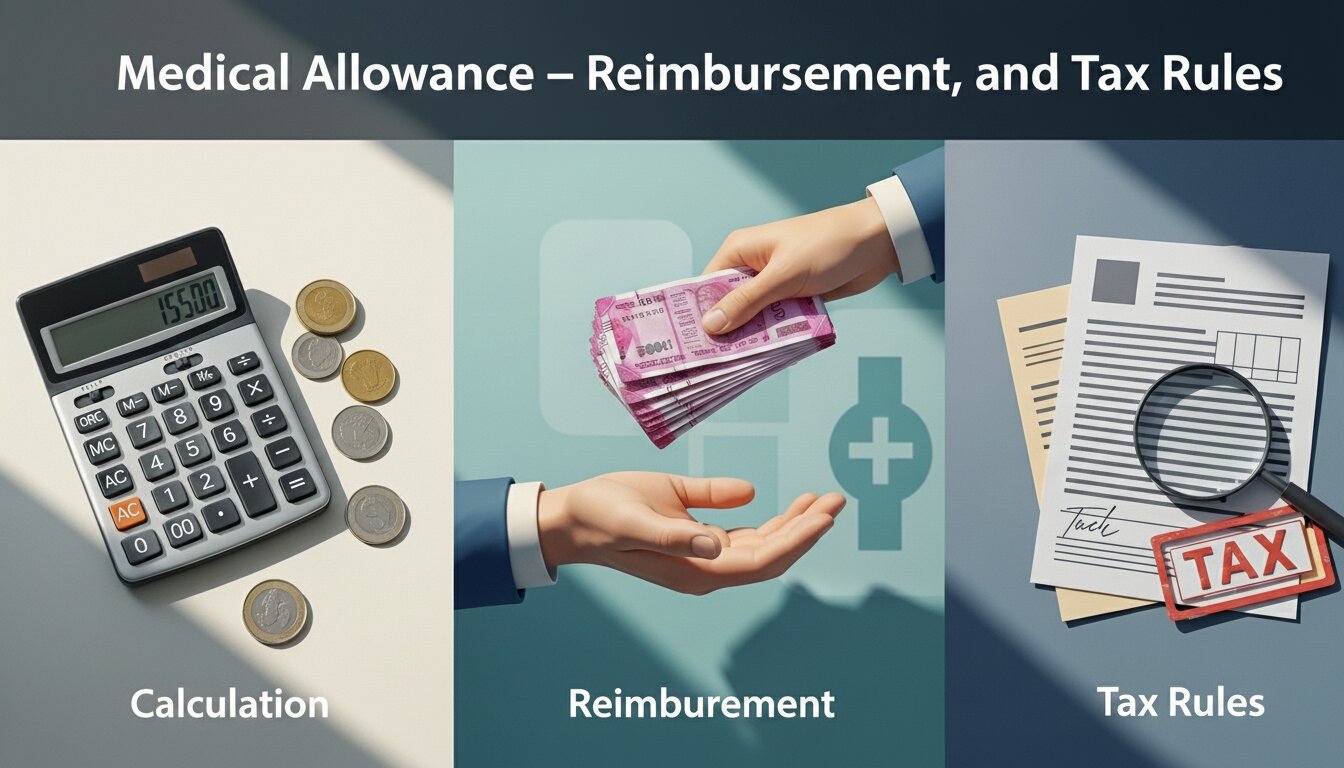
Medical Allowance - Calculation, Reimbursement, and Tax Rules
In todays world it is really important for employees and employers to know about the money they are entitled to for expenses. If you take a look at how medical allowancesre calculated and paid back and what tax rules apply you can plan your money better and follow the current tax rules. Medical allowances are very important for employees and employers. Understanding allowances will help you with your financial planning. You will know what to expect and how to make the most of your allowances. Medical allowances will also help employers with their planning. This guide will tell you all about allowances so you can get the most out of the benefits that are available to you for your medical allowances. By knowing more about allowances you can make better decisions, about your money and your medical allowances.
What is Medical Allowance?
Medical allowance is a fixed monetary benefit provided by employers to their employees to cover medical expenses. Unlike medical reimbursements, which require proof of expenditure, medical allowances are typically paid as a part of the employee's regular salary, irrespective of whether they incur medical expenses.
Calculation of Medical Allowance
The calculation of medical allowance is predetermined by the employer and may vary based on company policy, job role, or employee designation. Key factors influencing the calculation include:
- Company Policy: Employers determine the medical allowance based on their HR policies, aligning with legal norms and industry standards.
- Employee Role: Higher-ranking positions may attract larger allowances due to increased responsibilities.
- Market Standards: Aligning medical benefits with those offered by competitors can help attract and retain talent.
Typically, the medical allowance is outlined in the employee’s compensation package, specified either as a fixed monthly amount or an annual aggregate. It’s advisable for employees to review their employment contracts to understand the specific details pertaining to their medical allowance benefits.
Reimbursement Process
When employees incur medical expenses, reimbursement involves a systematic approach of submitting these expenses to avail of a refund. Employers typically require employees to follow these steps:
- Documentation: Employees must provide relevant bills, prescriptions, and receipts as proof of the medical expenses incurred.
- Submission: Most companies have a digital system or a designated personnel department where employees can submit their claims.
- Verification: The company's HR or finance department verifies these documents to ensure legitimacy and policy compliance.
- Approval and Payment: Once verified, the reimbursement is processed and added to the employee’s next salary or transferred directly to their bank account.
Tax Implications of Medical Allowance
Understanding the tax rules surrounding medical allowances is crucial to optimize the tax benefits available. Here's a detailed look at the tax implications:
- Tax-Free Limit: Traditionally, medical reimbursements up to a certain limit per annum are tax-exempt. However, this limit and the rules can be subject to change based on government tax policies.
- Documentation: Employees must maintain accurate records of medical expenses to avail of tax exemptions, ensuring they are compliant with regulations.
- Income Tax Reporting: Employees should report their medical expenses accurately in income tax returns to claim deductions.
It's imperative for employees and employers to stay updated on the latest tax regulations to maximize benefits and avoid legal hiccups. Consulting tax professionals can provide individualized guidance tailored to specific circumstances.
Changes in Tax Rules for Medical Allowance
In recent years, there have been evolving changes in tax regulations regarding medical allowances. Legislation can impact the structure and benefits of medical allowances significantly. Key changes often include adjustments to the tax-free limit and specific requirements for documentation and reporting. Thus, keeping an eye on the national budget announcements can provide insights into impending changes.
Optimizing Your Medical Allowance Benefits
To make the most of medical allowances, consider the following strategies:
- Educate Yourself: Regularly educate yourself on tax laws and updates concerning medical allowances.
- Accurate Documentation: Keep a meticulous record of medical expenses, ensuring all documentation is accurate and easily accessible.
- Professional Assistance: Consult with a tax advisor or financial planner to create strategies tailored to your financial and health needs.
Conclusion
Medical allowances are really good for you financially when you use them the way. If you know how they are calculated and how to get your money back you can save a lot on taxes and be healthier. Both you and your company need to know the rules and best ways to use medical allowances. You should talk to people who're good, with money and make sure you have all your papers in order. This guide will help you understand allowances. It will give you the knowledge you need to take care of your money and your health. You will be able to do everything you need to do with confidence. Just remember to know what is going on and follow the rules and you will get the most out of your medical allowances. For more details ledgers.cloud.