




PUGALENTHI
Senior Developer
Updated on
11-02-2026
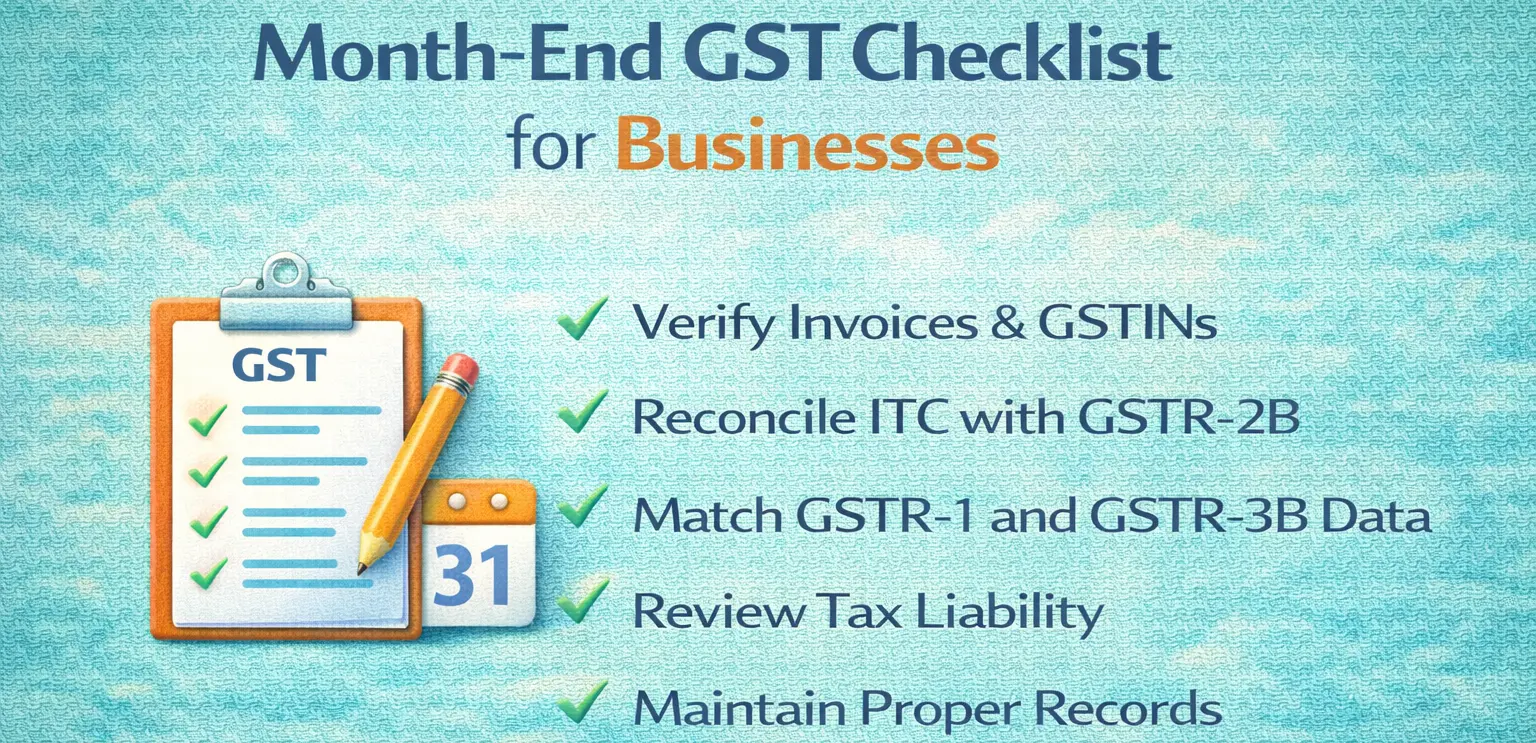
Month-End GST Checklist for Businesses: Practical Guide
Compliance with the GST is mandatory for every company, which means all companies regardless of their size need to comply with GST requirements. In order to help meet monthly compliance requirements some companies use a checklist to assist them with their monthly compliance obligations. A checklist can help to accomplish the tasks needed to ensure compliance with the GST (for example: checking invoices, reconciling input tax credits, etc) since it allows you to complete these tasks before the end of the month and avoid expensive penalties. This guide provides business owners and accountants with a comprehensive step-by-step checklist for managing and completing their monthly compliance activities for GST.
Introduction to Month-End GST Compliance
GST compliance involves various steps that need to be meticulously followed at the end of each month. Falling behind can lead to significant compliance issues, penalties, or interest on late payments. Here's how to tackle the key aspects of GST compliance efficiently.
1. Invoice Verification
First and foremost, ensure that all invoices for the month are correctly recorded and verified.
- Check that each invoice has been issued in accordance with GST norms, including mandatory details like GSTIN, invoice number, and value.
- Ensure that invoice details match with transactions recorded in your accounting system.
- Verify the accuracy of the GST rate applicable to the goods/services supplied.
- Ensure all invoices are uploaded to the GST portal, particularly if you have opted for e-invoicing.
2. ITC Reconciliation with GSTR-2B
Reconciliation of Input Tax Credit is essential to optimize your tax liability and ensure compliance.
- Utilize GSTR-2B auto-drafted ITC statement for matching input tax credits claimed.
- Identify discrepancies in ITC claims and correct them promptly.
- Take necessary steps to adjust reversed credits wherever applicable.
- Ensure reconciliation is completed within the prescribed timelines to smoothly claim ITC in your GSTR-3B return.
3. Matching GSTR-1 and GSTR-3B Data
One critical area of month-end GST compliance is ensuring data consistency between GSTR-1 and GSTR-3B.
- Verify that the total turnover declared in GSTR-1 matches with the figures reported in GSTR-3B.
- Ensure credit notes, debit notes, and amendments are accurately reflected in both returns.
- Identify any discrepancies and address them before filing returns.
4. Reviewing Tax Liability
Ensuring accurate calculation of tax liability is a key part of the GST checklist.
- Re-evaluate GST payable in alignment with the sales and purchases recorded for the month.
- Calculate any applicable interest on delayed tax payment.
- Monitor tax payments for accuracy and promptness to avoid penalties.
5. Maintaining Proper Records
Maintaining proper records is not only a legal requirement but also simplifies compliance.
- Ensure organized storage of invoices, credit and debit notes, purchase bills, and related documents for audit purposes.
- Periodically audit your records to ensure compliance with the current GST provisions.
- Implement a digital record-keeping system to streamline the process and provide easy access to key documents.
6. Common Challenges and How to Overcome Them
GST compliance comes with challenges. Understanding these can help you develop strategies to address them.
- Data Mismatch: Regularly perform reconciliations to minimize errors.
- Lack of Clear Understanding: Seek professional advice or training for your team.
- Adjusting to Policy Changes: Stay updated with the latest GST amendments and ensure your accounting practices align with them.
7. Tools and Resources for Simplified GST Compliance
Modern tools and resources can simplify GST compliance significantly:
- Leverage accounting software with integrated GST solutions.
- Consider third-party reconciliation services for precise ITC matching.
- Utilize government resources or seminars for a better understanding of GST compliance.
Conclusion
A month-end GST checklist that is structured and that can be acted upon is essential for businesses that want to maintain efficiency in complying with their GST obligations. By being pro-active and taking advantage of available resources, businesses can both comply with GST regulations as well as improve their financial results. Make sure to establish a routine with your accounting team, and follow these items consistently, in order to enhance your GST compliance framework and help you manage your tax obligations easily.
In summary, these steps will help make it easier to close your month-end processes and ensure compliance with all GST obligations. Adopting this guide also allows businesses to protect themselves from compliance risks while fostering an environment of accuracy and efficiency within their finance team.
Regular review and updating of this checklist to align with GST regulations will keep your business ahead of any compliance curves. Stay informed, stay compliant!
LEDGERS
LEDGERS simplifies GST compliance by embedding reconciliation directly into the accounting workflow, helping businesses identify mismatches early and address them before they lead to interest or penalties. With automated GSTN data synchronization, invoice-level tracking, and system-driven validations, LEDGERS enables seamless, reliable compliance without last-minute corrections or manual follow-ups.