




HARI KRISHNAN S
Updated on
09-06-2026
Navigating HR Statutory Changes: Essentials
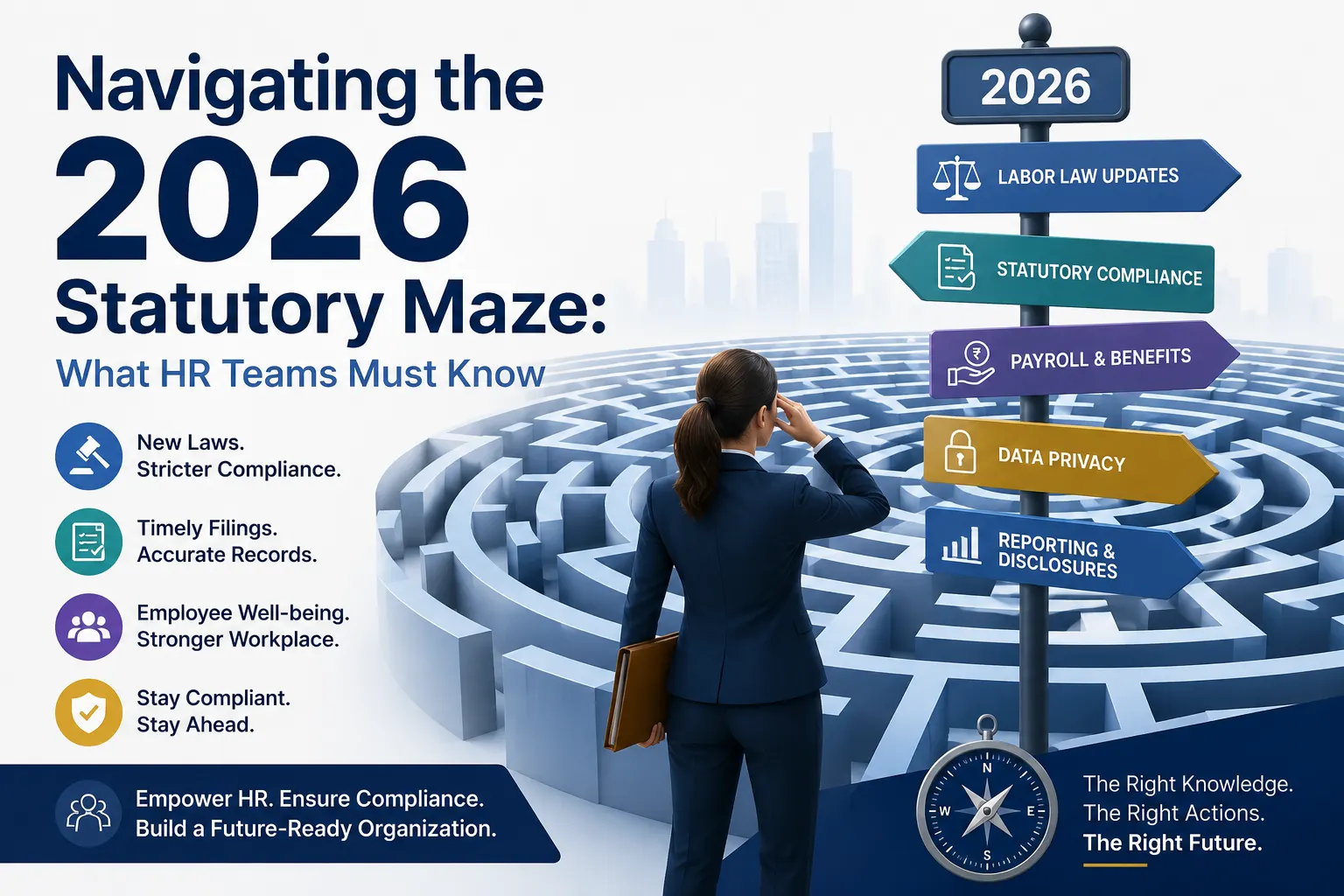
The year 2026 Ready to obtain a gamut Of statutory changes that HR teams All industries must prepare to secure compliance and foster organizational growth. Navigating the 2026 statutory maze It is not only about being consistent, but also about strategic positioning. Your organization For success in the midst of change regulatory landscapes. I this article, We will find out crucial insights And actionable strategies that HR leaders Must be implemented to manage effectively these upcoming challenges.
Understanding the 2026 Regulatory Shifts
Along with changes in labor laws, tax regulations, and employment standards I expect 2026, HR departments must be aware and proactive. These statutory changes Promises to reshape how organizations are managed. Their human resources. Here's what happens. The horizon:
- Revised Labor Laws: Anticipate new labor laws focusing on employee welfare, safety, and remote work regulations. Understanding these will be key in adapting workplace policies.
- Updated Tax Regulations: Expect modifications in payroll taxation and benefits tax treatment. HR teams will need to align payroll processes accordingly.
- Expansion of Employee Rights: With increased emphasis on diversity and inclusion, 2026 will likely introduce enhanced anti-discrimination policies.
Immediate Steps HR Leaders Should Take
In the face of these changes, HR teams must approach the 2026 challenges methodically. Here’s a step-by-step guide to ensure preparedness:
1. Conduct a Regulatory Audit
Engage in a thorough audit of current policies compared against upcoming statutory requirements. This will help identify gaps and prevent compliance oversights.
2. Stay Informed with Continuous Learning
Encourage HR teams to participate in workshops and training sessions focused on new laws. Subscribing to policy updates from reputable sources will keep your team ahead.
3. Revamp Internal Policies
Adjust workplace policies to align with new statutory mandates, whether they involve remote work norms, health and safety regulations, or other employee rights.
4. Leverage Technology for Compliance
Adopting HR management software that automatically updates with new regulations can dramatically streamline compliance efforts.
Leveraging Strategic Planning
To be an advance strategic plan Not only will ensure. Smoother transitions But at least business disruptions. Consider. The potential There are effects your organization’ s operations and workforce management practices.
Forecast Regulatory Impacts
Regularly analyze how new laws will affect business functions, From recruitment procedures retirement planning. Active planning is lacking. Compliance risks and enables. HR teams To develop strategies accordingly these impacts.
Enhancing Employee Engagement Through Compliance
Compliance can be an opportunity for organizations to foster trust and engagement among employees. Here’s how:
Transparent Communication
Maintain open channels for discussing the implications of statutory changes on employees. Transparency builds trust and eases anxiety attached to regulatory changes.
Inclusive Policy Development
Involve employees in the policy formation process, ensuring their voices are heard. This approach not only aids compliance but also enhances workforce morale.
Summary and Key Takeaways
The 2026 statutory changes current both challenges and opportunities to HR teams Aim to maintain compliance while promoting a supportive and engaging workplace. With timely preparation And strategic action, HR managers can not only navigate, but also benefit from it. These changes to strengthen organizational resilience. Key initiatives include audit, monitoring, policy reform and promotion. Open employee communications. Ultimately, understanding and adaptation the 2026 statutory landscape equips HR teams with the necessary tools Ensure compliance, assurance organizational reputations, And invest. New legal mandates to nurture a forward- thinking workforce.