




HARI KRISHNAN S
Updated on
30-07-2026
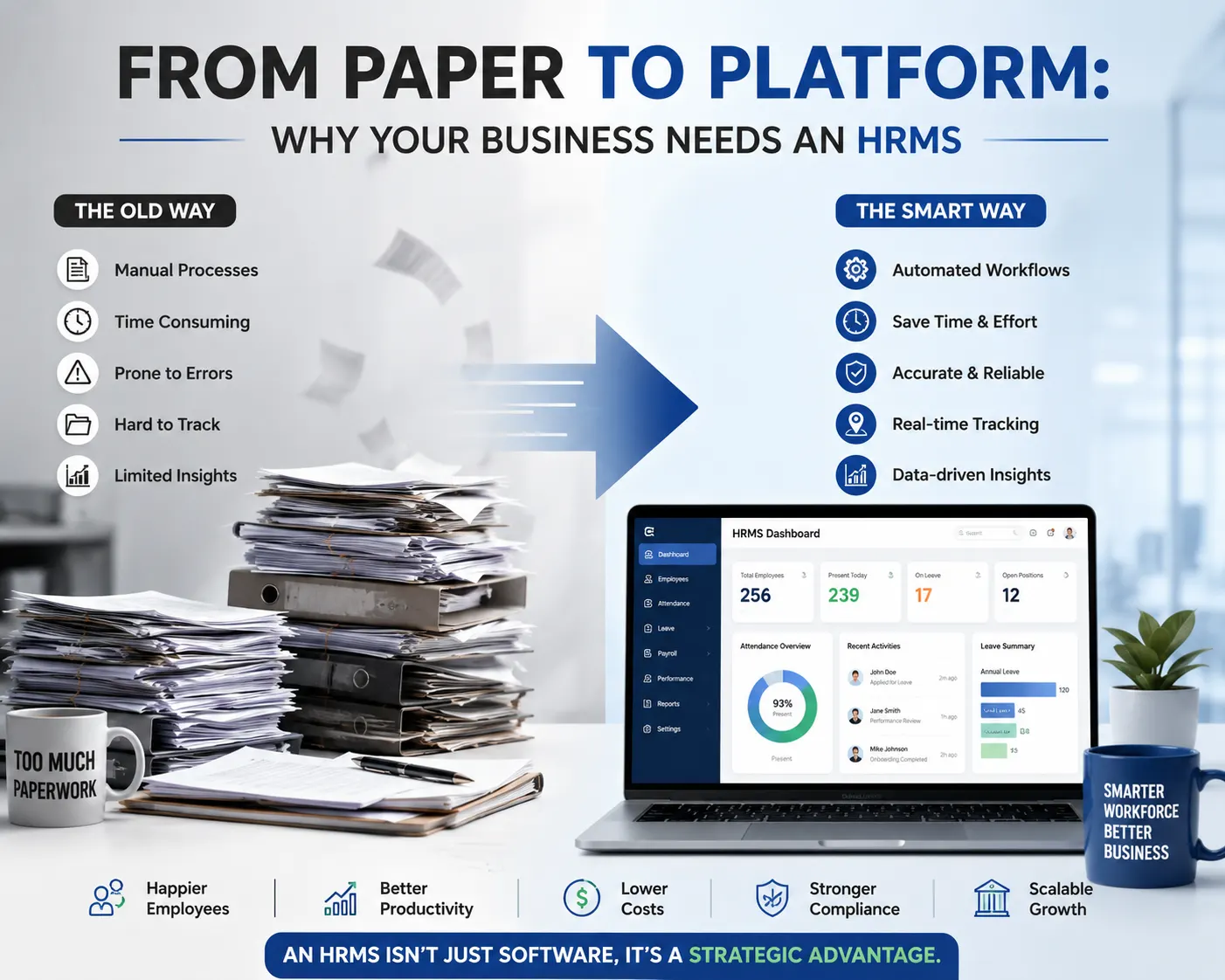
From Paper to Platform: Why Your Business Needs an HRMS
In today’s digital age, businesses are increasingly transitioning from traditional paper-based systems to innovative platform solutions. This shift is nowhere more apparent than in the realm of Human Resource Management Systems (HRMS). Modern HRMS platforms streamline HR operations, improving efficiency and reducing manual labor. If your organization still relies heavily on paper documents and traditional methods, it’s time to consider why integrating an HRMS is pivotal for your business success.
The Immediate Benefits of Adopting an HRMS
The world of business is fast-paced, and staying ahead means adopting systems that maximize productivity. Here’s why an HRMS is a game changer:
- Efficiency: Automate repetitive HR tasks, freeing time for strategic planning and employee development.
- Cost Reduction: Minimize errors and reduce costs associated with paper storage and handling.
- Data Accessibility: Ensure that crucial employee data is readily accessible and easily retrievable from anywhere.
- Regulatory Compliance: An HRMS simplifies compliance with employment laws and data protection regulations.
- Improved Employee Experience: Streamline onboarding and training processes, enhancing overall employee satisfaction.
An In-Depth Look at HRMS Capabilities
HRMS platforms offer a diverse array of features that cater to the evolving needs of modern organizations. Below are some of the core capabilities:
1. Recruitment and Onboarding
Efficient recruitment processes are crucial for attracting top talent. An HRMS enables HR teams to:
- Create job postings and distribute them across multiple platforms.
- Automatically track applications and generate shortlist reports with ease.
- Facilitate a smooth onboarding process by digitizing paperwork and scheduling training sessions.
2. Employee Data Management
Managing employee data manually can be cumbersome and prone to error. With an HRMS, businesses can:
- Store and manage employee information securely.
- Track performance reviews, promotions, and other critical HR metrics.
- Generate detailed reports for informed decision-making.
3. Payroll and Benefits Administration
The process of managing payroll and benefits can be simplified significantly with an HRMS:
- Automate salary calculations and ensure accuracy in deductions.
- Offer self-service portals where employees can view pay stubs and benefits.
- Ensure compliance with tax laws and benefit regulations.
Keeping Up with the Latest HRMS Trends
The HRMS landscape is always evolving, with new trends shaping the way organizations manage their workforce:
Cloud-Based Solutions
More businesses are opting for cloud-based HRMS platforms due to their scalability and flexibility. These solutions allow easy access to HR data from any device, ensuring seamless operations even for remote teams.
AI and Machine Learning Integration
Artificial Intelligence (AI) is transforming HR processes by introducing intelligent automation and predictive analytics. Machine learning algorithms can assess employee performance, predict workforce trends, and assist in talent acquisition.
Mobile Accessibility
Modern HRMS platforms emphasize mobile accessibility, enabling HR managers and employees to access essential HR functions on the go, enhancing responsiveness and productivity.
The Drawbacks of Sticking to Paper-Based Systems
While transitioning to an HRMS presents numerous advantages, maintaining a paper-based system may bring several setbacks:
- Increased Error Rates: Manual data handling increases the risk of errors, leading to costly corrections.
- Inefficiency: Paperwork slows down HR processes, which could lead to delayed decision-making.
- Limited Insights: Without an HRMS, it’s challenging to generate insights and analytics for strategic HR planning.
- Security Risks: Paper documents are susceptible to loss, theft, or damage, putting sensitive employee information at risk.
Conclusion: The Way Forward is Digital
Transitioning from a paper-based HR system to a comprehensive HRMS platform is no longer just an option, but a necessity for businesses aiming to thrive in the digital age. An HRMS not only streamlines HR processes but also contributes to improved employee experience, cost savings, and strategic growth. For businesses, small and large, that aim to remain competitive and future-proof, the time for adopting an HRMS is now.
By moving from paper to platform, your organization will position itself at the forefront of modern workforce management, ready to tackle challenges and seize opportunities in today’s dynamic business environment.