




ATCHAYA M
Updated on
12-03-2026
Role of e-Invoicing in Reducing GST Notices and Scrutiny
Over the last few years, GST compliance has become much more dependent on data. Tax Authorities now check for compliance through the use of digital records, automate the process of validation, and compare data from different systems with high frequency. The result of the increased use of technology in compliance is that any small discrepancies in invoices or returns may generate an inquiry, a notice, or additional scrutiny of businesses.
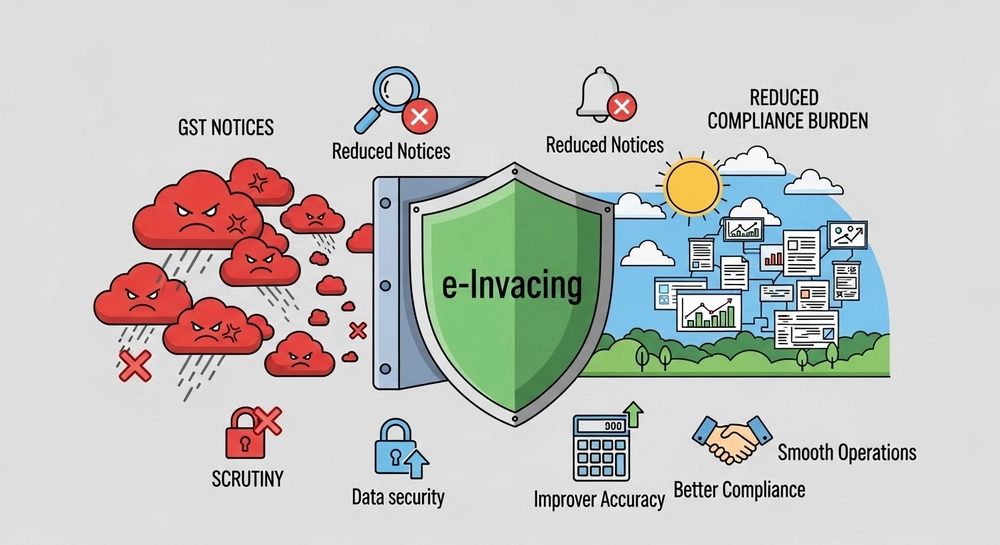
One main purpose of introducing electronic invoice (e-invoice) reporting was to increase transparency and decrease the number of discrepancies reported under GST. By creating a common format for invoicing and collecting their details through the Invoice Registration Portal (IRP), businesses are better able to create accurate records and reduce the risk of compliance problems that could result in GST notices from revenue authorities.
Reasons Why GST Notices Are Issued
GST notices are generally issued when there are inconsistencies in filing taxes or mismatches between compliance documentation. There are several factors that can cause these mismatches:
- Incorrect invoice details
- Differences between reported sales and return filings
- Missing invoices in GST returns
- Input Tax Credit mismatches between buyers and sellers
- Duplicate or inconsistent invoice numbering
In a traditional environment where invoices were created either manually or through disparate systems, these types of issues were relatively frequent.
How e-Invoicing Improves Data Accuracy
e-Invoicing introduces a structured approach to invoice generation. Before an invoice becomes valid, it must pass validation checks through the IRP. These checks verify important information such as:
- Supplier and recipient GSTIN
- Invoice number format
- Taxable value and tax amounts
- HSN or SAC codes
- Document type classification
Because the system validates invoice data before generating the Invoice Reference Number (IRN), many common errors are identified early. This significantly reduces the chances of incorrect invoices entering the GST reporting system.
Better Alignment Between Invoices and GST Returns
One of the key benefits of e-Invoicing is that it creates better alignment between invoice records and GST returns. Since invoice data is standardized and validated at the time of creation, businesses can prepare their GST returns using consistent information.
This reduces the risk of mismatches between:
- e-Invoice records
- Accounting data
- GST return filings
When these systems remain consistent, the likelihood of triggering automated scrutiny from tax authorities decreases.
Improved Transparency in Business Transactions
e-Invoicing enhances transparency by ensuring that invoices are registered in a centralized system before they are issued. Each e-Invoice receives a unique IRN and QR code, which confirms that the document has been validated.
This transparency benefits both businesses and regulators. For businesses, it provides a reliable record of transactions. For tax authorities, it improves the visibility of taxable supplies across the GST ecosystem.
Clear and transparent records reduce suspicion and lower the chances of compliance queries.
Reduced Input Tax Credit Disputes
Many GST notices arise due to Input Tax Credit mismatches between suppliers and recipients. If a supplier fails to report an invoice correctly, the buyer may face difficulty claiming ITC.
Because e-Invoicing validates invoices before they enter the GST system, it improves the reliability of invoice data. Buyers can rely on properly issued invoices for their tax credit claims, which reduces disputes and follow-up communication between vendors and customers.
Encouraging Stronger Compliance Practices
Another positive impact of e-Invoicing is the way it encourages businesses to maintain disciplined compliance practices. Structured invoice generation, accurate data entry, and consistent record keeping become essential parts of daily operations.
Businesses that adopt organized invoicing processes tend to experience fewer compliance complications and are better prepared during audits or departmental reviews.
Supporting Long-Term Compliance Confidence
As GST systems become more automated, maintaining accurate data becomes the best way to avoid unnecessary scrutiny. e-Invoicing helps businesses establish reliable documentation practices that support long-term compliance stability.
By generating validated invoices and maintaining consistent records, businesses can reduce the risk of notices and focus more on operational growth rather than compliance corrections.
Conclusion
e-Invoicing plays an important role in improving GST compliance by reducing data inconsistencies and strengthening transaction transparency. Through standardized invoice structures and validation checks, it helps businesses avoid common errors that often lead to GST notices or scrutiny.
When businesses adopt disciplined e-Invoicing practices, they benefit from more accurate records, smoother return filing, and stronger compliance confidence. Over time, this structured approach helps reduce compliance risks and supports a more reliable GST ecosystem for both businesses and regulators.