




MONISHA D
Updated on
30-07-2026
Sales Order to Invoice Mapping Logic Explained Using Ledgers
Today's dynamic business environment demands careful management of financial transactions among other things as part of everyday business management. Implementing accurately recording your sales orders through an invoicing process via your ledger not only streamlines business processes but also helps improve overall financial and reporting accuracy. The following article provides a detailed overview of how to map sales orders electronically to invoices while using ledger software and explains how mapping these types of transactions can make your financial operations run smoothly. You will find explanations on the reasoning behind the use of these systems as well as a complete set of instructions on optimising your complete financial processes.
What is Sales Order to Invoice Mapping?
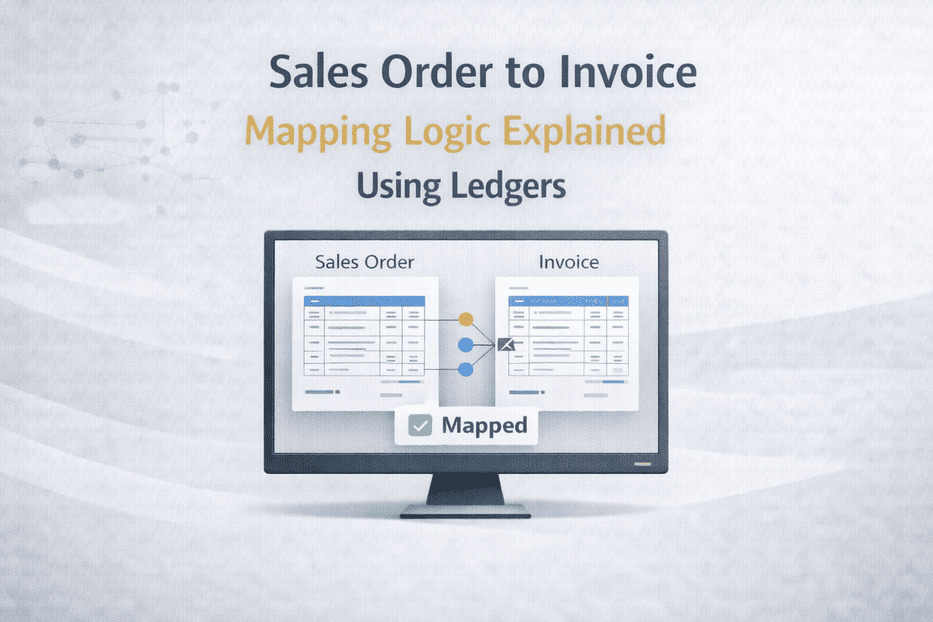
Sales order to invoice mapping is the process of converting a sales order into an invoice, which serves as a request for payment. This conversion involves aligning details such as items sold, quantities, prices, and customer information from the sales order with the invoice. Ledgers play a pivotal role in this procedure by maintaining an accurate record of these transaction details, ensuring transparency and integrity in financial records.
The Role of Ledgers in Mapping Logic
Ledgers are integral to financial accounting, acting as the backbone for recording transactions. Here's how ledgers facilitate the mapping of sales orders to invoices:
- Accuracy and Validation: Ledgers ensure that all sales order details are accurately captured and validated against the invoice, minimizing errors.
- Seamless Integration: They provide a seamless link between sales order management systems and invoicing processes, enhancing workflow efficiency.
- Audit Trails: Ledgers maintain an audit trail of all transactions, aiding in both internal audits and external financial reporting.
Step-by-Step Guide to Mapping Sales Orders to Invoices
Let's break down the process of mapping sales orders to invoices using ledgers into a series of actionable steps:
1. Capturing Sales Order Details
The first step involves capturing all relevant details from the sales order. This includes:
- Customer Information: Name, address, and contact details.
- Order Details: Item descriptions, quantities, unit prices, and discounts.
- Terms of Sale: Payment terms and delivery instructions.
These details are entered into the sales ledger, establishing a comprehensive record for the transaction.
2. Validating and Authorizing the Order
Before conversion, ensure the sales order is validated and authorized. This step involves:
- Cross-verifying item details against stock availability.
- Ensuring pricing aligns with company standards and agreements.
- Obtaining the necessary internal approvals for the transaction.
Ledgers serve as the check-point to validate these elements, ensuring the order's legitimacy.
3. Generating and Linking Invoices
Once approved, the sales order is converted into an invoice. Key activities include:
- Transferring sales order details onto the invoice.
- Assigning a unique invoice number for tracking purposes.
- Linking the invoice to the sales ledger to maintain consistency in records.
This step is crucial for seamless data flow and maintaining financial control.
4. Recording and Posting Invoices in Ledgers
The final step involves recording the invoice in the sales ledger. This entails:
- Updating the ledger with invoice numbers and transaction specifics.
- Tracking outstanding payments and monitoring receivables status.
- Ensuring all postings align with generally accepted accounting principles (GAAP).
Regular updates in the ledger facilitate ongoing financial reviews and ensure the company remains informed on its credit standing.
Benefits of Efficient Mapping Logic Using Ledgers
The transformation from sales orders to invoices using ledgers involves multiple components, and efficient mapping logic yields several benefits:
- Improved Cash Flow: Timely generation and tracking of invoices enhance receivables and bolster cash flow.
- Error Reduction: Accurate mapping minimizes discrepancies that can arise from manual data entry.
- Enhanced Transparency: Ledgers provide a transparent view of all transactions, crucial for audits and financial assessments.
Keeping Up with Industry Best Practices
As technology and financial practices evolve, staying updated with industry trends is vital. Here are some strategies to ensure your business remains aligned with best practices:
- Invest in advanced accounting software that integrates sales orders and invoicing functions to automate mappings.
- Regularly train your team on the latest accounting standards and technologies.
- Conduct periodic audits to identify areas for improvement in your invoicing processes.
Conclusion
Understanding and efficiently implementing sales order to invoice mapping logic using ledgers is critical for any business operations aiming to streamline financial workflows and enhance cash flow management. By capturing and validating sales orders, linking them to invoices through a structured ledger system, and ensuring up-to-date records, your organization will not only reduce errors but also foster a culture of financial integrity and accountability. Consistently updating your practices with industry developments will keep your business ahead of the competition and ensure sustainable growth in an ever-changing market environment.
To summarize, the effective mapping of sales orders to invoices is not just an operational necessity but a strategic advantage. By leveraging ledger systems, you create a robust financial framework that supports your company's growth and resilience against market fluctuations.