
MONISHA D
Updated on 30-07-2026
One of the crucial processes for accounting and taxation in India is the TDS Reconciliation. The process of TDS Reconciliation ensures that the sum of the taxes, which have been withheld, paid and reported by the firm, corresponds to the data provided in the tax department record keeping system. The presence of discrepancies in the TDS details can result in notices, penalties, payment delays, and issues related to other compliance concerns. Although there are numerous companies that rely on manual methods, using spreadsheets, accounting files, and various websites of governmental bodies, the increase in the number of transactions makes the procedure more complex and error-prone when the company continues to use manual systems. It becomes challenging to manage multiple vendors, receipts, challans and deduction entries. However, the use of modern accounting software makes it possible to automate the TDS Reconciliation procedure.
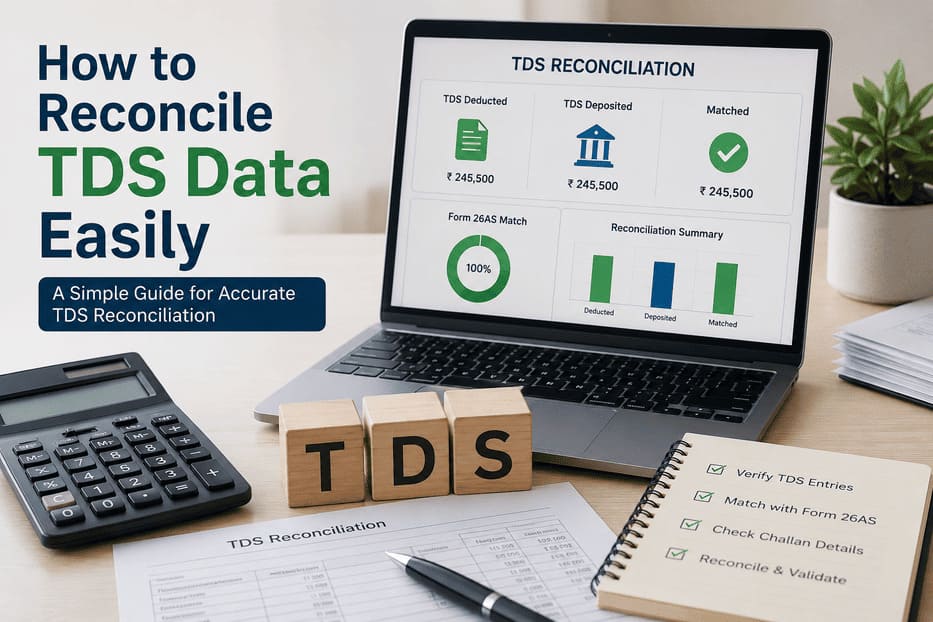
TDS reconciliation is the process of comparing and verifying TDS-related information between internal accounting records and government records. The main objective is to ensure that all deductions and deposits are correctly recorded and reported.
The reconciliation process generally includes checking:
The objective is to ensure that:
Proper reconciliation helps organizations maintain tax compliance and avoid legal or financial complications.
TDS reconciliation is not only necessary for compliance but also plays a major role in maintaining financial accuracy and operational efficiency.
When TDS records are properly reconciled, businesses can file returns with confidence and reduce the risk of incorrect reporting.
Vendors expect accurate TDS deductions and proper reporting. Errors in deductions or PAN details can create disputes and affect business relationships.
Accurate reconciliation improves the quality of financial records and ensures better visibility into tax-related transactions.
Well-maintained and reconciled records make audits easier and help businesses stay prepared for compliance reviews.
Many businesses struggle with TDS reconciliation because of large transaction volumes and manual processes.
Entering data manually into spreadsheets increases the risk of incorrect PAN numbers, invoice values, or deduction amounts.
Differences between internal accounting records and Form 26AS can occur due to late filing, incorrect challan details, or unmatched entries.
Businesses dealing with many vendors often find it difficult to track TDS deductions across multiple invoices and payments.
Applying incorrect TDS rates based on section codes may lead to short deduction or excess deduction issues.
Waiting until quarterly return filing deadlines to reconcile data increases pressure and the likelihood of missing discrepancies.
Businesses can simplify TDS reconciliation by following a structured process.
The first step is to gather all relevant records including:
Maintaining organized records helps reduce reconciliation errors.
Incorrect PAN details are one of the major reasons for TDS mismatches. Always verify vendor PAN numbers before processing transactions.
Ensure that:
Compare invoice and payment records with deducted TDS values to ensure:
This step helps identify short or excess deductions early.
Download Form 26AS and compare it with your accounting data and filed returns.
Check for:
Any mismatch should be corrected immediately before filing returns.
Ensure that challan details such as:
are correctly entered in returns and accounting systems.
Using dedicated TDS management software can significantly reduce manual work and improve reconciliation accuracy.
Modern software solutions help businesses:
Automation minimizes human errors and saves valuable time.
Modern cloud-based accounting software makes TDS reconciliation much easier compared to manual methods.
All invoices, payments, deductions, and tax records are stored in one system, making tracking easier.
Software automatically applies appropriate TDS rates based on transaction type and section codes.
Businesses can import large volumes of data while validating errors instantly.
Users can generate reconciliation reports anytime to monitor mismatches and pending corrections.
Automated reminders and validations help businesses file returns accurately and on time.
Businesses can improve reconciliation efficiency by following these practices:
Cloud-based TDS software provides flexibility, scalability, and better accessibility for modern businesses.
Advantages include:
Businesses handling high transaction volumes especially benefit from cloud-based automation.
TDS reconciliation is a critical process for accurate tax record keeping and compliance with Indian tax laws. The process, when done manually, takes longer, creates errors, and introduces other compliance issues for companies handling a high volume of transactions. Through the application of a proper reconciliation process and the use of advanced accounting software, companies will be able to eliminate mistakes and increase efficiency in tax management. Automation of the TDS reconciliation process offers savings in time and increased accuracy of finance. Ultimately, effective TDS reconciliation ensures efficient business operations and compliance.
