




PUGALENTHI
Updated on
05-01-2026
The Role of Reconciliation in Avoiding GST Interest and Penalties
The importance of GST Reconciliation cannot be emphasized enough, as it is a very intricate area for every entity or individual that engages in business under these regulations. There are many times business owners are left with mismatched records and an audit or penalty that they never anticipated. By understanding the relationship between doing a proper and timely GST reconciliation to avoid penalties and interest, we can create a smoother financial process for our businesses. In this guide, we will outline some of the main reasons why having your records reconciled on time is important. We will also discuss how having your record mismatched during the filing period may lead you to incur unnecessary costs, the importance of completing your GST reconciliation before filing your GST return instead of after you have filed your GST return, and how to be ready for an audit.
How Mismatched Data Leads to Interest and Penalties
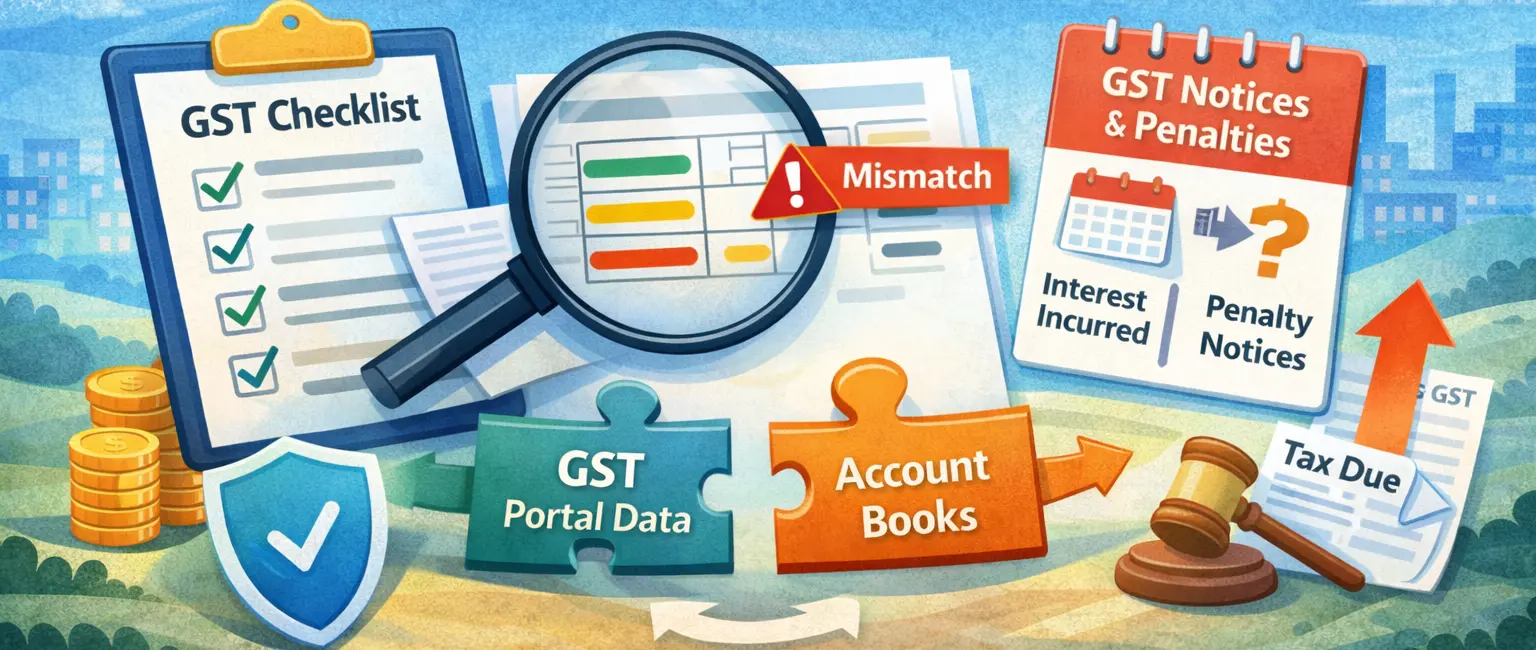
Mismatched data is a prevalent issue that haunts businesses navigating the GST framework. Such discrepancies often arise due to:
- Inaccurate tax invoices or credit notes
- Failure to cross-verify supplier data with received supplies
- Errors during data entry or bookkeeping
- System glitches or software incompatibilities
When businesses submit GST returns with mismatched data, it becomes a red flag for tax authorities, indicating potential tax evasion or non-compliance. The result? Additional scrutiny, audits, and potentially hefty penalties. The following are common consequences of mismatches:
- Interest charges on the mismatch amount
- Financial penalties for data errors
- Legal complications or increased audit frequency
The financial implications can be substantial, affecting cash flow and business credibility. By reconciling GST data, businesses can ensure that all entries are accurate, consistent, and free from discrepancies.
Why Timely Reconciliation Matters More Than Post-Filing Corrections
While post-filing corrections can rectify errors, they often come at the cost of interest and penalties. Waiting for tax authorities to identify discrepancies is a reactive approach, fraught with risk. Here's why timely reconciliation is essential:
Proactive Error Identification: Early reconciliation helps in identifying errors before they are submitted in GST returns, avoiding last-minute surprises.
Minimized Financial Risk: By reconciling in a timely manner, businesses can avoid the compounding interest and penalties associated with late payments or adjustments.
Enhanced Financial Planning: Timely reconciliation helps businesses organize financial plans, forecasting better cash flow and minimizing unexpected financial hits.
Consistent reconciliation ensures businesses remain compliant, reducing the stress associated with financial management, and allowing focus on growth and development.
Using Reconciliation to Stay Audit-Ready
Being audit-ready is crucial for any business. Regular reconciliation plays a pivotal role in preparing for financial audits, offering tangible benefits:
Comprehensive Financial Records: Regular reconciliation ensures all financial records are up-to-date, complete, and easily accessible, reducing audit preparation time.
Improved Compliance: By regularly reconciling data, businesses demonstrate commitment to compliance, potentially reducing the likelihood of detailed audits.
Audit Trail Creation: Systematic reconciliation creates an audit trail, making it easier for businesses to backtrack and provide necessary documentation during audits.
Decreased Audit Delays: Preparedness through regular reconciliation means audits are quicker, smoother, and less disruptive to daily operations.
Integrating technology-led solutions, such as accounting software and automated reconciliation tools, enhances the reliability and speed of the reconciliation process. These technological solutions can reconcile data across different platforms, cross-check invoices, and highlight mismatches efficiently.
Conclusion
The Reconciliation Process is not simply a regulatory requirement, but rather a key process that allows for the smooth operation of business processes, the reduction of discrepancies with Fiscal Reports and being proactive with the Goods and Services Tax (GST), as businesses focus on maintaining accurate Records and avoiding potential GST Interest Penalties and Interest, Reconciliation becomes a key element of the Accounting Process. To meet the compliance obligation, businesses must complete all Reconciliations on time and utilize Suitable Advanced Reconciliation Technology to maintain compliance with impending Compliance Change, thus avoiding the financial burden associated with Financial Penalties and Related Audits.
Staying compliant with GST regulations doesn't have to be daunting. Through proper reconciliation, businesses can safeguard against financial pitfalls and enjoy peace of mind, knowing they are on satisfactory legal and fiscal footing. Remember, reconciliation is not just about keeping numbers straight it's about securing your business's financial future.
LEDGERS simplifies GST compliance by embedding reconciliation directly into the accounting workflow, helping businesses identify mismatches early and address them before they lead to interest or penalties. With automated GSTN data synchronization, invoice-level tracking, and system-driven validations, LEDGERS enables seamless, reliable compliance without last-minute corrections or manual follow-ups.