




HARI KRISHNAN S
Updated on
30-07-2026
Transition from Manual Spreadsheets to Automated Cloud-Based Software
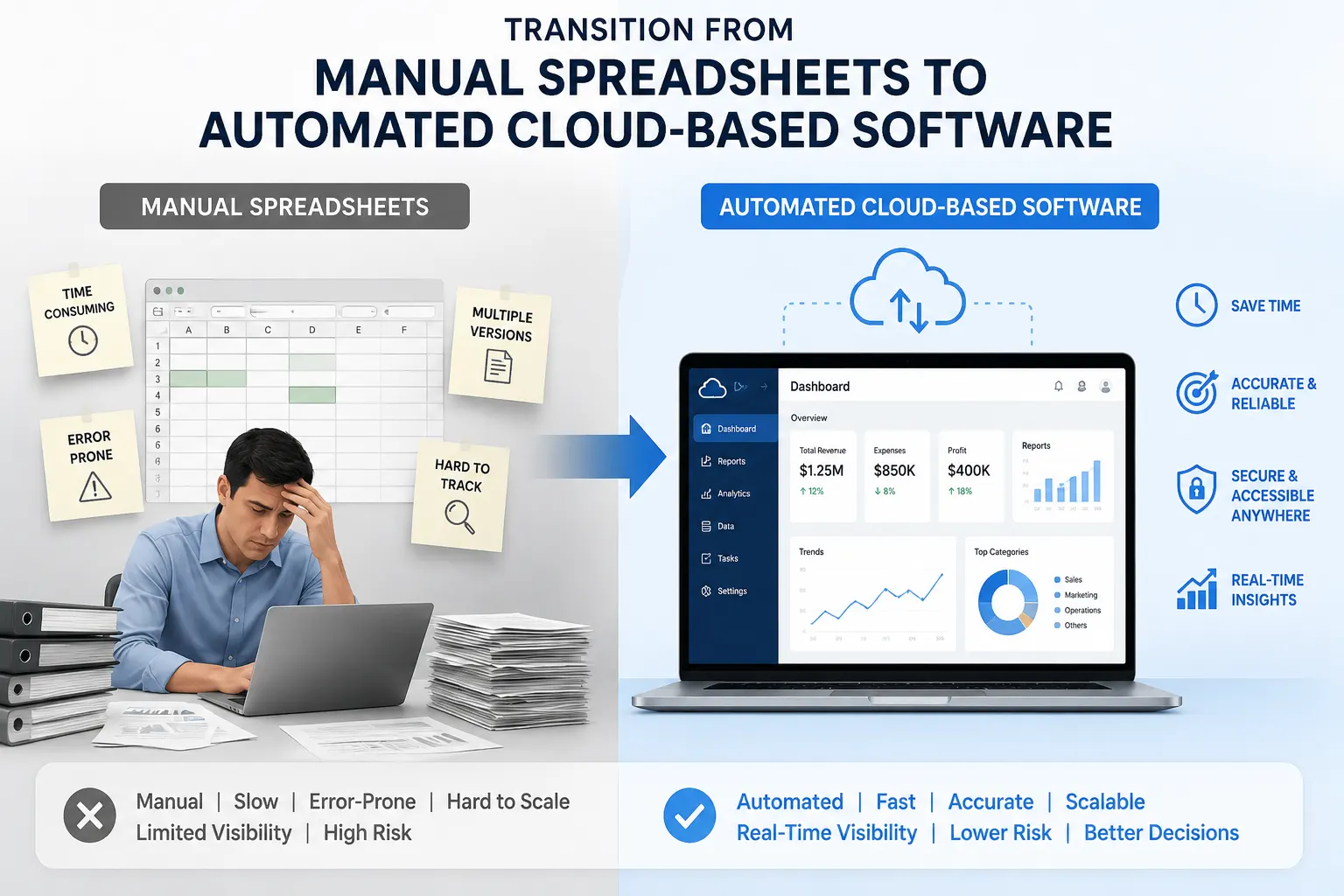
The transition from spreadsheets and manual tracking to automated, cloud-based software represents a pivotal shift in the way businesses operate. In an era characterized by rapid technological advancements, companies are increasingly moving away from traditional methods of data management and embracing more sophisticated, automated systems. This shift is driven by the need for increased efficiency, accuracy, and accessibility of data. In this article, we delve into the reasons behind this transition, the benefits it offers, and how businesses can successfully make the shift.
Why Move from Spreadsheets to Automated Solutions?
The reliance on spreadsheets and manual tracking methods has served businesses well for decades. However, as organizations grow and data becomes more complex, these methods reveal significant limitations. Here are some reasons why businesses choose to transition:
- Scalability: As businesses expand, managing large volumes of data manually becomes cumbersome and prone to error.
- Real-Time Data: Automated solutions offer immediate access to data, allowing for quicker decision-making and responsiveness to market changes.
- Collaboration: Cloud-based platforms facilitate more effective collaboration among teams, regardless of geographical location.
- Security: Modern software solutions provide robust data security measures that are more advanced than those protecting traditional spreadsheets.
Benefits of Cloud-Based Software
Transitioning to cloud-based software provides numerous advantages that can significantly improve business operations. Here are some of the key benefits:
- Increased Efficiency: Automated systems reduce the time spent on mundane tasks, allowing employees to focus on more strategic activities.
- Error Reduction: Automated processes minimize human error, leading to more accurate data and analyses.
- Cost Savings: Despite the initial investment, automated software often results in significant long-term cost savings by optimizing resource use.
- Enhanced Analytics: With reliable data inputs, businesses can leverage advanced analytics to gain deeper insights into their operations.
Key Steps in Transitioning to Automated Software
Successfully transitioning from spreadsheets and manual tracking systems to automated, cloud-based software requires careful planning and execution. Here are some key steps:
- Assessment: Evaluate current processes to identify inefficiencies and prioritize areas for automation.
- Goal Setting: Define clear objectives for what you hope to achieve with the transition, such as improved data accuracy or enhanced collaboration.
- Software Selection: Choose a solution that aligns with your business needs and offers the scalability to grow with your organization.
- Training: Invest in comprehensive training for employees to ensure they can effectively use the new system.
- Implementation: Roll out the software in phases to manage change effectively and troubleshoot any issues promptly.
Current Trends in Automation and Cloud Solutions
The landscape of automated, cloud-based software is always evolving, with several key trends shaping its future:
- Artificial Intelligence (AI): AI is increasingly being integrated into automation software to enhance data analysis and predictive capabilities.
- Integration: The ability to seamlessly integrate with other business applications is crucial, leading to the development of more interoperable cloud solutions.
- Customization: Businesses can now tailor solutions to tailor-fit specific operational needs, enhancing the relevance and efficiency of the systems.
- Regulatory Compliance: Automated software is being designed to meet compliance requirements across various industries, ensuring legal adherence with ease.
Challenges and Considerations
While the benefits are clear, transitioning to automated, cloud-based systems comes with its own set of challenges:
Change Management: Employees may be resistant to change, requiring effective management strategies to ease the transition process.
Data Migration: Moving existing data into a new system can be complex and resource-intensive, necessitating meticulous planning and execution.
Cost: The initial investment for automated systems can be significant, but it is often outweighed by long-term benefits.
Conclusion: Embrace the Future
The transition from spreadsheets and manual tracking to automated, cloud-based software is not just a trend; it is a necessary evolution for businesses seeking to remain competitive in today's rapidly changing landscape. By embracing automation, companies can enhance their efficiency, improve data accuracy, and position themselves for future growth. The key is to approach the transition strategically, keeping in mind both the benefits and the challenges, ensuring a smooth and successful shift to the digital future.
In conclusion, the transition from spreadsheets and manual tracking to automated, cloud-based software is a critical step for businesses aiming to streamline their operations and stay ahead in a competitive market. By understanding the benefits and carefully planning the transition, companies can reap the rewards of increased efficiency, accuracy, and flexibility in their operations.