
PUGALENTHI
Updated on 30-07-2026
Businesses must ensure they are GST Compliant since such compliance can become very complicated to execute. This guide will explain how businesses can avoid GST Compliance Risks by describing common issues including Return Mismatches, Input Tax Credits Errors, Late Filing and Poor Record Maintenance. Additionally, we will describe Practical Action that businesses can take to maintain GST Compliance focusing on Proactive Practices, regular checks and system-based discipline.
Every business that operates in a jurisdiction that has GST tax must comply with the rules and regulations regarding GST. Many times, however, businesses encounter problems that can negatively impact their ability to comply with GST rules and regulations, which can lead to compliance penalties or an audit from a taxing authority. If you know what some of the typical risks associated with GST compliance are, you will be prepared to proactively deal with these types of problems.
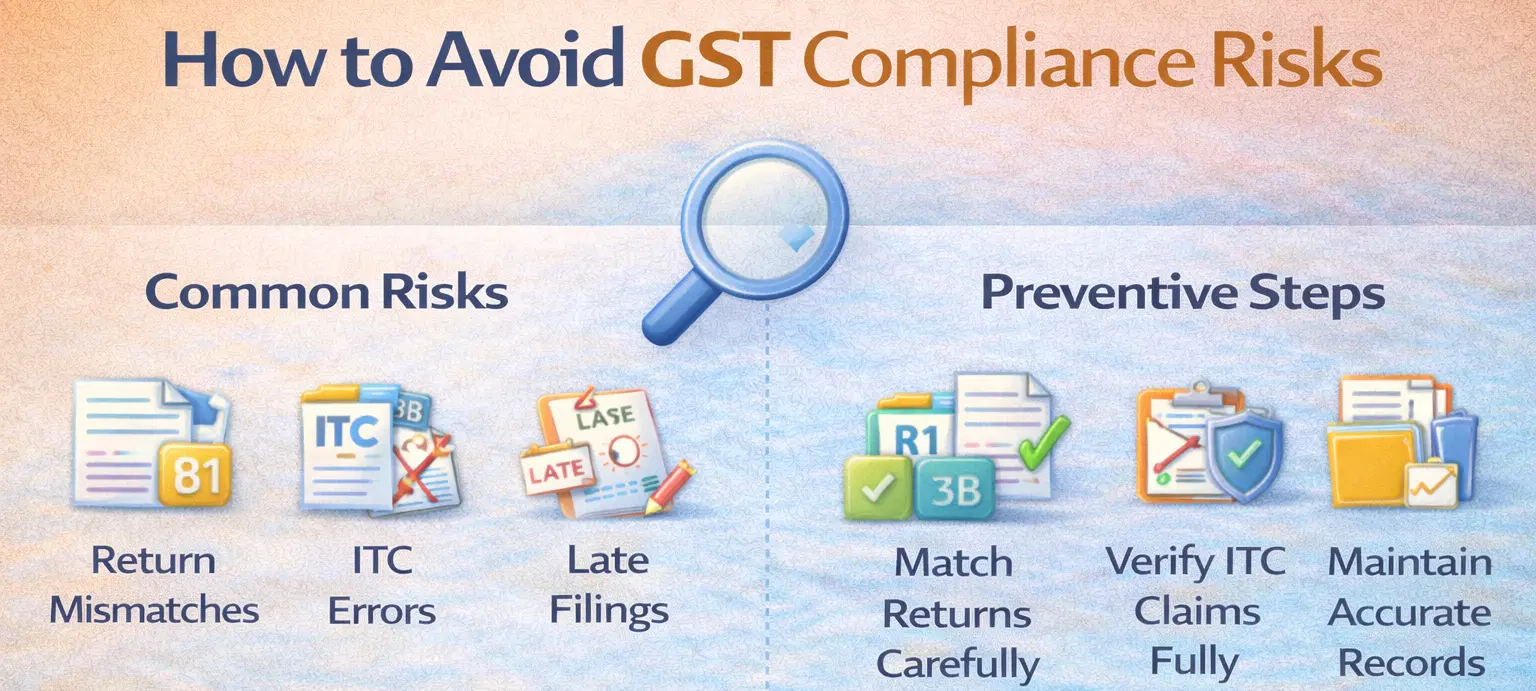
Return mismatches occur when the information in GST returns does not align across different forms, such as GSTR-1 and GSTR-3B. These discrepancies can result in scrutiny from regulatory bodies.
Input Tax Credit (ITC) errors arise when businesses claim incorrect credits, either exceeding their entitlement or filing claims for ineligible transactions. These errors can affect your tax liability.
Late filing of GST returns can incur hefty penalties and interest, adding unnecessary financial strain on your business.
Poor record maintenance leads to chaos during audits. Lack of proper documentation of sales, purchases, and tax payments can complicate compliance efforts.
Invest in reliable accounting software tailored to your specific business needs. This software should automate data entry and provide real-time compliance checks, allowing for a seamless GST return filing process.
Ensure that your team is well-versed in GST regulations through regular training sessions. Keeping your staff updates can reduce human errors in compliance and filing processes.
Conduct internal audits on a periodic basis to identify and rectify potential discrepancies before they escalate. These audits provide a safety net, ensuring your compliance processes remain robust.
Develop organizational policies that mandate regular checks and updates to GST-related processes. This practice fosters a culture of compliance within the organization.
Maintain a relationship with GST consultants or tax professionals who can provide insights and guidance on navigating complex GST scenarios, keeping you ahead of regulatory changes.
Understanding how to avoid GST compliance risks is crucial for maintaining a healthy business operation. By addressing common compliance challenges such as return mismatches, ITC errors, late filings, and poor record maintenance, you protect your business from potential penalties and audits. Implementing proactive practices, setting up routine checks, and maintaining system-based discipline are essential strategies. This approach not only ensures compliance but also fosters a culture of continuous improvement and readiness for audits. Embrace these practices today to safeguard your business from unnecessary risks associated with GST compliance.
By following the guidelines set out in this article, businesses can not only meet but exceed compliance requirements, paving the way for smooth operations and long-term success.
LEDGERS simplifies GST compliance by embedding reconciliation directly into the accounting workflow, helping businesses identify mismatches early and address them before they lead to interest or penalties. With automated GSTN data synchronization, invoice-level tracking, and system-driven validations, LEDGERS enables seamless, reliable compliance without last-minute corrections or manual follow-ups.
