




Jyothishwar M
Updated on
30-07-2026
Understanding Your Payslip: A Complete Guide
Every employee and worker in the UK is entitled to receive an individual, detailed written payslip when, or before, they're paid. This right applies to casual staff as well as permanent employees, though it doesn't extend to independent contractors or freelance workers. Your payslip doesn't need to be a physical document—it can be sent by email or accessed through a website.
Essential Information on Your Payslip
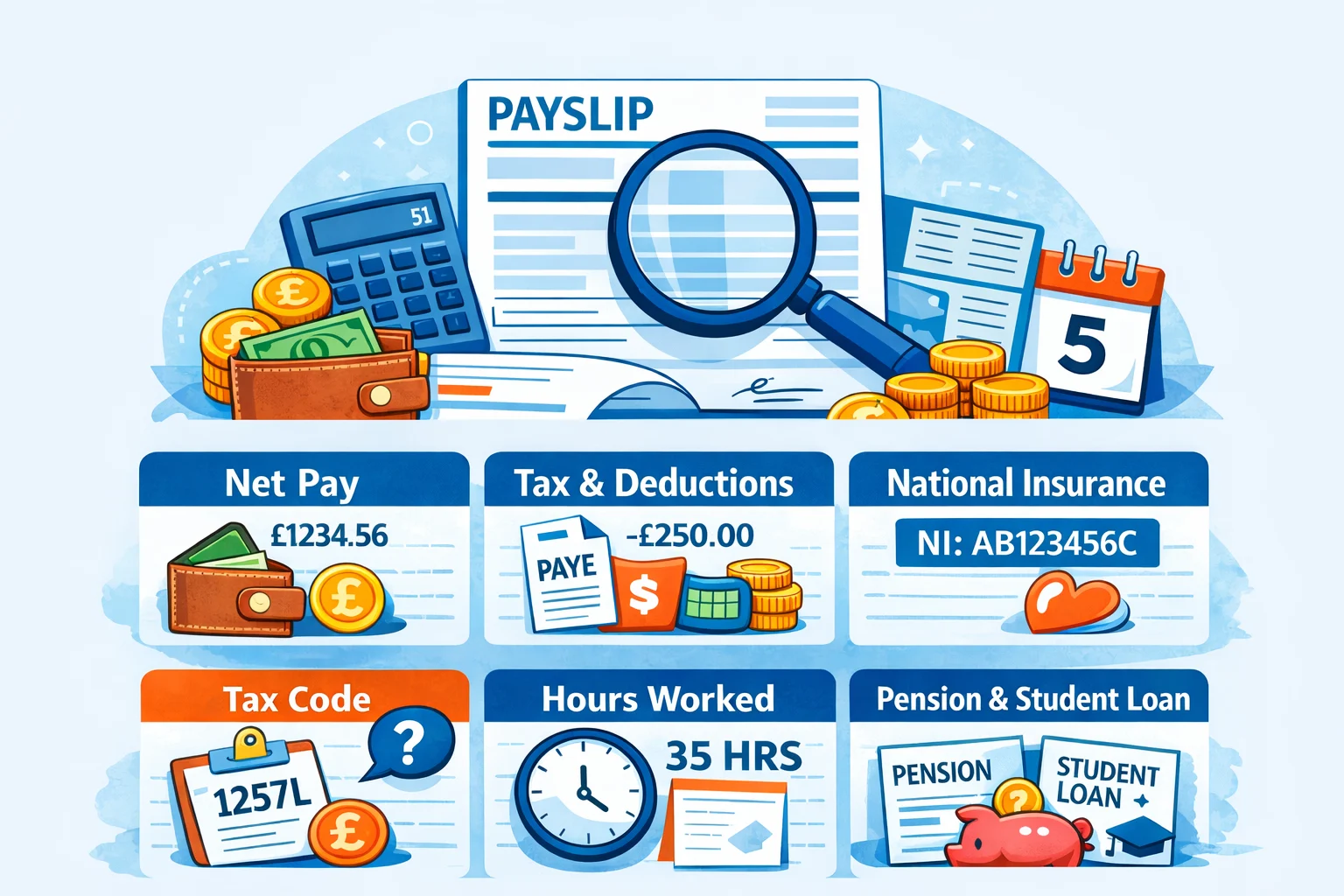
By law, your payslip must include net pay, which is the total amount of take-home pay after all deductions. It must show variable deductions—the amounts of any deductions that change from payday to payday, such as tax and National Insurance, along with what they're for. Fixed deductions, like union dues, must show the total amount. Employers can provide a separate statement with details of these deductions at least once a year instead of listing them on each payslip. The amount and method of any part payment, such as separate figures for cash and bank transfers, must be included. Since April 2019, if your pay varies by the amount of time worked, your payslip must show the number of hours. Additional required information includes your tax code, National Insurance number, pay rate (annual or hourly), and extra payments like overtime, tips, or bonuses, which are included in your gross pay figure to know more visit https://ledgers.cloud/in/payroll.
Decoding Your Payslip
Your name and sometimes your home address will appear on your payslip. Some companies assign payroll numbers to identify individuals on their system. The date shows when your pay should be credited to your bank account. The tax period number represents the tax period for that payslip—for monthly payments, 01 equals April and 12 equals March.
Your tax code is sent by HM Revenue & Customs (HMRC) and tells your employer how much tax-free pay you should receive before tax is deducted from the rest. It's important to check this against your latest tax code notice, as an incorrect code could mean you pay too much or too little tax. You need a National Insurance number to work in the UK. This personal number stays with you throughout your life, even if you change your name. It ensures your contributions are recorded properly and helps build up your entitlement to state benefits, including your pension.
The payments section shows your earnings before deductions. It might include how your pay was calculated, such as your hourly rate and hours worked, and any additional payments like bonuses, commission, or overtime. If your employer pays expenses through payroll, these might be listed separately or combined to show a taxable or non-taxable amount. Your payslip must show the amount of variable deductions like tax and National Insurance.
If you're paying into a workplace pension, your contribution will be shown, and your employer's contribution might also appear. If you're repaying a student loan, this will be shown on your payslip. Employees normally start making repayments from the April following graduation or leaving their course. HMRC tells your employer how to calculate and deduct the correct amount. Keep your payslips and P60 as records of repayments in case of problems.
Courts can order deductions directly from your pay for unpaid fines or debt repayments. The Child Maintenance Service can also request a Deduction from Earnings Order for child maintenance. Employers may charge an additional £1 administration fee if they choose, which must be shown separately on the payslip with a description.
What appears regarding sick pay depends on your illness duration and company sick pay policy. Employers must pay Statutory Sick Pay (SSP) if you're off sick for four days or more in a row and meet certain conditions. SSP is treated like wages, so deductions apply for tax, National Insurance, and student loans. You might also be entitled to occupational sick pay under your contract, usually shown as a separate figure with any SSP deducted from it.
Statutory Maternity Pay (SMP) will appear on your payslip if you're a mother off work after having a baby. You might also receive maternity pay, usually shown separately. Parents sharing time off through Shared Parental Leave might receive Shared Parental Pay. For adoptions, Statutory Adoption Pay goes to the parent staying home, while the other partner in a joint adoption can be eligible for Additional Statutory Paternity Pay. All these payments are treated as ordinary earnings for tax and National Insurance purposes.
Health insurance, company cars, season-ticket loan repayments, cycle-to-work scheme loans, and charitable donations through give-as-you-earn schemes will be listed and can affect your tax code. Any other deductions, such as trade union subscriptions, should be shown.
Your payslip might show your total earnings for the current financial year, which runs from 6 April to 5 April, along with totals for tax, National Insurance, student loans, and pension payments. Net pay is the amount you receive after all deductions—the figure that should match what's paid into your bank account.
Gross pay is your income before any taxes and deductions, often referred to as your annual salary. Net pay is what remains after deductions like Income Tax and National Insurance—your take-home pay. Employers sometimes use space on the payslip to share important information about your pay or other matters.
Why Keep Your Payslips?
Payslips contain personal information, including your National Insurance number. Keep them safe to prevent identity fraud. It's important to maintain a record of all earnings and tax payments in case you need to check old details. For financial products like loans, you might need to provide your last three payslips as proof of income.