




RANJITH KUMAR M
Updated on
30-07-2026
Understanding the New Wage Code and Its Impact on Businesses
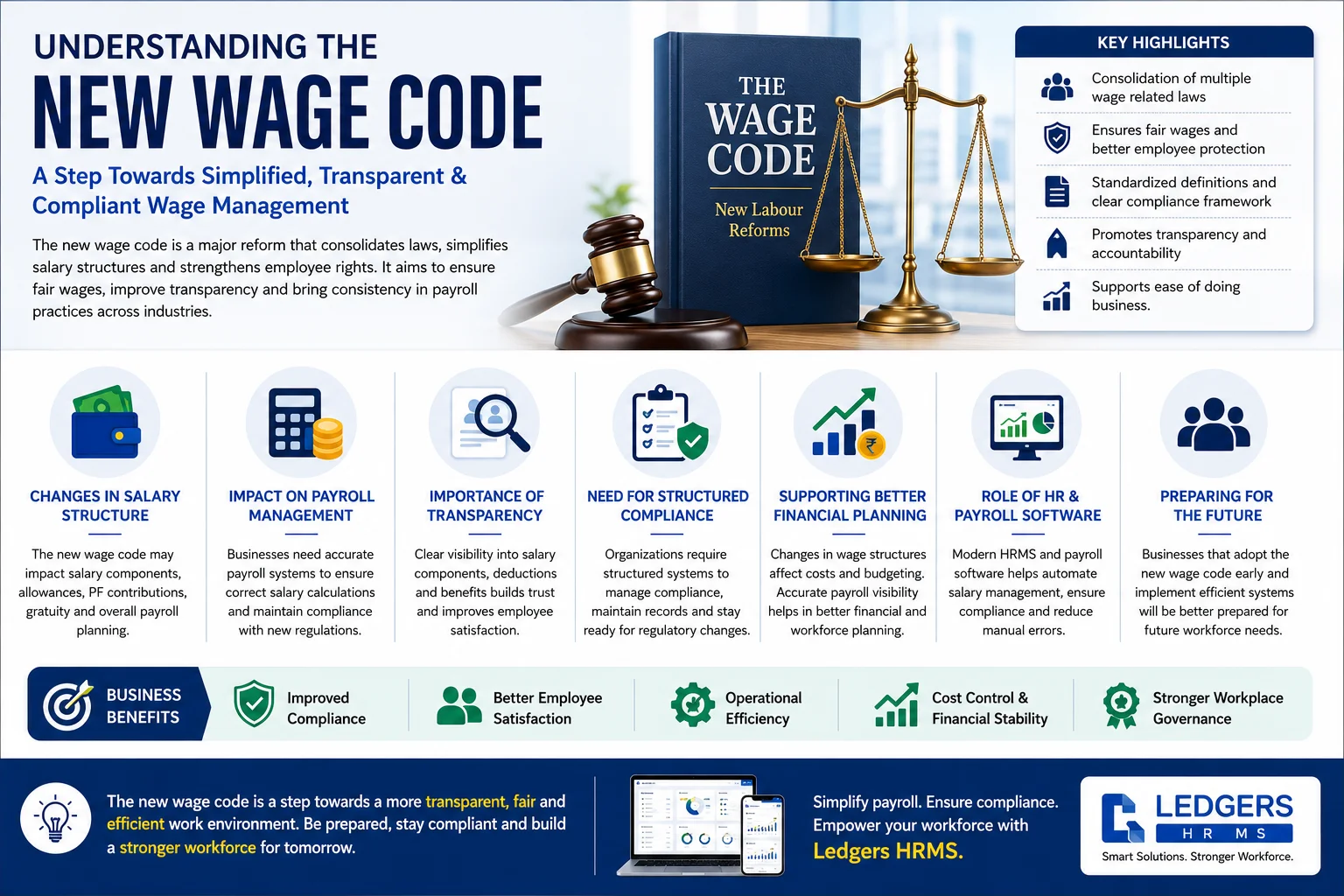
The new wage code is one of the most important labor reforms introduced to simplify salary structures and improve workforce regulations in India. It aims to create a standardized approach to employee wages, improve transparency, and ensure better compliance for businesses across different industries. Organizations need modern systems and structured payroll processes to adapt effectively to these changes.
What Is the New Wage Code
The new wage code is part of India’s labor law reforms that combine multiple wage related regulations into a single framework. The objective is to simplify wage management, improve employee protection, and create consistency in salary related practices across organizations.
This reform affects how businesses structure salaries, calculate benefits, and manage payroll compliance.
Changes in Salary Structure
One of the major impacts of the new wage code is the change in salary composition. Businesses may need to restructure employee salaries to align with the updated wage definitions and compliance requirements.
This can influence allowances, provident fund contributions, gratuity calculations, and overall payroll planning.
Impact on Payroll Management
The implementation of the new wage code increases the importance of accurate payroll management. Businesses need systems that can maintain proper salary calculations and support compliance with updated labor regulations.
Organized payroll processes help organizations avoid calculation errors and maintain operational consistency.
Importance of Workforce Transparency
Transparency in salary management becomes more important under the new wage code. Employees expect clear visibility into salary components, deductions, and benefits.
Businesses that maintain transparent payroll practices can improve employee trust and workplace confidence.
Need for Structured Compliance Management
Compliance requirements under the new wage code may increase administrative responsibilities for organizations. Businesses need structured systems that can support salary management and maintain accurate workforce records.
This helps organizations remain prepared for regulatory updates and operational changes.
Supporting Better Financial Planning
Changes in wage structures can affect overall workforce costs and financial planning. Businesses need clear payroll visibility to manage salary expenses effectively and maintain long term financial stability.
Accurate payroll data helps organizations make better budgeting and operational decisions.
Role of HR and Payroll Software
Modern HR and payroll software solutions help businesses adapt to the new wage code more efficiently. These systems support organized salary management, employee record maintenance, and workforce visibility.
Using structured payroll technology can reduce manual effort and improve compliance management.
Conclusion
The new wage code represents a significant change in workforce and payroll management for businesses in India. Organizations that prepare with structured payroll systems, transparent salary practices, and efficient workforce management processes will be better positioned to adapt successfully. Understanding and implementing the new wage code effectively can help businesses maintain compliance while supporting long term workforce stability.