




ATCHAYA M
Updated on
30-07-2026
Why ITC Mismatches Create Bigger Problems Than Businesses Expect
The Input Tax Credit is a valuable benefit that businesses can get under the GST system. It helps businesses reduce the amount of tax they have to pay by giving them credit for the GST they paid on purchases that are allowed. For a lot of companies the Input Tax Credit directly affects the money they have available to use the flow of cash and their overall plan for paying taxes.
While most businesses are focused on getting the Input Tax Credit they often do not realize how much of a problem it can be if there are mistakes in the credits they claim. What might seem like a mistake in the records of things they bought or in the information about the people they buy from can eventually cause bigger problems with following the rules and with money.
A lot of businesses only find out about these mistakes when they are filing their GST returns checking their records or being audited. By that time fixing the problem usually takes work following up with the people they buy from and making corrections. It is really important to understand why these mistakes happen and why they are a problem if businesses want to follow the GST rules correctly.
What is an Input Tax Credit mistake?
An Input Tax Credit mistake happens when the credit that a business claims does not match the GST records that're available.
This can happen because of:
- Missing supplier invoices
- Incorrect GSTIN details
- Tax amount differences
- Delayed invoice uploads
- Duplicate or incorrect purchase entries
Even if the actual business deal is real mistakes can still happen if the information that supports it is not consistent.
The Input Tax Credit is important for businesses to understand. Businesses need to make sure they get the Input Tax Credit right to avoid problems. The Input Tax Credit can help businesses save money on taxes. Only if they do it correctly.
Why Businesses Often Ignore Small ITC Differences
In day-to-day operations, businesses process hundreds or even thousands of purchase transactions. Because of this, small mismatches may seem insignificant.
Finance teams may assume:
- The difference will be corrected later
- Suppliers will eventually upload missing invoices
- The mismatch amount is too small to worry about
While this approach may seem practical in the short term, unresolved differences often accumulate over time and become much harder to manage.
Impact on Cash Flow
One of the biggest consequences of ITC mismatches is their effect on cash flow.
When eligible ITC cannot be utilized properly:
- Tax liability increases
- Additional GST may need to be paid from available funds
- Working capital gets affected
For growing businesses, even temporary restrictions on ITC availability can create unnecessary financial pressure.
This is why ITC management is not just a compliance issue—it is also a financial management issue.
Increased Reconciliation Effort
Every mismatch creates additional work for finance teams.
Instead of focusing on routine compliance activities, teams often spend time:
- Comparing purchase records
- Checking supplier invoices
- Reviewing GST data
- Following up with vendors
As transaction volumes increase, reconciliation becomes more time-consuming and difficult.
Businesses that address mismatches early usually spend significantly less effort on corrections later.
Supplier Compliance Directly Affects Your ITC
Many ITC mismatches originate outside the business itself.
For example:
- Suppliers may upload invoices late
- Invoice values may be reported incorrectly
- GSTIN details may contain errors
Even if the purchasing business maintains accurate records, supplier-related issues can still affect ITC availability.
This is why vendor compliance plays such an important role in GST management.
Audit and Compliance Risks
ITC is one of the most closely reviewed areas during GST audits and compliance checks.
Large or repeated mismatches may attract attention because they can indicate:
- Incorrect ITC claims
- Missing purchase records
- Reporting inconsistencies
Although many mismatches are genuine operational errors, businesses may still need to provide explanations and supporting documents.
Maintaining accurate ITC records reduces this risk significantly.
How Small Errors Become Large Problems
A single mismatched invoice may not seem serious. However, when similar issues occur repeatedly across months, the impact becomes much larger.
Businesses may eventually face:
- Significant reconciliation backlogs
- Delayed ITC utilization
- Compliance complications
- Increased administrative effort
What started as a small data issue can evolve into a larger operational challenge.
The Importance of Regular Purchase Reconciliation
One of the most effective ways to reduce ITC mismatches is regular reconciliation.
Businesses should periodically compare:
- Purchase registers
- Supplier invoices
- Available ITC records
- GST return data
Regular review helps identify discrepancies before they accumulate.
Instead of solving dozens of issues at month-end, businesses can resolve them continuously throughout the year.
Maintaining Accurate Purchase Records
Strong ITC management begins with accurate purchase data.
Businesses should ensure:
- Vendor GSTINs are correct
- Invoice details are complete
- Tax amounts are recorded accurately
- Duplicate entries are avoided
Clean purchase records create a strong foundation for accurate ITC claims.
Why Visibility Matters
As businesses grow, tracking ITC manually becomes increasingly difficult.
Finance teams need visibility into:
- Available credits
- Pending mismatches
- Supplier-related issues
- Reconciliation status
Without clear visibility, mismatches often remain unnoticed until filing deadlines approach.
A structured approach helps businesses monitor ITC more effectively.
Building Better Vendor Relationships
Many ITC problems can be reduced through better coordination with suppliers.
Regular communication helps ensure:
- Timely invoice reporting
- Correct GST details
- Faster mismatch resolution
Businesses that actively engage with vendors usually experience fewer ITC-related challenges.
Long-Term Benefits of Managing ITC Properly
Businesses that consistently monitor and resolve ITC mismatches benefit from:
- Better cash flow management
- Faster GST reconciliation
- Reduced compliance risks
- Stronger audit readiness
- Improved financial accuracy
Over time, these benefits contribute to more efficient business operations.
Conclusion
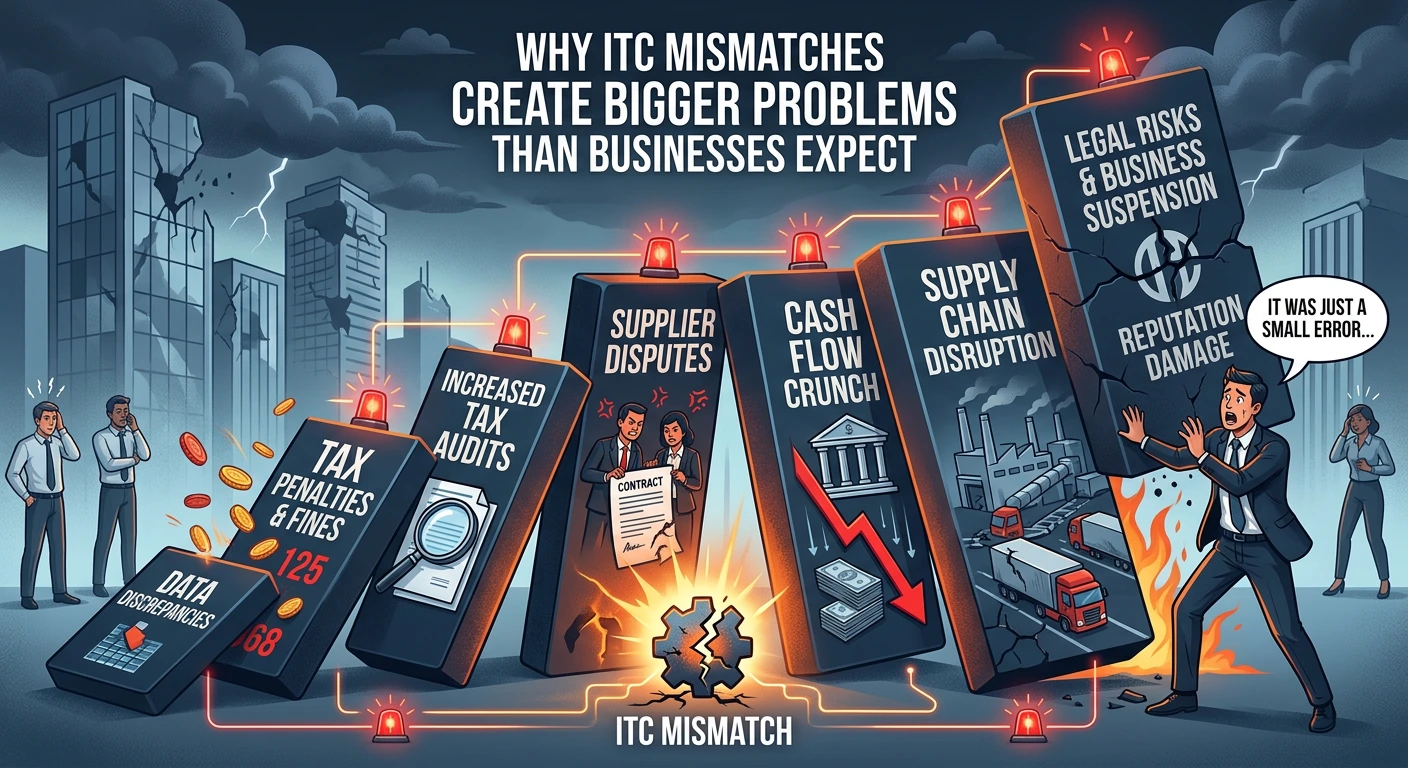
ITC mismatches often appear minor at first, but their impact can be much larger than businesses expect. They affect cash flow, increase reconciliation effort, create compliance risks, and consume valuable finance team resources.
By maintaining accurate purchase records, performing regular reconciliation, monitoring supplier compliance, and addressing discrepancies early, businesses can significantly reduce ITC-related challenges. A proactive approach to ITC management not only strengthens GST compliance but also supports healthier financial operations and long-term business growth.