




PUGALENTHI
Updated on
06-04-2026
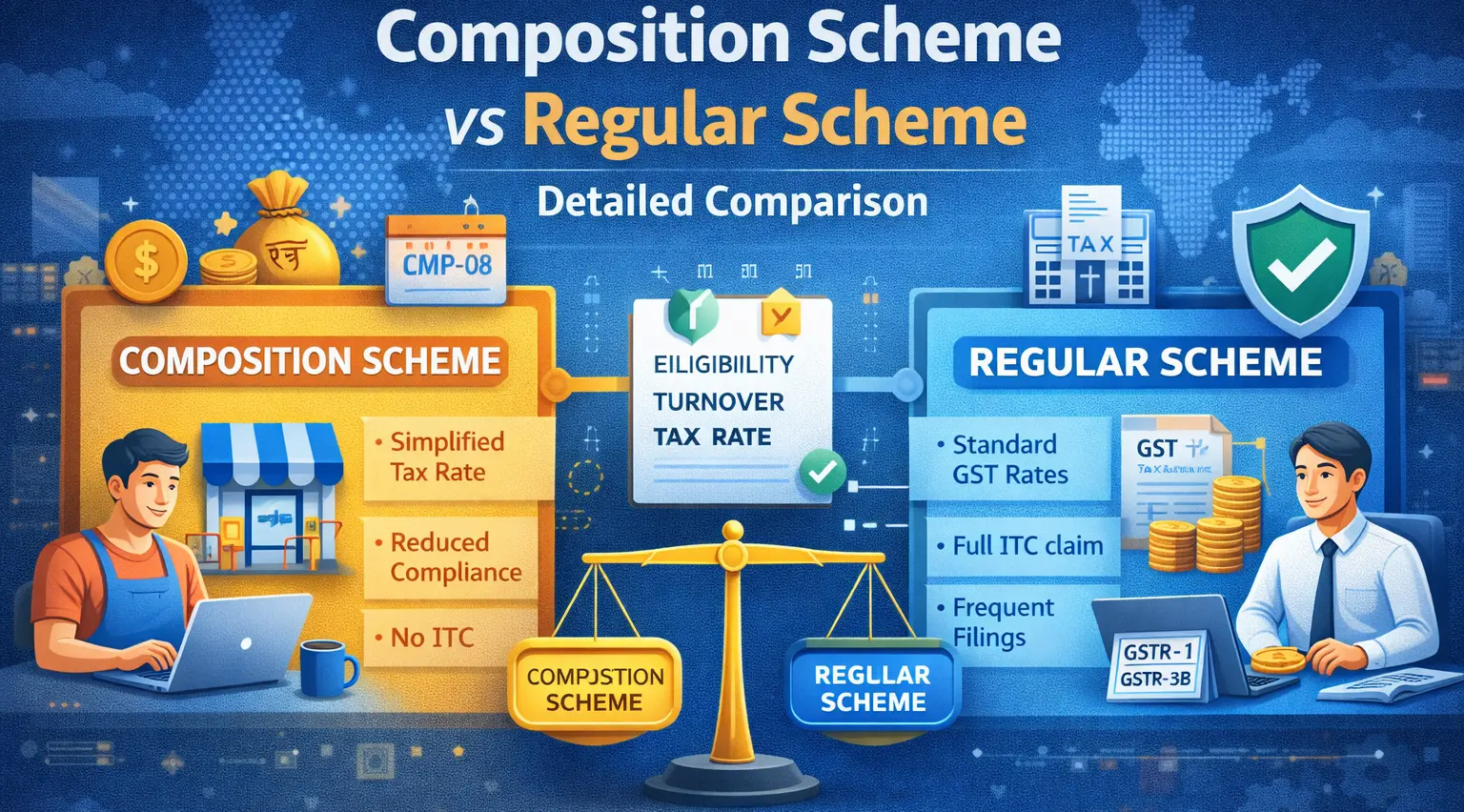
Composition Scheme vs Regular Scheme: Detailed Comparison
Navigating through the complicated and intricate world that makes up GST (goods and services tax) in India, businesses have an important decision to make with regard to which of the GST schemes is right for them. Making this choice is vital as it will allow them to be compliant with the tax system and also have the most tax-efficient outcomes possible. In this article, we will provide a detailed comparison of the two different types of GST schemes – the Composition Scheme versus the Regular Scheme – highlighting their respective differences as well as some similarities. We do this so that businesses in India can make informed decisions that are best suited for them when it comes to GST scheme selection.
Understanding GST Schemes in India
India's GST system offers businesses the option to choose between two primary schemes: the composition scheme and the regular scheme. Each has its unique set of rules and requirements, making the decision to opt for one over the other a significant one.
Why Choosing the Right Scheme Matters
Selecting the correct scheme affects compliance, tax efficiency, and business operations. A wrong choice can lead to:
- Increased compliance burden.
- Higher tax liability.
- Loss of competitive advantage.
Hence, understanding the nuances of each scheme is critical for business efficiency.
What is the Composition Scheme?
The composition scheme is designed for small taxpayers, offering a simplified tax structure with low compliance requirements. Here's a quick overview:
- Eligibility: Turnover doesn’t exceed Rs. 1.5 crore. (Rs. 75 lakhs for special category states)
- Tax Rates: Lesser than regular rates, generally 1% for traders, 2% for manufacturers, and 5% for restaurants.
- Compliance: Quarterly return filing with no input tax credit (ITC) claims.
What is the Regular Scheme?
The Regular Scheme is available to all eligible businesses with no upper turnover limit. This scheme is more comprehensive than the composition scheme:
- Eligibility: Open to all taxpayers.
- Tax Rates: Based on the type of goods or services offered.
- Compliance: Monthly/Quarterly filing with ITC availability.
Key Differences Between Composition and Regular Scheme
Eligibility Criteria
- Composition Scheme: Limited to businesses with an annual turnover below the specified threshold.
- Regular Scheme: No turnover limit, open to all businesses.
Turnover Limits
- Composition Scheme: Applicable to businesses with turnover up to Rs. 1.5 crore.
- Regular Scheme: Not bound by a turnover cap.
Tax Rates
- Composition Scheme: Fixed, lower tax rates.
- Regular Scheme: Standard GST rates as applicable to goods and services.
Return Filing Requirements
- Composition Scheme: Simplified quarterly returns.
- Regular Scheme: Monthly or quarterly returns based on turnover.
Input Tax Credit (ITC) Availability
- Composition Scheme: No ITC available.
- Regular Scheme: Full ITC claims possible.
Invoicing Rules
- Composition Scheme: Simple bill of supply without tax component.
- Regular Scheme: Detailed tax invoice with GST component.
Compliance Burden
- Composition Scheme: Lower compliance load due to fewer filings.
- Regular Scheme: Extensive bookkeeping and detailed reporting.
Advantages and Disadvantages of Each Scheme
Composition Scheme
Advantages:
- Simplified compliance with fewer returns.
- Lower tax rates beneficial for price-sensitive markets.
Disadvantages:
- No ITC, leading to potential cost disadvantages.
- Limited applicability based on turnover.
Regular Scheme
Advantages:
- Access to ITC, reducing the cumulative tax burden.
- No turnover restrictions.
Disadvantages:
- Higher compliance and administrative costs.
Practical Examples for Small Businesses
Consider a local restaurant with a turnover of Rs. 80 lakh. Under the composition scheme, they pay 5% GST and file returns quarterly, allowing for simplified operations. However, a manufacturer with turnovers exceeding Rs. 2 crore might benefit from the regular scheme, claiming ITC to reduce overall tax liability.
When to Choose the Composition Scheme?
- For small traders with limited turnover.
- When operating in highly price-sensitive industries.
- If ITC is not a significant concern for business operations.
When to Opt for the Regular Scheme?
- If turnover exceeds the composition limit.
- For businesses benefiting significantly from ITC.
- When a detailed tax invoice is required for operations.
Common Misconceptions and Mistakes
- Assuming composition scheme is always cheaper.
- Overlooking the benefits of ITC under the regular scheme.
- Failing to evaluate turnover rules annually.
Quick Comparison Summary
- Turnover Limit: Composition < Regular
- Tax Rates: Composition < Regular
- Compliance: Composition < Regular
- ITC: Regular > Composition
Best Practices for Scheme Selection
- Evaluate turnover and business model annually.
- Use GST software for accurate compliance tracking.
- Consult with GST experts to align the scheme with business goals.
Conclusion
In conclusion, selecting between the composition and regular GST schemes is contingent on a business's unique circumstances. By understanding the key differences, potential advantages, and pitfalls, businesses can make strategic decisions that foster growth and compliance. For seamless GST operations, adopting GST software and leaning on expert advice are recommended steps. This ensures that businesses not only comply with GST regulations but also thrive within the evolving economic landscape of India.
LEDGERS
LEDGERS assists with compliance relating to GST through the integration of reconciliations into your accounting processes to allow the speedy identification of errors in records prior to incurring any penalties or interest. LEDGERS allows you to automate the process of synchronizing your GSTN data and tracking invoices on an invoice-by-invoice basis eliminating the need for manual corrections and the time-consuming process of verifying transactions at the end of a reporting period through the use of automatic validations from the system to facilitate revenue compliance activities.