




PUGALENTHI
Senior Developer
Updated on
03-03-2026
Correcting GST Errors After Return Filing: A Practical Guide
Filing Goods and Services Tax (GST) returns accurately is vital for businesses to maintain compliance and avoid penalties. However, even the most meticulous accountants can make mistakes. This guide, aimed at business owners and accountants, will focus on correcting common GST errors after return filing, specifically in GSTR-1 and GSTR-3B.
Common Types of Errors in GSTR-1 and GSTR-3B
Understanding the types of errors that occur in GST return filings is the first step. Here's a breakdown:
- Incorrect Invoice Details: Errors such as wrong GSTIN, invoice numbers, or dates.
- Wrong Tax Amounts: Mistakes in calculating the GST rate, whether underpayment or overpayment.
- ITC Mismatches: Discrepancies in Input Tax Credit claims between filed returns and purchase records.
- Missed Entries: Omissions in sales or purchase invoices.
Making Corrections Through Amendments
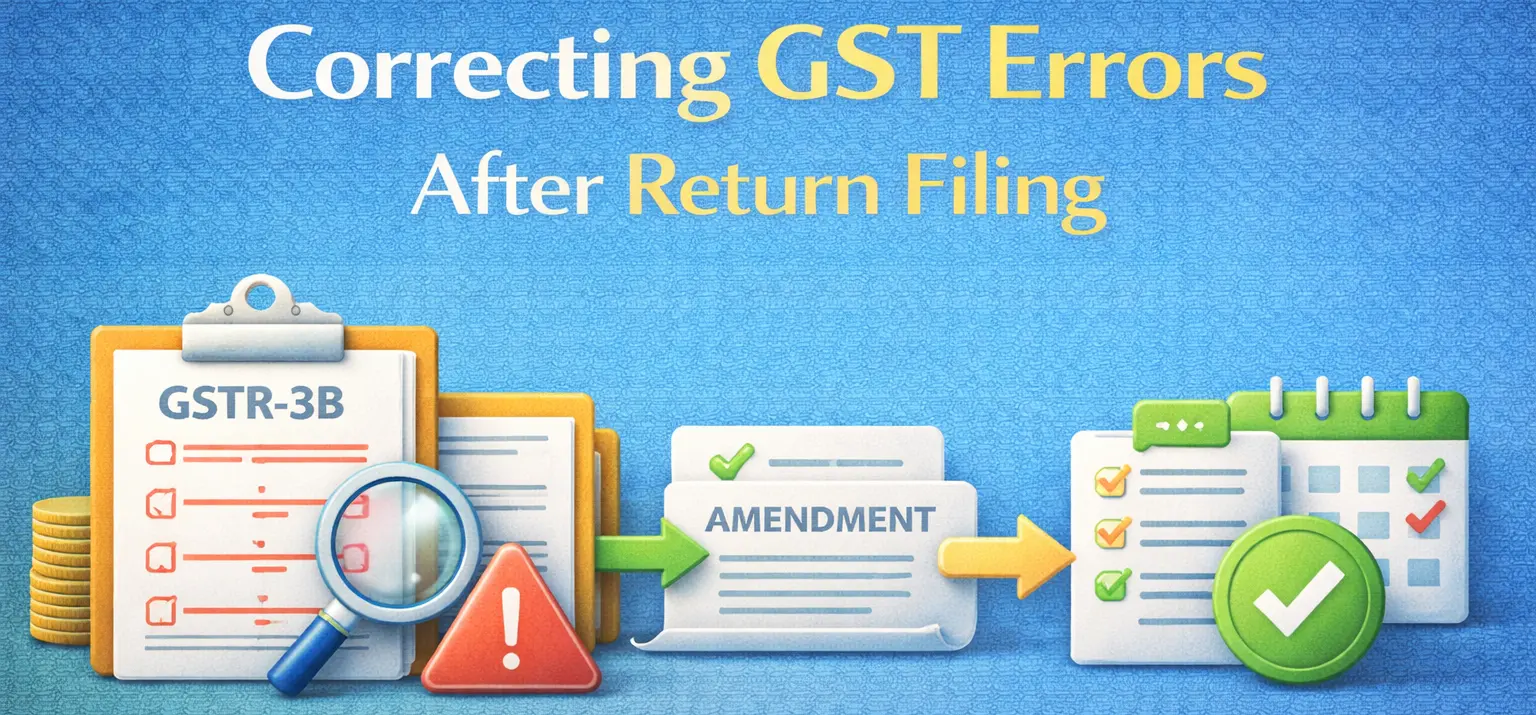
Fortunately, the GST system allows for corrections through specific amendments. Let's explore how amendments can help correct these errors:
Correcting Invoice Details
In subsequent returns, businesses can amend mistakes related to invoice details. Here’s how:
- Locate the "Amendment" section in the GST portal for the relevant return period.
- Identify the invoice with errors and input corrected details.
- Submit the amended returns with accurate data.
Adjusting Wrong Tax Amounts
Wrong tax amounts can disrupt cash flow, but addressing them is straightforward:
- Calculate the correct tax liability or excess payment in your records first.
- Adjust the liability in the subsequent month's GSTR-3B return.
- Include appropriate calculations to justify the adjustment.
ITC Mismatches and Missed Entries
ITC mismatches can be corrected through reconciliation. Steps include:
- Regularly compare purchase records with GSTR-2A/2B to identify mismatches.
- Use a matching tool or reconciliation software for efficiency.
- Amend the return in which the error occurred or adjust in the current period.
Preventive Best Practices to Reduce Errors
Correcting errors is essential, but preventing them is even better. Here are some best practices:
Implement Strong Internal Controls
Develop procedures for data entry and review, ensuring every invoice is checked before filing.
- Designate responsibility for double-checking entries at different stages.
- Include verification steps for each component of the GST return.
Regular Reconciliation
Make periodic reconciliations a core part of the accounting routine:
- Monthly reconciliations can catch errors before they become problematic.
- Use tools for matching invoices and purchase records against GSTR-2A/2B.
Training and Up-Skilling
Ensure your team stays updated with GST regulations:
- Conduct regular training sessions to brief staff on new requirements.
- Encourage participation in webinars and workshops on GST practices.
Concluding Summary
Correcting GST errors after return filing involves identifying them early, utilizing amendments, and making necessary adjustments. Understanding the common types of errors like incorrect invoice details, wrong tax amounts, ITC mismatches, and missed entries is crucial. By incorporating amendments and reconciliation into practice, along with preventive measures such as robust internal controls, regular reconciliation, and continuous employee training, businesses can minimize errors effectively. Ultimately, maintaining accuracy in GST filings will not only ensure compliance but also optimize tax liabilities, thereby strengthening business credibility and operations.
With careful attention to detail and a systematic approach to corrections and preventive measures, businesses can navigate the complexities of GST filing with confidence and ease. Prioritizing accuracy and utilizing available resources will ensure successful GST compliance.
LEDGERS
LEDGERS simplifies your GST compliance by integrating reconciliation into your accounting workflow, enabling you to find mismatch errors in your records quickly before incurring penalties or interest. Automate the syncing of your GSTN data and invoice-level invoice tracking with LEDGERS, while eliminating the need for manual corrections and period-end follow-up with system-generated validations to streamline the revenue compliance process.