




PUGALENTHI
Updated on
30-07-2026
Data Security in Financial Applications: Best Practices
With the rise of the digital age, the importance of protecting sensitive financial data continues to increase across industries, and with the sensitive nature of GST processing, financial data security should be at the top of all businesses' priority lists. Protecting sensitive financial information (GSTINs, invoices, return filings, and ITCs) helps avoid breaches and leaks and ensures that businesses' financial information remains secure and confidential from unauthorized access. Especially when using GST APIs and GSP Services, businesses that interact with GST services should always maintain superior data security standards.
The Sensitivity of Financial and GST Data
GST data encompasses a range of sensitive information such as GST Identification Numbers (GSTIN), detailed invoices, return filings, and ITC records. This data, if compromised, could lead to financial losses, identity theft, or fraudulent activities. The digitization of these records has created an urgent need for strong data protection measures.
Risks Associated with Data Breaches
Data breaches can cause:
- Monetary losses
- Reputational damage
- Regulatory penalties
- Loss of customer trust
In a financially driven world, maintaining the confidentiality, integrity, and availability of data is fundamental for earning the trust of stakeholders and the public.
Importance of Data Security for GST Compliance Platforms
GST compliance platforms are essential for businesses to report and manage tax obligations efficiently. The integration and interaction with GST APIs and GSP services require stringent security practices to secure the data flow and prevent unauthorized access.
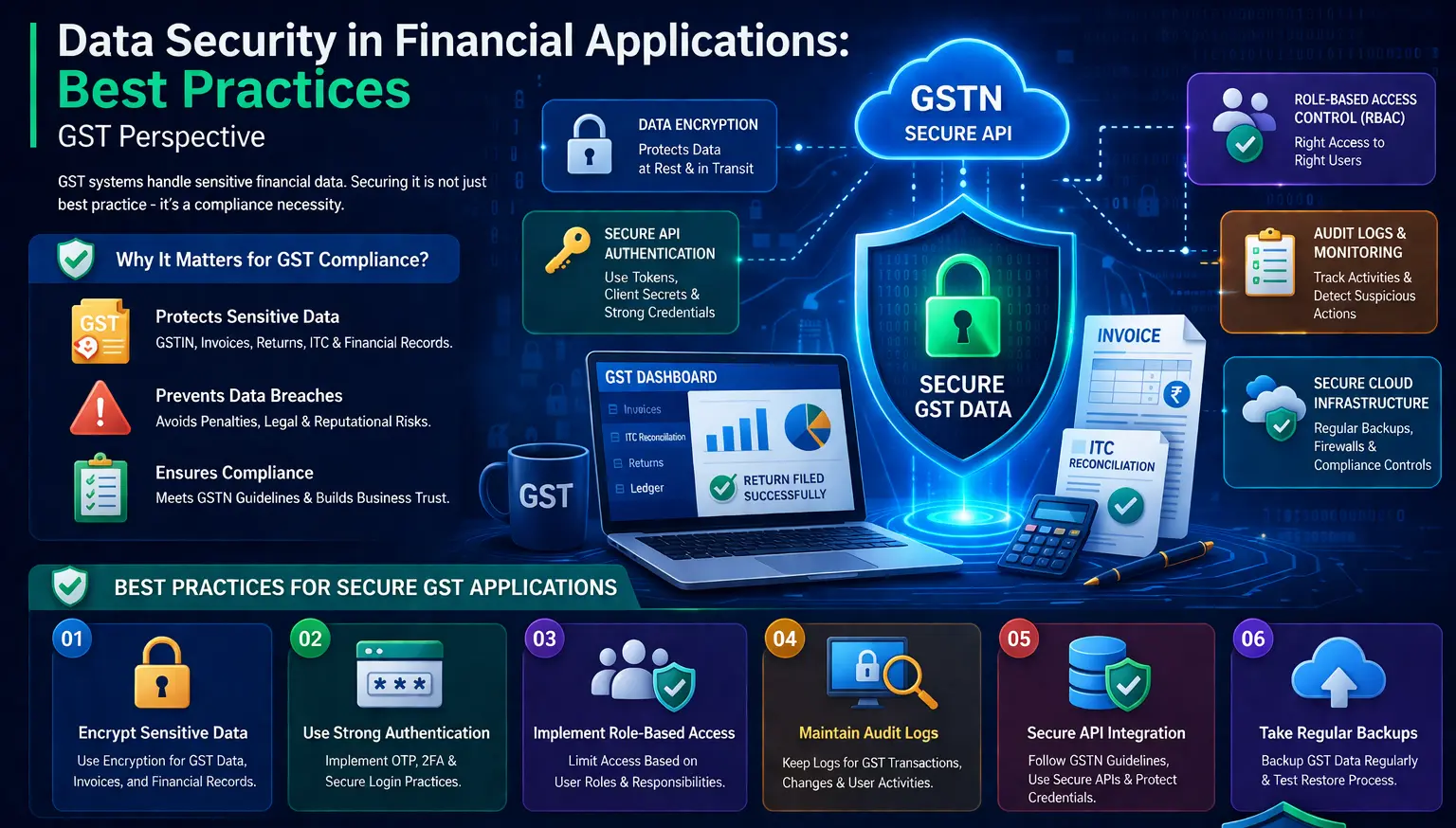
- Data Encryption: Encrypting data both at rest and in transit safeguards it against interception.
- Secure API Authentication: Secure API tokens prevent unauthorized access to GST systems.
- Role-Based Access Control (RBAC): Ensures only authorized users access specific data.
- Audit Logs: Help track access and changes to data, crucial for detecting anomalies.
- Secure Cloud Infrastructure: A resilient and secure infrastructure protects against external threats.
Protecting GST Data during API Communication
API security is vital to protect sensitive GST data during exchanges. Best practices include:
- Using HTTPS protocols for encrypted communication
- Handling API keys securely and rotating them regularly
- Implementing security headers to protect API vulnerabilities
- Following stringent GSTN guidelines for compliance
Practical Scenarios for Securing GST Data
Securing GST Return Filing Systems
Systems handling GST return filings should employ end-to-end encryption, enforce strong password policies, and apply regular software updates to mitigate security threats.
ITC Reconciliation and Multi-user Accounting Platforms
These systems should benefit from role-based access and multi-factor authentication to ensure that only authorized users can view or alter sensitive reconciliation data. Moreover, comprehensive logging of user actions helps in maintaining audit trails and accountability.
Common Vulnerabilities in GST Data Security
Some recurring vulnerabilities include:
- Weak password policies
- Improperly configured security settings
- Poor data storage management
- Unmonitored access logs
Actionable Recommendations for Enhanced Security
Implementing the following can significantly enhance GST data security:
- Conducting regular security audits
- Adopting token-based authentication mechanisms
- Employing data masking strategies
- Implementing robust backup and disaster recovery plans
Ensuring Compliance, Trust, and Reliability
Compliance with regulatory requirements is a key pillar in data security. Reliance on GST software that upholds compliance not only ensures alignment with legal standards but also builds trust and reliability.
Conclusion
The article provides "Data Security in Financial Applications: Best Practices", which outlines a wealth of information for protecting both GST and financial information (through the implementation of strict security policies, compliance to GST requirements, and advanced IT best practices). When organizations are using these policies as part of their financial platforms, they will be able to further protect their data and increase their reputation and the trust of their customers. As a result of the actions outlined in the guidelines provided within this article, organizations will be able to protect their GST information from threats and remain compliant while building trust with their customers.
LEDGERS
LEDGERS assists with compliance relating to GST through the integration of reconciliations into your accounting processes to allow the speedy identification of errors in records prior to incurring any penalties or interest. LEDGERS allows you to automate the process of synchronizing your GSTN data and tracking invoices on an invoice-by-invoice basis eliminating the need for manual corrections and the time-consuming process of verifying transactions at the end of a reporting period through the use of automatic validations from the system to facilitate revenue compliance activities.