




PUGALENTHI
Updated on
30-07-2026
Quarterly vs Monthly GST Filing: Which is Better?
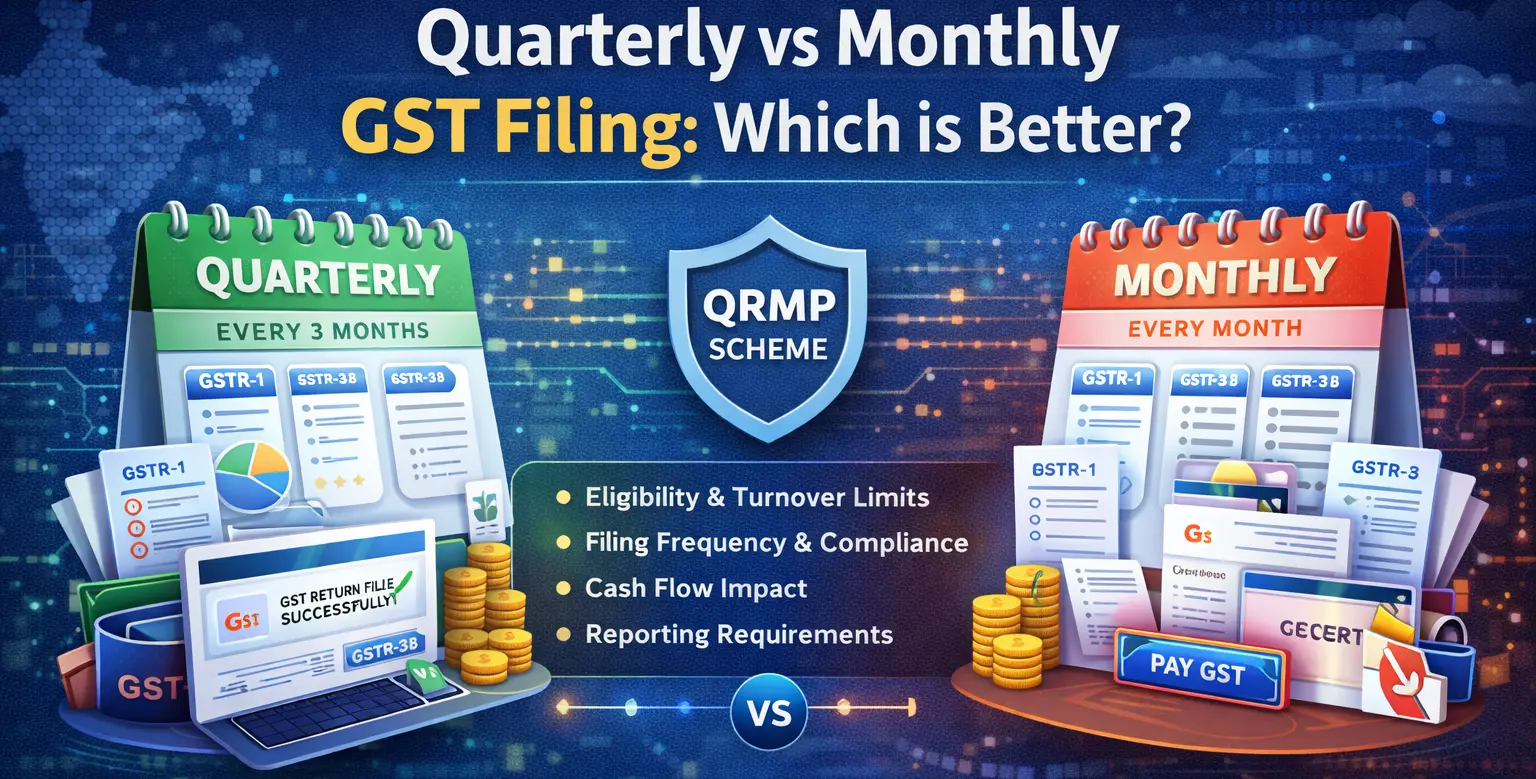
The GST Return Filing Process is important for any business operating in India. The frequency at which your business files its GST returns (Quarterly or Monthly) is a very important decision that will affect not only compliance with GST regulations but also how you manage your cash-flow. The introduction of the Quarterly Return Monthly Payment (QRMP) scheme gives businesses even more options. This article will provide businesses with some basic guidelines to follow as they determine which option is best for them based on advantages and disadvantages of both options.
Understanding GST Return Filing Requirements
GST return filing is a mandatory compliance requirement for all businesses with a GST registration. The return filing process requires businesses to report their sales, purchases, tax collected, and tax paid. Choosing the right frequency for filing these returns (quarterly or monthly) is crucial as it impacts various aspects of a business.
The Importance of Selecting an Appropriate Filing Frequency
Choosing the right filing frequency can directly affect a business's cash flow, compliance burden, and tax payment schedule. Businesses should consider their transaction volumes, cash flow patterns, and overall compliance capabilities when deciding on filing frequency.
Exploring Filing Options: Quarterly vs Monthly
Quarterly Filing and the QRMP Scheme
Eligible taxpayers can opt for quarterly filing under the QRMP scheme, introduced to ease the compliance burden for small taxpayers. Here's a breakdown:
- Eligibility: Businesses with an aggregated turnover of up to INR 5 crores in the previous financial year.
- GSTR-1 and GSTR-3B: Filed quarterly, while payment of tax is made monthly.
- Cash flow impact: Less frequent return filing can aid in managing working capital.
Monthly Filing
Monthly filing is typically chosen by larger businesses with higher transaction volumes. Here’s what it involves:
- Eligibility: No restrictions; available to all taxpayers.
- GSTR-1 and GSTR-3B: Filed every month, ensuring timely tax credits.
- Cash flow impact: Frequent compliance might require consistent cash flow, which could strain smaller businesses.
Comparing Quarterly and Monthly Filing Across Key Factors
Eligibility Criteria and Turnover Limits
Taxpayers with up to INR 5 crore in turnover can opt for quarterly filing via QRMP. Monthly filing has no upper turnover limit, making it suitable for large enterprises. SMEs and growing businesses need to evaluate turnover projections to make the optimal choice.
Compliance Burden and Reporting Requirements
- Quarterly Filing: Lesser frequency reduces the compliance burden but requires effective cash flow management for monthly tax payments.
- Monthly Filing: Ensures prompt deposit of taxes and ITC claims but requires more frequent engagement with compliance procedures.
Impact on Cash Flow and Frequency of Tax Payments
Under the QRMP, businesses make monthly payments either through a fixed sum method or the self-assessment method:
- Fixed Sum Method: A pre-determined amount paid monthly, smoothening cash flow.
- Self-Assessment Method: Payments based on actual tax liability, offering flexibility in cash management.
Advantages and Disadvantages
Each option carries its own benefits and drawbacks:
Quarterly Filing:- Reduced compliance burden with fewer filings.
- May delay the claim of Input Tax Credit (ITC) due to quarterly GSTR-1 filing.
- Facilitates quicker ITC claims and smoother transactions with GST-compliant businesses.
- Higher frequency can exert pressure on resources for regular compliance.
Common Misconceptions and Mistakes
Choosing the right frequency often involves misconceptions that can lead businesses astray:
- Assuming quarterly filing under QRMP is a get-out-of-compliance card; monthly payments are mandatory.
- Overlooking future turnover projections that might necessitate a switch in filing frequency.
Practical Advice: When to Opt for Quarterly vs Monthly Filing
The decision largely depends on business size, volume of transactions, and compliance capability:
- Small Businesses: Quarterly is beneficial for reduced paperwork and managing limited resources.
- SMEs: Consider quarterly to maintain cash flow while managing moderate transaction volumes.
- Large Enterprises: Monthly filing ensures efficient tax credit claims and compliance integrity.
Leverage GST Software and Automation Tools
Efficient GST return filing can be effortless with the right technology. Leveraging GST software helps streamline the process, minimizing human error and saving time. Automation tools ensure that deadlines are met, improving compliance accuracy and easing the burden of regular filing activities.
Conclusion
Both quarterly and monthly GST filing options present unique advantages tailored for different business needs. By considering transaction volumes, cash flow impacts, and compliance capacities, businesses can make informed decisions about their GST filing frequency. Adopting GST software solutions can further optimize the filing process, allowing businesses to focus more on growth than on intricate compliance procedures. The right choice will mitigate risks, ensure regulatory compliance, and maintain healthy financial management.
LEDGERS
LEDGERS assists with compliance relating to GST through the integration of reconciliations into your accounting processes to allow the speedy identification of errors in records prior to incurring any penalties or interest. LEDGERS allows you to automate the process of synchronizing your GSTN data and tracking invoices on an invoice-by-invoice basis eliminating the need for manual corrections and the time-consuming process of verifying transactions at the end of a reporting period through the use of automatic validations from the system to facilitate revenue compliance activities.