




SIVAKRISHNAN V
Updated on
30-07-2026
E-Stamping Agreements, POA, LLP Agreements, and Partnership Deeds Explained
In today's digital era, managing legal documentation has become increasingly sophisticated yet accessible. For individuals and businesses alike, understanding the nuances of E-Stamping Agreements, Power of Attorney (POA), Limited Liability Partnership (LLP) Agreements, and Partnership Deeds is essential. Comprehending these terms not only aids in safeguarding assets but also streamlines legal undertakings by minimizing bureaucratic obstacles. This article sheds light on these essential legal concepts, focusing on their significance in modern business and personal transactions.
What is E-Stamping?
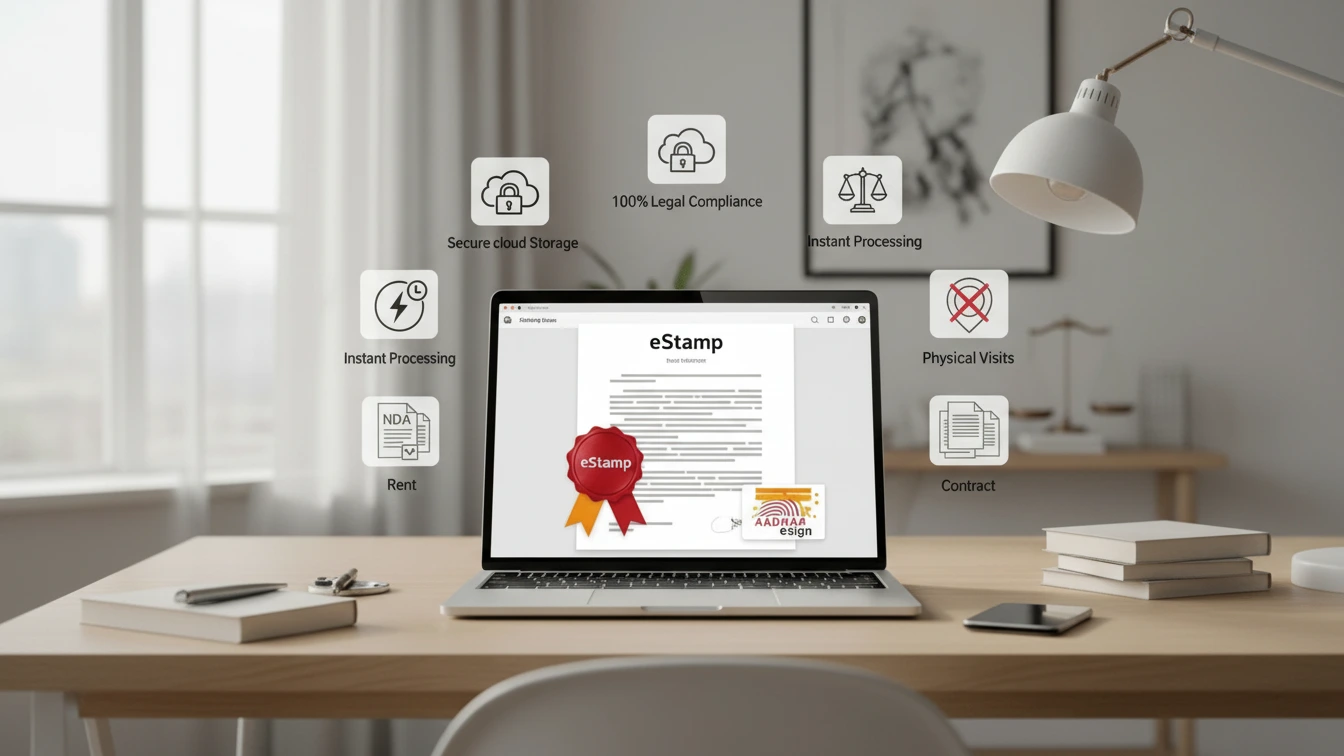
E-stamping is a convenient digital method for paying stamp duty, enabling the eradication of counterfeit stamp papers. Its introduction has effectively revolutionized the processing of legal documents, such as property papers, agreements, and financial instruments, by eliminating old-school paper-based stamping methods.
Benefits of E-Stamping
- Security: Prevents the use of counterfeit stamp papers through secure, digital verification processes.
- Convenience: Eliminates the hassle of procuring physical stamp papers, enabling easy access and processing online.
- Time-Saving: Reduces processing time by automating transactions.
- Accessibility: Availability of e-stamp certificates online simplifies access for users across different geographic locations.
Understanding Power of Attorney (POA)
A Power of Attorney (POA) is a legal document that authorizes one person (the agent) to act on behalf of another (the principal). It is instrumental in situations where the principal is unable to execute legal, financial, or medical decisions. Understanding POA is crucial in ensuring that the agent acts in the principal's best interests.
Types of POA
- General POA: Grants broad powers for the agent to make decisions across a range of issues.
- Specific POA: Limits the agent's powers to particular matters or cases.
- Durable POA: Remains in effect even if the principal becomes incapacitated.
- Medical POA: Empowers the agent to make healthcare decisions on behalf of the principal.
LLP Agreements: A Modern Approach to Partnerships
Limited Liability Partnership (LLP) is a hybrid structure that combines the flexibility of a partnership with the advantages of limited liability. An LLP Agreement defines the rights, duties, mutual responsibilities, and relations among partners in this unique organizational form.
Key Features of LLP Agreements
- Limited Liability: Partners have limited liability, protecting personal assets from business debts.
- Flexibility: Provides partners the ability to decide the management structure and profit-sharing mechanisms.
- Continuity: LLPs have perpetual succession, meaning operations continue despite changes in partnership.
- Separate Legal Entity: LLPs are distinct from their partners, enabling them to own property, incur debts, and sue in their own name.
Decoding Partnership Deeds
A Partnership Deed is a vital legal document that constitutes the framework of a partnership firm. It details the roles, responsibilities, profit-sharing ratios, and terms of operation among partners, reducing ambiguity or conflicts by ensuring clarity in financial and managerial aspects.
Components of a Partnership Deed
- Name and Address of the Firm: Identifies the partnership legally.
- Nature of Business: Clarifies what the partnership was established to conduct.
- Duration of Partnership: States the agreed period for which the partnership will last.
- Capital Contribution: Details each partner's financial contribution to the firm.
- Profit Sharing Ratio: Specifies how profits and losses are divided among partners.
The Role of Technology in Legal Documentation
The integration of technology within legal frameworks, including E-Stamping, facilitates faster, more accurate processing of documentation, alleviating traditional burdens and inefficiencies. Cloud-based solutions and digital signatures have profoundly impacted documentation's legality, acceptance, and validity across various jurisdictions.
Recent Developments
- Blockchain: Utilized to ensure traceability and authenticity in legal documentation.
- AI and Machine Learning: Deployed to review and draft documents, ensuring greater precision and reduced legal costs.
- Pandemic-Driven Innovations: Remote working trends have expedited the digitalization of virtual notary and legal support services.
Conclusion
Navigating the complexities of today’s legal systems means developing practical solutions such as E-Stamping Agreements, POA, LLP Agreements, and Partnership Deeds, allowing stakeholders to be more informed about the process at hand through the use of these resources. Ultimately, harnessing these tools, learning about their benefits, and leveraging their utility can provide individuals and businesses with the legal framework necessary to make sound decisions with confidence while expediting the legal process and providing secure methods to do so. Staying up to date with these digital advancements and legal systems will allow stakeholders to create a more effective strategic decision-making process while also allowing for improved efficiencies in the legal process overall.