
SWATHI S
Updated on 30-07-2026
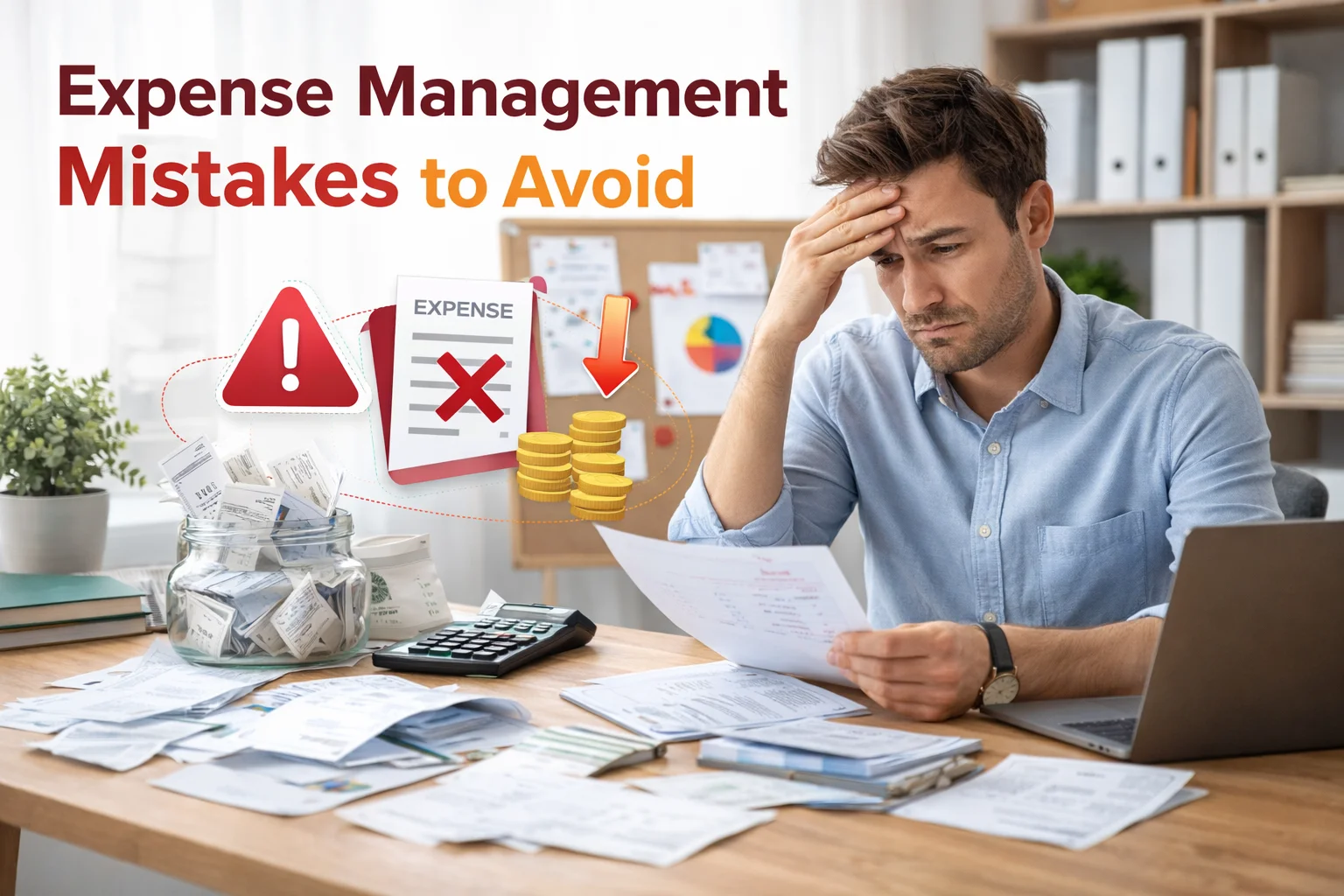
Expense management is a cornerstone of a business's financial stability and long-term growth. However, many organizations stumble over common mistakes that hinder their financial operations and efficiency. From inadequate reporting and unnecessary costs to inefficient operations, these challenges can disrupt financial control. By identifying and avoiding these pitfalls, businesses can improve their financial management and streamline their operations.
One critical mistake businesses make is failing to establish clear rules for expense management. In the absence of well-defined guidelines, employees often find themselves unclear on:
This ambiguity often leads to reporting errors and policy breaches. To avoid such issues, companies must implement clear and detailed expense policies that everyone understands and follows.
Relying on manual processes, such as spreadsheets or paper, for managing expenses is another pervasive mistake. This approach is prone to errors, including:
Adopting an automated expense management system helps streamline processes, reduce errors, and improve overall accuracy.
Procrastination in submitting expense reports poses a significant challenge for finance teams. Such delays can:
Encouraging timely expense submissions ensures financial records remain accurate and up-to-date.
Misclassification of expenses makes it challenging to analyze financial data effectively. Without proper categorization:
Standardizing expense categories is essential for drawing meaningful insights from financial data.
An unsystematic approval process can decelerate expense management. Common issues include:
Implementing automated approval workflows ensures better control and expedited processing.
Neglecting to enforce expense policies can lead to overspending and potential misuse of company funds. To mitigate this, employing systems that automatically flag policy violations maintains compliance and financial control.
Without real-time expense tracking, finance teams lack current insight into spending, potentially causing:
Real-time visibility enables proactive monitoring and helps businesses stay within budgetary limits.
Failing to integrate expense management systems with accounting software leads to:
Integrating these systems ensures seamless data flow and enhances operational efficiency.
Complex or cumbersome expense reporting processes can frustrate employees, potentially resulting in:
Providing a user-friendly system encourages employees to adhere to proper expense management procedures.
Many businesses neglect to regularly audit their expense management processes. Without audits:
Conducting regular audits helps identify and rectify issues, bolstering the overall expense management system.
To steer clear of these common errors, businesses should concentrate on improving their expense management by:
By taking a proactive approach, companies can achieve better financial control and ensure long-term success.
Solutions like Ledgers can help businesses avoid frequent missteps in expense management. Ledgers provides automation, real-time tracking, policy enforcement, and seamless integrations-enabling effective expense management. By eliminating inefficiencies and enhancing visibility, businesses can develop an expense management system that supports growth and maintains financial discipline.
In conclusion, optimizing expense management through the identification and avoidance of common mistakes results in improved financial oversight, operational efficiency, and overall business success.
