




HARI KRISHNAN S
Senior Developer
Updated on
23-06-2026
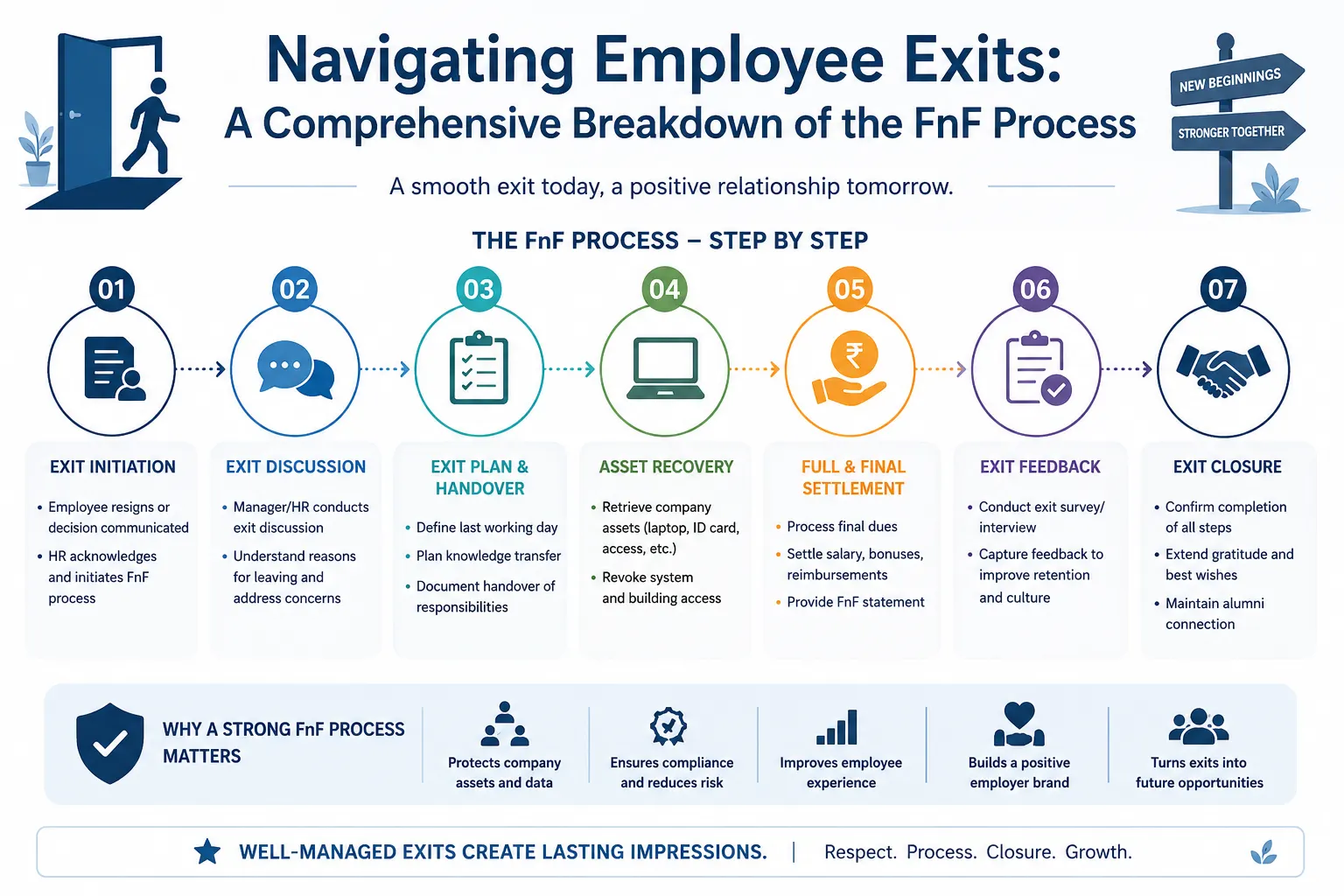
Navigating Employee Exits: A Comprehensive Breakdown of the FnF Process
Employee exits can be a complex and sensitive phase for any organization. Navigating these exits requires a clear understanding of the Full and Final (FnF) Settlement process. This guide will demystify the FnF process, providing valuable insights on how to handle employee departures efficiently, maintain compliance, and ensure a seamless transition.
Understanding the Full and Final Settlement Process
When an employee leaves, whether voluntarily or involuntarily, the organization must settle any remaining dues through a well-defined process. This is known as the Full and Final (FnF) Settlement. It involves various financial and administrative tasks that ensure both the company and the employee part ways amicably and legally.
Key Components of the FnF Process
- Calculating Dues: This is the most critical aspect, involving the calculation of overdue salaries, unpaid bonuses, leave encashments, and other earnings.
- Tax Deductions: Ensure proper calculation and deduction of taxes, in compliance with legal requirements.
- Provident Fund Transfers: Handle the transfer or withdrawal of Provident Fund contributions, ensuring prompt communication with relevant institutions.
- Gratuity Payments: If applicable, calculate gratuity amounts based on tenure and make timely payments.
- Clearances: Secure clearances from all departments, certifying that the employee has no dues pending.
- Exit Interviews: Conducting interviews can provide valuable feedback and insights for your organization.
The Importance of a Structured FnF Process
Implementing a structured FnF process ensures:
- Compliance: Adhere to local laws and regulations, reducing the risk of legal complications.
- Transparency: Help build trust as employees see that the company handles exits fairly.
- Efficiency: Streamline tasks and avoid delays, which can lead to dissatisfaction and disputes.
- Record-Keeping: Maintain accurate records of settlements, crucial for audits and future references.
Navigating Common Challenges
There are typical challenges that businesses face during the FnF process:
- Communication Gaps: Miscommunication can lead to misunderstandings about final dues and cause delays.
- Delay in Settlements: Prolonged processes can frustrate employees, affecting the organization's reputation.
- Compliance Issues: Failure to comply with statutory requirements increases the risk of legal repercussions.
Best Practices for an Effective FnF Process
1. Standardized Procedures
Developing a standardized FnF procedure ensures consistency and accuracy. Having a checklist for the entire process can prevent overlooked details and improve efficiency.
2. Clear Communication
Maintain clear communication with departing employees. Explain the FnF process, including timelines, and ensure they understand the components of their settlement.
3. Use of Technology
Leverage technology for automating tasks such as calculation of dues, tax deductions, and sending out settlement statements. This support minimizes human errors and speeds up the process.
4. Cross-Departmental Coordination
Facilitate coordination among HR, finance, and IT departments for seamless processing. Each department's role in finalizing the exit should be defined and communicated clearly.
5. Exit Interviews
Conducting an exit interview can uncover insights that help improve organizational culture and retention strategies. It’s an opportunity to learn why employees leave and what can improve.
Keeping Up with Legal Updates
Law and tax requirements related to the FnF process can change, so it is crucial for an organization to stay updated:
- Regularly review and adapt to changes in labor laws and tax policies.
- Seek legal counsel when required to ensure that all settlements comply with the latest standards.
The Role of HR in FnF Settlements
HR plays a pivotal role in managing employee exits. Key responsibilities include:
- Initiating the FnF process and guiding employees through each step.
- Ensuring all documentation is complete and accurate before the employee's departure.
- Acting as a liaison between departments to facilitate smooth processing.
Conclusion
Navigating employee exits and the FnF process can be an intricate task, but with a comprehensive understanding and structured approach, organizations can manage this phase efficiently. By implementing best practices, maintaining clear communication, and staying updated with legal requirements, you can minimize disputes and ensure that departures are handled professionally and respectfully. A well-executed FnF process not only assures departing employees of fair treatment but also reflects positively on your organization, enhancing its reputation and fostering a conducive workplace culture.