
RAGU M
Updated on 30-07-2026
In today's fast-paced business world, understanding financial statements is crucial for anyone involved in finance or business management. Whether you're a seasoned professional or new to the field, this walk-through guide aims to demystify financial statements, breaking down complex terminologies and presenting the most relevant information upfront. By following this guide, you will gain the knowledge needed to make informed financial decisions and better understand the financial health of any organization.
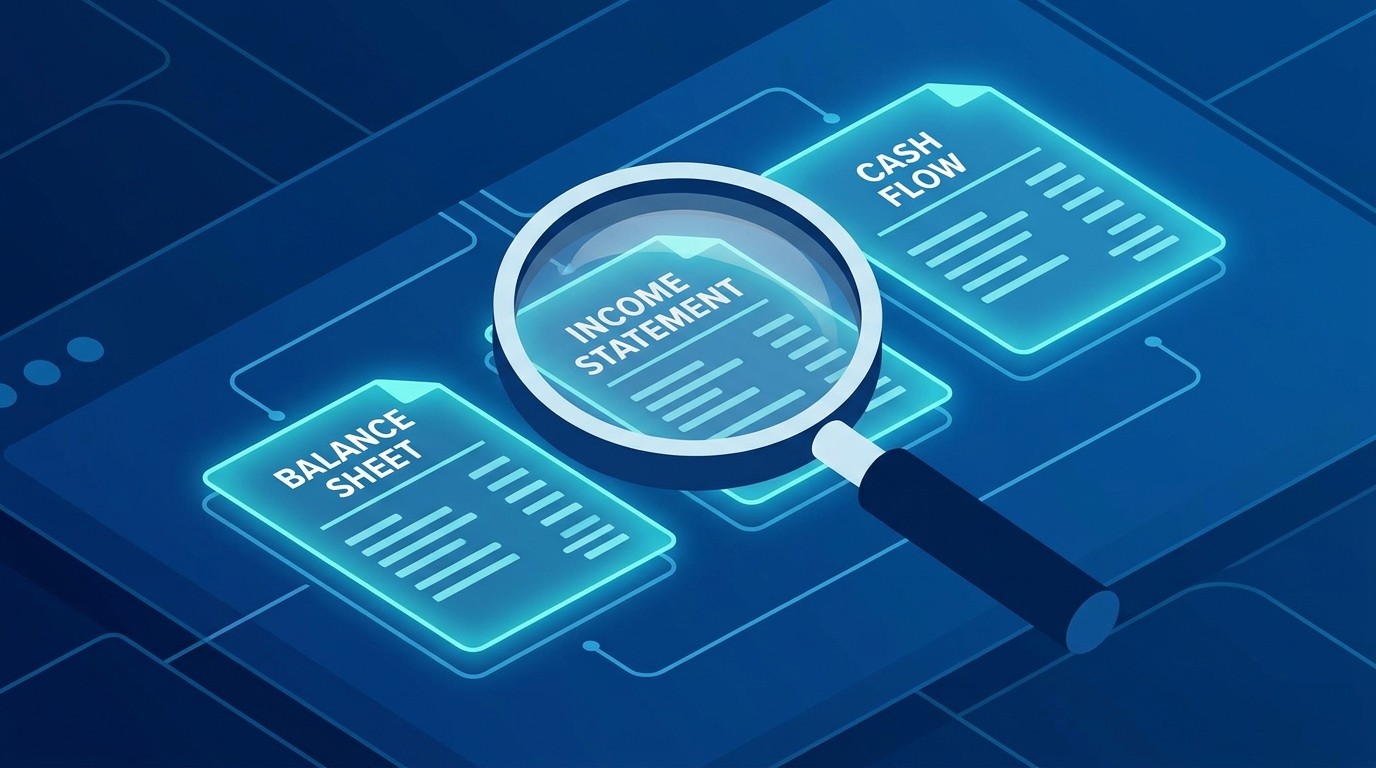
Financial statements are structured reports detailing a company's financial performance, position, and cash flow. They provide a quantitative overview of the financial activities within a business, serving as essential tools for stakeholders such as investors, creditors, and management. Financial statements generally include:
Financial statements play a pivotal role in decision-making processes. Here’s why they are indispensable:
The balance sheet provides a snapshot of a company's financial position at a particular point in time. It is divided into three main sections:
The income statement measures a company’s financial performance over a specific period, detailing income and expenses. It includes:
The cash flow statement shows how changes in the balance sheet and income affect cash and cash equivalents, segmented into:
This statement summarizes the changes in owners' equity over an accounting period, highlighting:
The ability to read and interpret financial statements is essential. Here are some aspects to consider:
The evolution of technology has significantly impacted how financial statements are prepared and analyzed. Key trends include:
Statements relating to an entity's finances signify much more than mere abstract data; they represent an assessment of an organization's overall performance. As organizations and industries move toward a digital environment, there has been a rise in the demand for greater levels of transparency and data-driven decision making. The use of financial statement data continues to be an essential resource for determining the liquidity position of a business, forecasting its ongoing operational results, and performing various types of valuations or transaction analysis. Understanding how to interpret financial statements will enable a person to become an active participant in the field of corporate finance, while also equipping them with tools to significantly increase their effectiveness in the corporate finance sector. Individuals interested in gaining insight into financial statement usage may research numerous resources and/or courses/other avenues related to financial data analysis that can assist in providing access to vast amounts of opportunity within the financial data analysis field.
Continue your journey, stay informed, and let financial statements be your guide in navigating the ever-changing financial environments — because understanding them is not just a necessity but an advantageous skill in today’s competitive world. Experience the digital statements in Ledgers.cloud
