




PUGALENTHI
Updated on
30-07-2026
GST Due Dates and Compliance Timelines Explained
Taxation can be an overly complicated matter, so it is very important for business owners to ensure they are complying with all the GST due dates. This GST Due Dates and Compliance Timelines Explained simply clarifies the various GST deadline obligations so they can better understand what needs to be filed each month or quarter to avoid costly interest and penalties.
Importance of GST Compliance
Tracking GST compliance timelines is more than a bureaucratic necessity; it is a critical component of financial health for any business. Failing to adhere to GST due dates can result in severe penalties. Timely filing ensures:
- Avoidance of interest and penalties.
- Improved cash flow management.
- Enhanced business credibility.
- Simplified auditing processes.
Key GST Return Due Dates and Timelines
Monthly Filings
Businesses registered under GST are generally required to file certain returns monthly. Here are the crucial monthly filings that must not be missed:
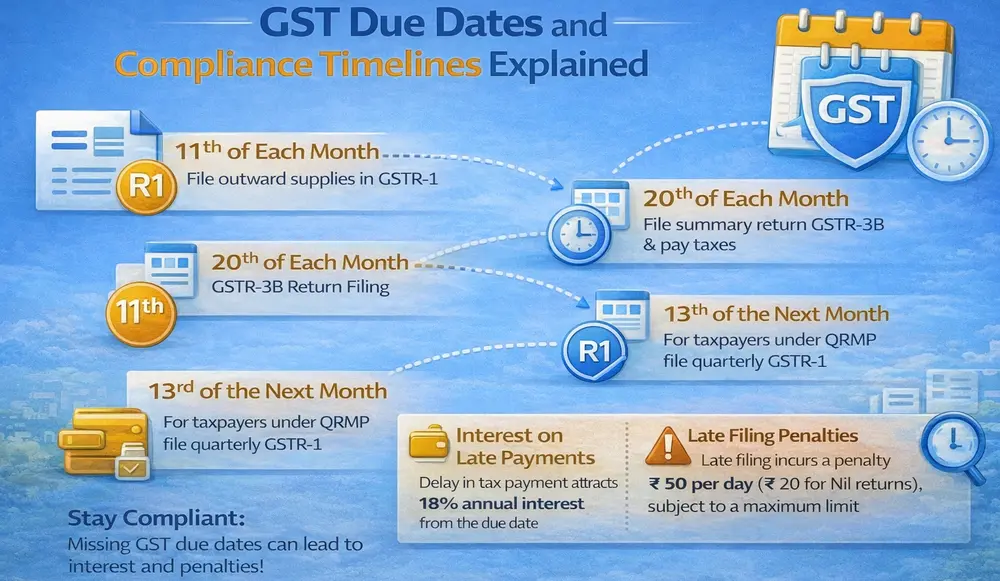
GSTR-1: Outward Supplies
Due Date: 11th of the following month.
This return captures details of all outward supplies or sales made by a business. Accurate reporting in GSTR-1 is essential as it impacts corresponding ITC claims by recipients.
GSTR-3B: Summary Return
Due Date: 20th of the following month.
This is a self-declaration and must include details of outward supplies and input tax credit (ITC) claimed.
Quarterly Filings
Businesses with a turnover of up to Rs. 5 crore may be eligible to file returns quarterly:
GSTR-1: Quarterly Filings
Due Date: 13th of the month following the quarter.
For eligible businesses, this is an opportunity to summarize sales or outward supplies on a quarterly basis.
GSTR-4: Annual Return for Composition Scheme Dealers
Due Date: 30th April of the following financial year.
This is applicable for businesses registered under the composition scheme, allowing them to file returns annually instead of quarterly.
GSTR-9: Annual Return
Due Date: 31st December of the following financial year.
This return is for summarizing the details of 2018-19 financial year transactions. It includes all business turnovers, taxes paid, and ITC claimed.
Consequences of Missing GST Due Dates
Missing the GST due dates can lead to several repercussions:
- Interest at the rate of 18% per annum is levied on the tax due.
- Late fees: Rs. 50 per day per act (CGST & SGST) are applicable until the return is filed.
- Continuous defaults can also lead to loss of input credit and notices from the department.
Tips for Efficient GST Compliance
Maintaining a tracking system for GST filings is essential. Here are a few tips to ensure that you never miss a deadline:
- Set reminders for due dates at least a few days in advance.
- Use spreadsheet trackers to manage due dates effectively.
- Delegate tasks to a dedicated team member if possible.
- Regularly reconcile your books to ensure the accuracy of filed returns.
Optimize Compliance with LEDGERS
LEDGERS software can significantly ease the burden of tracking and filing GST returns. With features designed to automatically track due dates and provide timely notifications, it helps businesses maintain seamless compliance. LEDGERS also offers comprehensive insights into financial data, ensuring accurate filings and optimized tax planning.
Conclusion
Understanding and adhering to GST due dates and compliance timelines is vital for every business. It can prevent non-compliance issues, additional costs, and operational disruptions. Tools like LEDGERS can greatly assist in staying on top of these requirements, allowing businesses to steer clear of the intricacies involved in manual tracking. By staying aware and using the right tools, businesses can ensure smooth operations and focus on growth rather than compliance headaches.
For reliable and efficient GST compliance, give LEDGERS a try and take the stress out of tracking GST due dates.