




PUGALENTHI
Updated on
30-07-2026
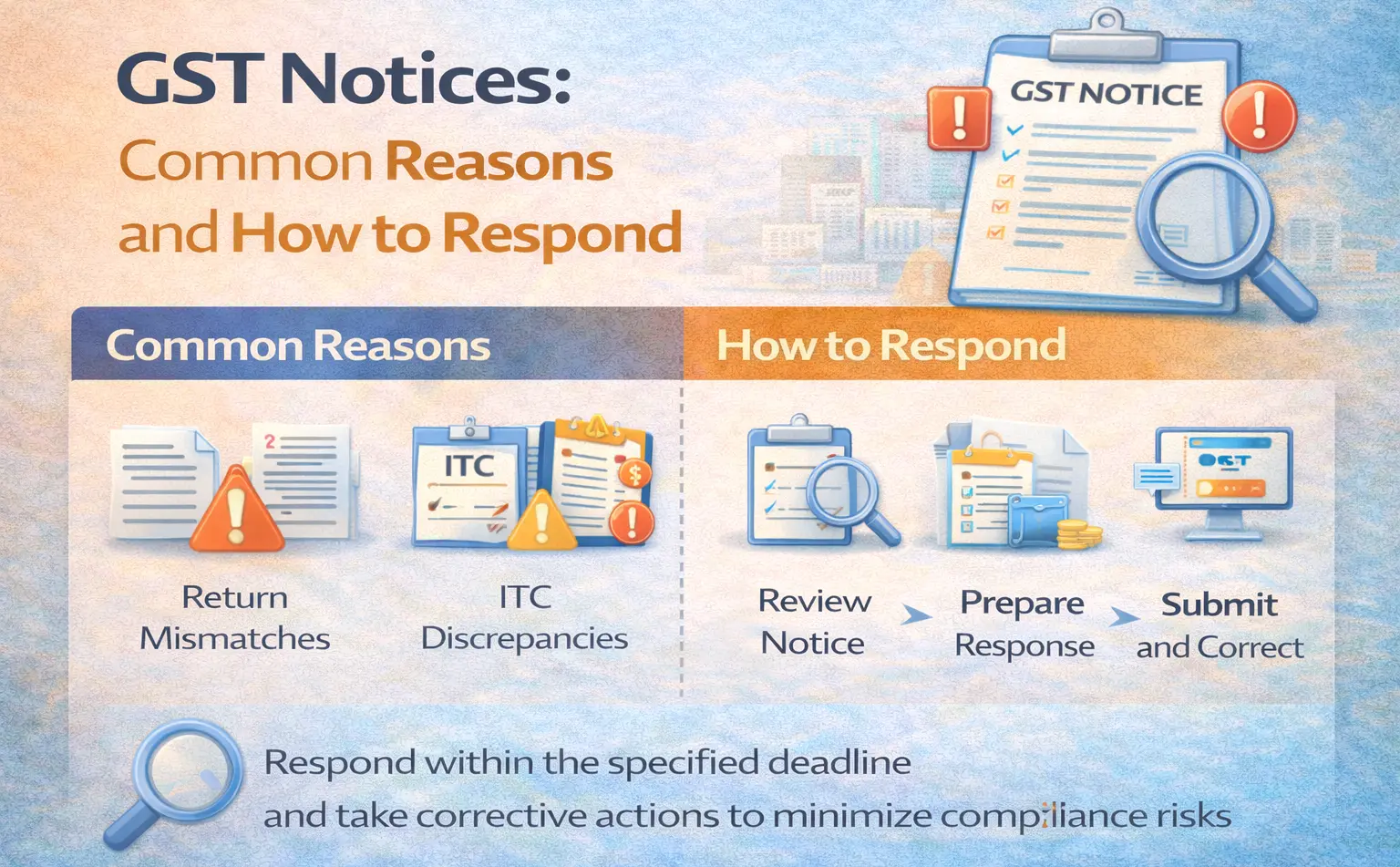
GST Notices: Common Reasons and How to Respond
A key component of tax compliance is the Goods and Services Tax (GST). No matter how diligent an organization is with its tax compliance, it could still receive GST Notices. This Simple and Practical Crescent Guide will help you understand what to do when you have received a GST Notice, how to read the notice and effectively respond to it, be aware of typical reasons for receiving GST Notices and applicable strategies for a timely and efficient response.
Common Reasons Businesses Receive GST Notices
Receiving a GST notice can be daunting for any business, but understanding the reasons behind these notices can ease concerns and aid in resolving issues promptly. Here are some of the most common reasons businesses might receive a GST notice:
- Mismatches in Returns: This occurs when there's a discrepancy between your GST return filings, such as GSTR-3B and GSTR-2A or 2B.
- ITC Discrepancies: Errors related to Input Tax Credit (ITC) claims, often due to wrong or missing information, lead to notices.
- Late Filings: Submitting GST returns after the due date can trigger penalties and notices.
- Tax Shortfalls: When the tax paid is less than what is due, leaving a shortfall.
Types of GST Notices
Understanding the type of notice received is critical for responding appropriately. The GST system primarily uses the following notices:
- Notice for Show Cause: Typically issued for mismatches or discrepancies asking for an explanation or additional information.
- Scrutiny Notice: Issued when returns are scrutinized and some issues are identified.
- Demand Notice: Sent when an officer determines a demand for tax, interest, or penalties.
How to Respond to GST Notices
Responding promptly and precisely to GST notices can help prevent further consequences. Here are structured steps to follow:
Step 1: Understand the Notice
Read the notice carefully to understand the reason, what information is being requested, and the timelines for response. Ensure you identify if it requires action or merely awareness.
Step 2: Collect Required Documentation
Gather all relevant documents that pertain to the notice:
- Previous GST returns
- Invoices or financial records
- Supporting documents for claimed ITC
Ensure all documents are accurate and complete. Reconciling your books can preempt further discrepancies.
Step 3: Prepare Your Response
Draft a clear and concise response addressing every point raised in the notice. Highlight and rectify errors with supportive documentation.
It's advisable to:
- Use the official GST portal wherever possible for submitting responses.
- Maintain respectful and professional language throughout your communication.
Step 4: Submit the Response Timely
Meeting the timelines specified in the notice is crucial. Delays might lead to further penalties or stricter legal actions.
If the notice permits, respond online on the GST portal, ensuring an audit trail and receipt of submission.
Step 5: Implement Corrective Actions
After submitting your response, it is essential to rectify the issues that caused the notice. This might involve:
- Amending future filings for accuracy and compliance
- Reviewing internal processes to prevent recurrence
- Attending GST compliance training or consultations
Tips to Reduce Compliance Risks
Here are some practical tips to lower the likelihood of receiving future GST notices:
- Ensure timely and accurate filing of GST returns.
- Reconcile books regularly to catch discrepancies early.
- Stay informed about GST updates and amendments.
Conclusion
Receiving a GST notice need not be a cause for panic. By understanding the common reasons and having a clear process for response, businesses can manage notices efficiently and reduce compliance risks. Staying proactive and informed about GST regulations ensures smoother operations and minimal interruptions to business activities. Implement the steps outlined in this guide and handle any GST notice with confidence and competence.
LEDGERS simplifies GST compliance by embedding reconciliation directly into the accounting workflow, helping businesses identify mismatches early and address them before they lead to interest or penalties. With automated GSTN data synchronization, invoice-level tracking, and system-driven validations, LEDGERS enables seamless, reliable compliance without last-minute corrections or manual follow-ups.