




ATCHAYA M
Updated on
30-07-2026
Managing GST Compliance for Growing Startups Using LEDGERS
Typically, for most startup businesses, the focus at the beginning stage is on product development, customer acquisition, and cash flow management. As such, GST compliance tasks and invoices are often completed, at the beginning of the business, in a quick manner or without complying with regulatory process flows.
Eventually, as the business will start to experience growth, the complexity of GST compliance also increases. This is due to an increase in transaction volume, the involvement of multiple customers and suppliers in addition to the increasing number of regulatory requirements that need to be met. Compliance that once could be taken care of with simple processes will now be difficult to accomplish.
It is at this transition phase that GST compliance will require a more robust compliance approach to efficiently manage GST compliance for growing companies.
Challenges Startups Face in GST Compliance
Growing startups often experience a shift in operations that brings new compliance challenges. Some of the common issues include:
- Managing increasing invoice volumes
- Maintaining accurate customer and tax data
- Handling multiple GST returns
- Keeping track of Input Tax Credit (ITC)
- Avoiding errors during return filing
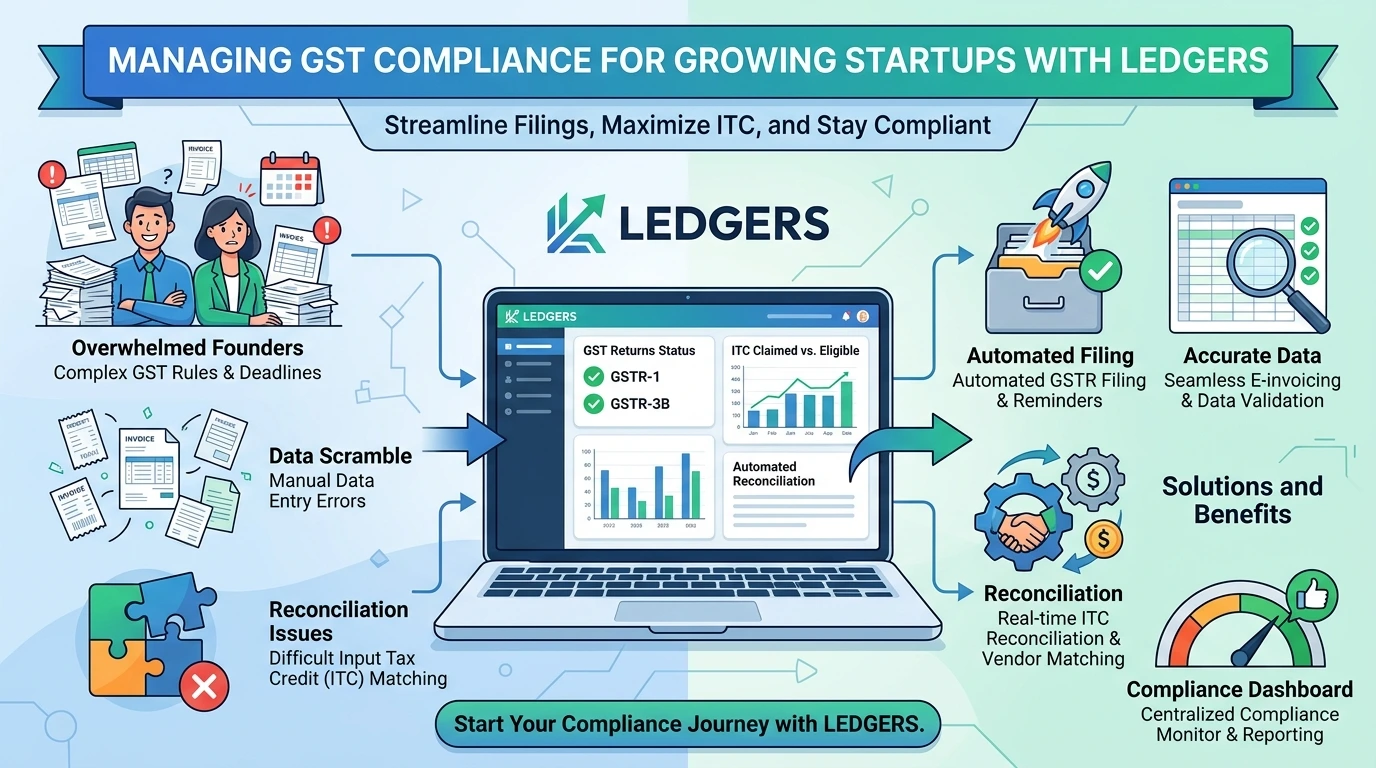
During the first few years, a startup may use spreadsheets or more basic systems to manage their transactions; however, as the volume of transactions increases, it will become increasingly difficult to manage these transactions correctly or to adequately file for GST.
From Simple Processes to Structured Workflows
Initially, invoicing and compliance tasks may be handled by a small team or even a single person. But as the business expands, responsibilities get distributed across teams.
Sales teams generate transactions, operations manage deliveries, and finance teams handle invoicing and compliance. Without proper coordination, this can lead to:
- Missing or delayed invoices
- Inconsistent data across systems
- Increased dependency on manual work
Startups need to transition from informal processes to structured workflows to keep up with growth.
Maintaining Accuracy While Scaling
One of the biggest challenges for startups is maintaining accuracy while scaling operations. As the number of transactions increases, even small errors can multiply and create larger problems.
Incorrect GSTINs, wrong tax calculations, or missing invoices can lead to:
- Reconciliation issues
- ITC mismatches
- Delays in return filing
A structured system helps startups maintain accuracy without increasing manual effort.
Why Visibility Becomes Important
As startups grow, it becomes harder to track everything manually. Founders and finance teams need visibility into:
- Invoice status
- Tax liabilities
- Filing progress
- Pending tasks
Without clear visibility, compliance tasks can easily get delayed or overlooked.
How LEDGERS Supports Growing Startups
LEDGERS helps startups manage GST compliance by bringing all related processes into a single platform. Instead of using multiple tools or spreadsheets, startups can manage invoicing, data, and compliance in a more organized way.
It helps by:
- Structuring invoice data properly
- Maintaining consistent workflows
- Reducing manual data entry
- Providing better visibility into compliance tasks
This allows startups to focus more on growth while keeping compliance under control.
Reducing Dependency on Manual Work
Manual processes may work for a small number of transactions, but they quickly become inefficient as the business grows. Repetitive tasks like data entry, validation, and reconciliation take up valuable time.
With a structured system, startups can:
- Minimize repetitive work
- Reduce errors
- Improve efficiency
This is especially important for lean teams that need to manage multiple responsibilities.
Handling Compliance Without Slowing Down Growth
One of the biggest concerns for startups is that compliance should not slow down business operations. Delays in invoicing or filing can affect cash flow and customer relationships.
A well-organized system ensures that compliance runs alongside business operations without creating bottlenecks.
Preparing for Future Growth
Startups that establish strong compliance processes early are better prepared for future expansion. As they grow into larger organizations, having structured workflows already in place makes the transition smoother.
It also helps in:
- Handling audits confidently
- Managing higher transaction volumes
- Maintaining consistent financial records
Conclusion
GST compliance can become challenging as startups grow, but it does not have to be overwhelming. By moving from basic tools to structured systems, startups can manage invoicing and compliance more efficiently.
LEDGERS helps startups build this structure by simplifying workflows, improving accuracy, and providing better visibility. With the right approach, startups can stay compliant while continuing to focus on scaling their business.