




HARI KRISHNAN S
Senior Developer
Updated on
12-06-2026
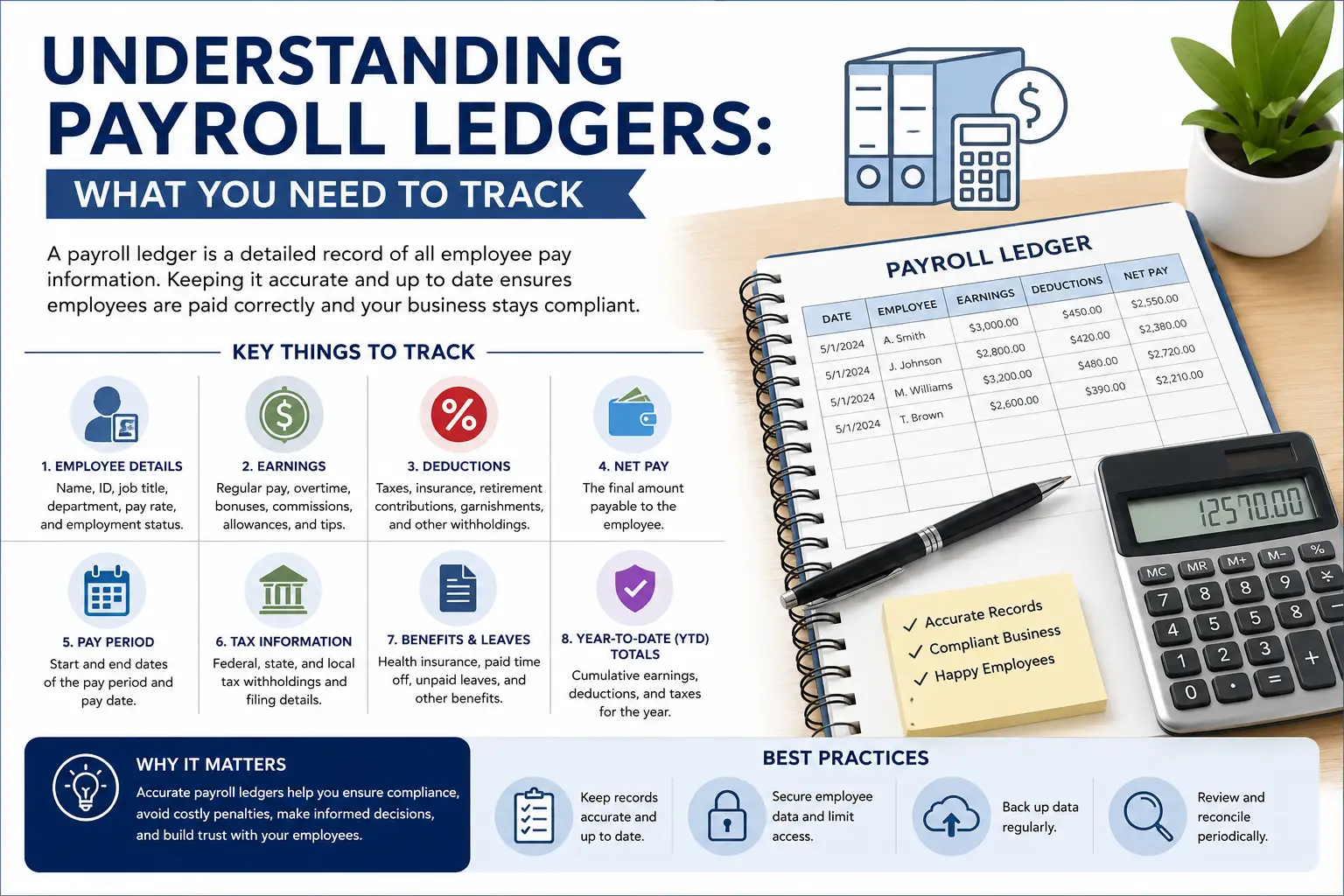
Understanding Payroll Ledgers: What You Need to Track
Salary must be administered. A crucial part of any business, accuracy, accuracy required, and compliance with the rules. But the heart Of efficient payroll management lie the payroll ledger, An vital tracking tool financial transactions related to employee compensation. To understand payroll ledgers It is necessary to efficient your financial processes. This article will guide you through what you necessitate to track within. Payroll ledgers, to provide the necessary insights To promote better business management.
What is a Payroll Ledger?
A payroll ledger is an organized record that accounts for an employer's expenses on employee compensation. It tracks the gross wages, taxes deducted, net pay, benefits, and other compensation-related details. Maintaining an accurate payroll ledger is critical not only for internal audits but also for adhering to regulatory requirements. Let's delve deeper into what you need to track within payroll ledgers.
Essential Elements to Track in Payroll Ledgers
Gross Wages
Gross wages include the total earnings of an employee before any deductions. This element encompasses hourly pay, salaries, bonuses, and commission. Tracking gross wages is crucial as it forms the base upon which taxes and benefits are calculated.
Taxes and Deductions
- Income Taxes: Track federal, state, and local income taxes. Ensure accurate calculation based on employee W-4 forms.
- Social Security and Medicare: These are mandatory deductions that need to be tracked for compliance with federal laws.
- Other Deductions: These may include retirement contributions, health insurance premiums, and other voluntary withholdings.
Net Pay
Net pay is the amount employees take home after deductions. This figure should be meticulously documented to ensure employees receive the correct compensation, reflecting the payroll ledger's role as a check-point between gross pay and deductions.
Employee Benefits
Employee benefits can vary from health insurance to retirement plans and must be tracked accurately. Include all kinds of compensations and perks that employees earn apart from their standard pay. Keeping track helps in reconciling with financial statements and provides necessary data for decision-making.
Expenses Reimbursements
Employees may incur expenses while performing job duties, such as travel or meal expenses. Tracking these reimbursements in the payroll ledger facilitates clear visibility over expenses and ensures transparency.
Overtime Payments
Overtime payments require precise tracking and calculation as they involve different pay rates than regular hours. Proper documentation ensures adherence to labor laws and prevents legal issues related to wage disputes.
Benefits of Maintaining an Accurate Payroll Ledger
Enhanced Compliance
Accurately tracking payroll details helps businesses stay compliant with tax regulations, federal and state labor laws. Compliance helps avoid penalties and legal issues, thereby safeguarding the organization.
Improved Financial Management
Payroll data is critical for seamless financial management. By tracking detailed payroll expenses, organizations can better forecast future costs, manage cash flow, and develop informed budget plans. Compliance also ensures that you’re adequately prepared for any audits.
Data-Driven Insights
A well-maintained payroll ledger can provide insightful data that enhances strategic planning. It aids in analyzing trends, understanding labor costs, and optimizing workforce management, which can drive informed decision-making.
Steps to Implement an Efficient Payroll Ledger System
Select the Right Payroll Software
Choose payroll software that aligns with your business needs and provides comprehensive support in automating payroll processing, tracking, and reporting. The right tools can significantly reduce the risk of errors and save time.
Regular Audits
Implement regular audits to ensure accuracy in payroll data. Establish a routine for checking and verifying the entered data to minimize discrepancies that could lead to financial losses or compliance issues.
Employee Training
Train your HR and finance teams in payroll processes and ledger management. Understanding the software features and compliance requirements helps in maintaining an efficient payroll system and improves accuracy in tracking.
Conclusion
To understand payroll ledgers is fundamental to efficient payroll management And overall business operations. By paying total attention to tracking key elements like gross wages, Deductions and benefits can businesses increase compliance, manage. Finances better, And benefit valuable insights to strategic planning. To apply technology and training It is vital to increase the accuracy and reliability of Your payroll processes. A well maintained payroll ledger Not only does it reflect an organization's efficiency rather plays an critical role. Its financial health. Generate sure you review and update regularly. Your tracking systems In line with the constantly developing business and regulatory environments.