




PUGALENTHI
Updated on
30-07-2026
Understanding ITC Matching and Mismatch Resolution in GST
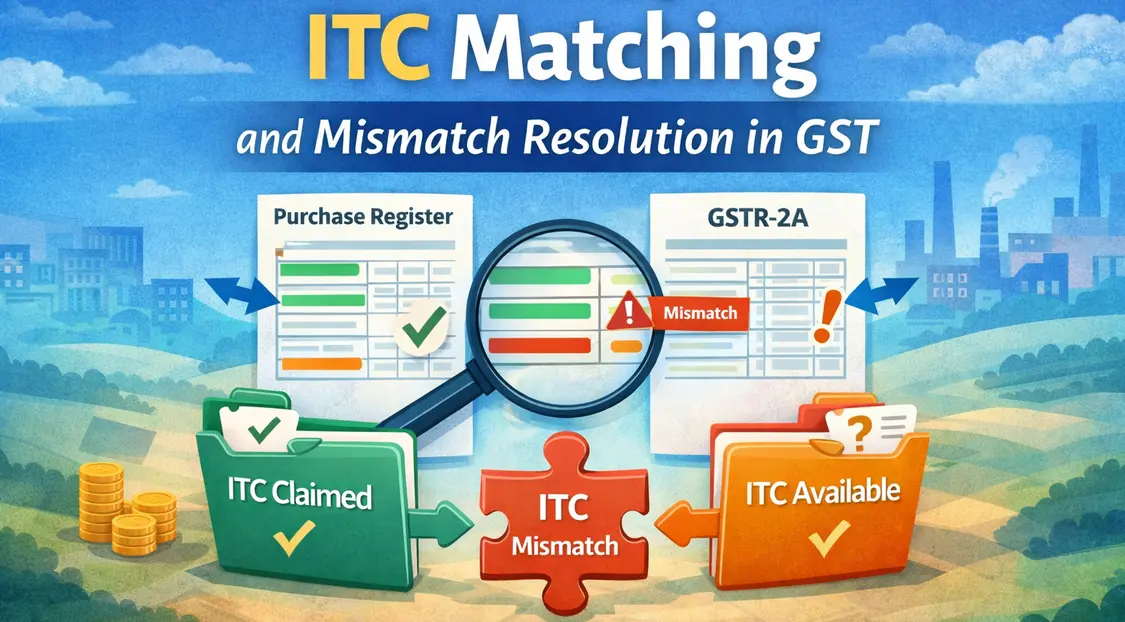
Input Tax Credits (ITC's) are a critical area of concern for every business or organization that operates in accordance with the Goods & Services Tax (GST) legislation. However, there are a number of common mismatches that can arise with respect to ITC's that may pose challenges for many businesses or organizations. To help ensure compliance and smooth operations with regards to financial matters, it is imperative for businesses or organizations to understand how to properly match their ITC's to those of their vendors and/or customers, and what to do in the case of a mismatch. In this article, we examine the causes of ITC mismatches, their impact, and how to track and resolve ITC dissimilarities.
What are ITC Mismatches in GST?
The concept of ITC allows businesses to reduce their tax liability by claiming credit for the taxes paid on inputs used in the production of goods and services. However, discrepancies between the ITC claimed by purchasers and the details reported by suppliers can lead to ITC mismatches. These mismatches arise mainly due to:
- Data Entry Errors: Mistakes in inputting necessary data can cause significant mismatches.
- Non-Filing or Incorrect Filing by Supplier: If suppliers fail to furnish accurate returns, it affects ITC claims.
- Timing Differences: Any lag in the reconciliation process between the supplier's sales and the buyer's purchase data can lead to mismatches.
Impact of ITC Mismatches on Businesses
The ramifications of ITC mismatches can be dire for businesses. Here's how they impact operations:
- Compliance Challenges: Mismatches require businesses to provide explanations or corrections, often increasing administrative burdens.
- Cash Flow Disruptions: Delayed ITC claims can significantly impact business cash flow, hindering operations.
- Risk of Penalties: Non-compliance due to mismatches may lead to fines and penalties, escalating operational costs.
- Reputational Damage: Persistent mismatches and compliance issues may damage a company's reputation.
Systems and Tools for Resolving ITC Mismatches
Advanced technological solutions can mitigate the issues stemming from ITC mismatches. Here's how systems and tools assist in resolving these discrepancies:
1. Automated Reconciliation Software
These systems are designed to align purchase invoices with those reported by suppliers effectively. Benefits include:
- Real-time Matching: Instantaneous reconciliation of purchase data with supplier data.
- Error Detection: Identifies discrepancies swiftly, allowing timely corrections.
- Audit Trail: Maintains a comprehensive log of transactions and corrections for auditing purposes.
2. GST Compliance Software
Specialized GST software helps track, calculate, and file taxes seamlessly. Key features include:
- Real-time GST Calculations: Ensures accurate tax computation and filing.
- Centralized Data Storage: Keeps all transaction data secure and easily accessible.
- In-depth Reporting: Provides insights into ITC claimed, availed, and mismatches for detailed analysis.
3. Artificial Intelligence (AI) and Machine Learning (ML) Algorithms
AI and ML technologies can enhance the precision of matching processes. Here's how:
- Pattern Recognition: Detects patterns and anomalies in transaction data to prevent mismatches.
- Predictive Analysis: Forecasts potential reconciliation challenges and provides solutions.
- Continuous Learning: Adapts to new data trends, improving over time for better accuracy.
Preventive Measures for Avoiding ITC Mismatches
Prevention is better than resolution. Businesses can adopt measures to avoid mismatches, including:
- Regular Reconciliation: Schedule frequent reconciliation processes to catch mismatches early.
- Supplier Verification: Ensure suppliers are compliant with GST norms to prevent erroneous data entry.
- Proper Record-Keeping: Maintain meticulous records to support ITC claims with concrete evidence.
The Role of GST Network (GSTN) in ITC Mismatch Resolution
GSTN plays a pivotal role in managing GST-related data. It facilitates ITC matching by:
- Providing a Common Portal: A centralized system for taxpayers to access and reconcile their data.
- Integration with Other Systems: Ensures seamless data flow between the GST portal and other tax-related platforms.
- Real-time Data Uploads: Provides immediate access to tax data, reducing time lags in reconciliation.
Conclusion
To effectively manage GST on ITC, companies must have a complete understanding of the complexities of ITC matching, which also includes understanding mismatches and how to effectively manage mismatches. In addition, companies can utilize automated tools and preventative measures to create an efficient and effective process for GST compliance while also mitigating the risk associated with GST compliance. Companies will experience fewer disruptions caused by mismatches when using advanced technology and a proactive attitude towards their GST Compliance.
Continuous learning and adaptation are crucial to eliminate potential obstacles and take full advantage of their eligible ITC. For businesses looking to be successful in their GST compliance journey, it is essential to adopt technology and remain vigilant. To maximize success in the GST arena, businesses should continue to educate themselves, be proactive, and take advantage of the best available systems.