




PUGALENTHI
Updated on
30-07-2026
Why GST Compliance Is More Than Just Filing Returns
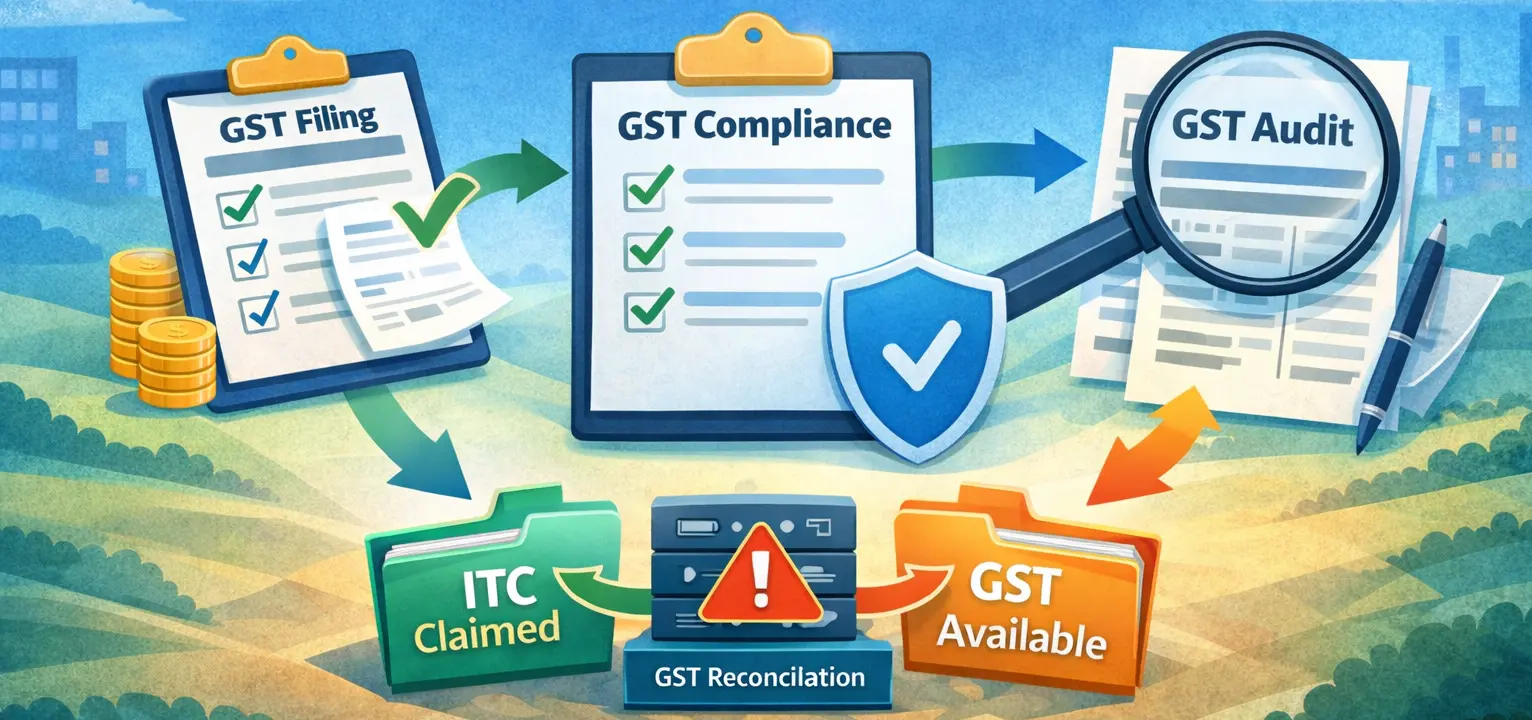
Filing your GST is just the tip of the iceberg. While many businesses see GST compliance as simply submitting their return, the reality is that there are actually numerous components involved in GST compliance; filing is only one piece of the puzzle. Understanding the difference between filing, reconciling, and auditing your GST returns will help you to appreciate the complexity of GST Compliance. It is critical that businesses be familiar with all components of GST Compliance, as this will help ensure that they maintain their financial integrity and reduce the risk of incurring penalties or other legal problems. This article will provide comprehensive information on each of these components of GST Compliance.
Understanding GST Filing
GST filing is a fundamental aspect of tax compliance, involving the submission of tax returns at periodic intervals. Businesses must report their sales, purchases, output tax, and input tax credits to the tax authorities. Key components of GST filing include:
- GST Returns: Documents filed by a taxpayer with the tax administrative authorities, detailing income, sales, and purchases.
- Regular Deadlines: Monthly, quarterly, and annual filing obligations that must be adhered to ensure compliance.
- Input Tax Credit (ITC) Claims: The ability of a business to reduce its tax liability by claiming the tax paid on inputs.
While many businesses focus extensively on meeting these deadlines, true GST compliance extends much further.
Beyond Filing: The Scope of GST Compliance
Merely filing returns isn't enough to ensure comprehensive GST compliance. Businesses must actively engage in other processes to remain fully compliant. Some of these processes include:
Reconciliation
Reconciliation refers to the process of matching the records uploaded by the taxpayer with those maintained by suppliers and customers. This involves:
- Data Verification: Ensuring all inward and outward supply details match with corresponding records.
- Discrepancy Management: Identifying and rectifying mismatches or errors in entries.
- Consistency Checks: Regularly reconciling GST data with accounting records to maintain accuracy.
The reconciliation process is crucial as discrepancies can lead to penalties, denial of ITC, and other regulatory challenges.
Audits
GST audits are detailed examinations of the financial records of a business to ensure they are in compliance with GST laws. They include:
- Annual Audits: Mandated for entities with turnover exceeding a specified threshold.
- Internal Audits: Voluntary audits conducted by businesses to ensure internal controls are effective.
- Departmental Audits: Conducted by tax authorities to ensure consistent adherence to GST norms.
Audits help in identifying areas of non-compliance and provide opportunities to rectify them before they result in penalties or investigations by authorities.
The Importance of Full-Fledged GST Compliance
Adhering to the complete spectrum of GST compliance ensures that businesses are well-protected from legal and financial repercussions. Here are some benefits of thorough compliance:
- Avoiding Penalties: Timely and accurate reconciliation and audits can help avoid penalties which might arise from incorrect filing.
- Enhanced ITC Management: Reconciliation ensures that ITC claims are maximized, optimizing cash flow.
- Improved Credibility: Consistency in compliance enhances the business's reputation with stakeholders, including suppliers and customers.
Furthermore, staying current with the latest GST updates and regulatory changes is essential for maintaining compliance.
Latest Developments in GST Compliance
With the continual evolution of GST laws, businesses must keep abreast of the latest changes. Recent developments, such as the introduction of e-invoicing, have significant implications for compliance. Businesses must ensure they are:
- Updated with Technology: Leveraging software solutions for effective compliance management.
- Educated on Amendments: Keeping the workforce informed about current laws and procedures.
- Agile in Implementation: Quick to adapt to changes in the regulatory environment.
Regular training and workshops can aid in ensuring all employees are aware of their responsibilities concerning GST regulations.
Conclusion
Businesses should recognize that complying with GST regulations requires more than just filing GST returns; to be compliant with GST, businesses must also focus on other important areas, such as reconciliation, audits, and keeping up-to-date with changes to GST-related legislation. By taking a comprehensive approach to GST compliance, businesses are protecting themselves from the risk of legal and financial penalties associated with noncompliance. In addition, the integrity and operational efficiency of the business are enhanced, thereby enabling sustained growth for the organization.
For these reasons, businesses should continuously develop and refine their methods of achieving GST compliance and should view GST compliance as an integral component of their overall financial operations, rather than as just a means to submitting a return.