




PUGALENTHI
Senior Developer
Updated on
04-06-2026
GST Compliance Calendar for Businesses
Goods And Services Tax (GST) is crucial in India’s increasingly complicated taxation procedures, to keeping businesses in check financially. However, having a GST compliance calendar will greatly enhance your organization's chances of being able to comply with GST based upon the complexities associated with it. The GST compliance calendar is an important planning tool for businesses and should be used as an important management method for ensuring that all tax returns, payments, reconciliations and compliance to statutes are done on a timely basis. This article will outline the benefits of maintaining a GST compliance calendar and provide a thorough understanding of what the major GST deadlines that businesses should keep abreast of.
Understanding GST Compliance Requirements
There are a number of statutory activities required to support accurate reporting related to India’s GST, including timely filing of returns, making payment(s) for taxes and maintaining proper documentation. GST registered businesses must file a variety of returns based on their classification as taxpayers. Some examples of GST returns are GSTR-1, GSTR-3B etc. Failure to meet deadlines has a domino effect, leading to penalties, interest charges, and potentially, litigation. Late filing of returns may also impact a business’ ability to claim Input Tax Credit (ITC) and therefore increase the business’ financial obligation.
Key GST Deadlines and Obligations
Regular compliance ensures smooth business operations and helps maintain the trust and reputation of the business. Below is a breakdown of essential GST deadlines:
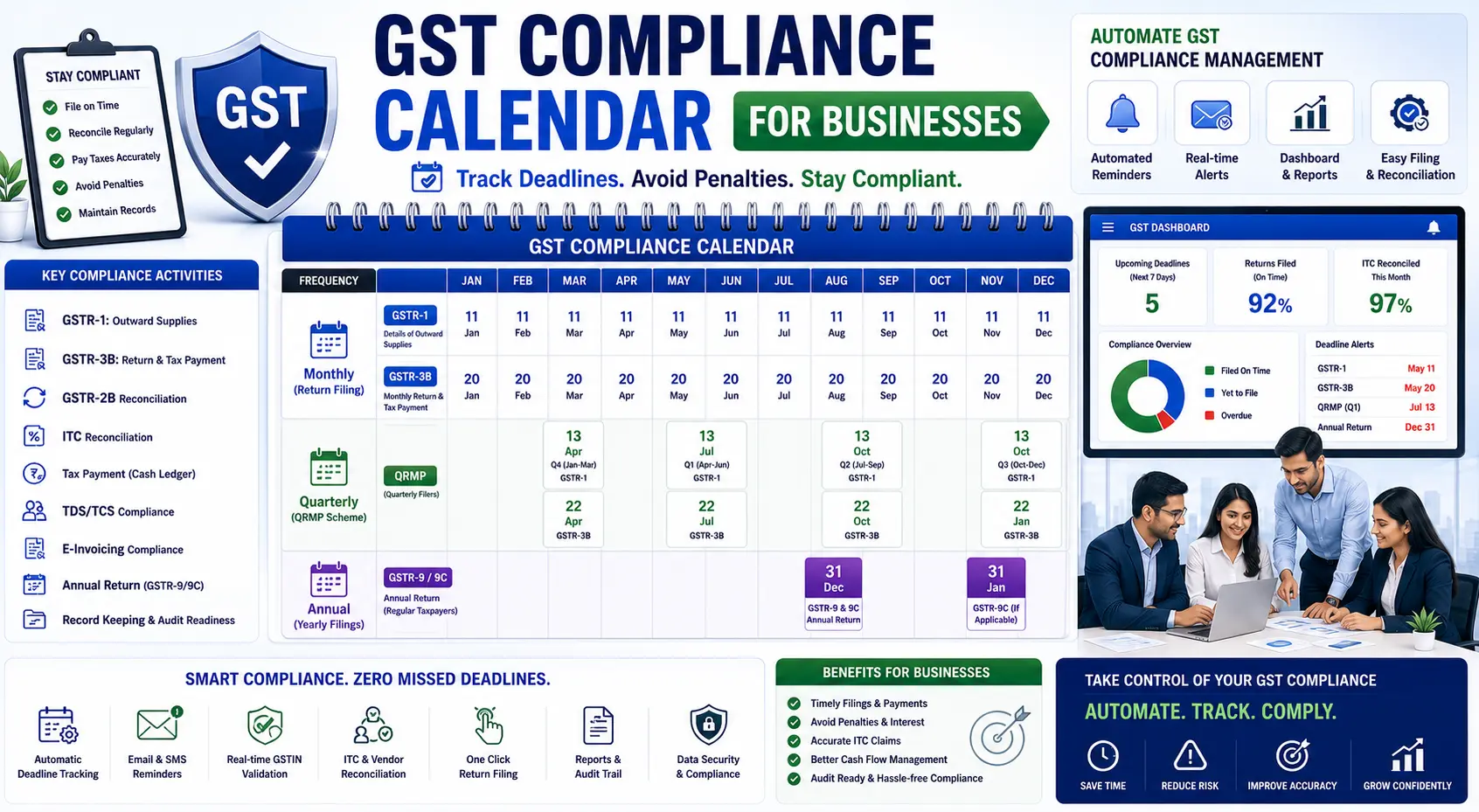
- GSTR-1: This monthly or quarterly return captures the details of all outward supplies made. Monthly filers must submit by the 11th of the following month, whereas quarterly filers have until the 13th of the month following the quarter.
- GSTR-3B: A summary return due monthly or quarterly that consolidates all outward and inward supplies, highlighting tax liabilities and claiming ITC. The 20th of the following month is the deadline for monthly filing, while quarterly filers (under the QRMP scheme) need to adhere to a specific set of monthly payments and filing on the 22nd or 24th of the month following the quarter.
- GSTR-9: Annual returns must be filed by 31st December following the relevant financial year, providing a comprehensive summary of the year's activities.
- CMP-08: Composition taxpayers must file quarterly returns by the 18th of the month following the quarter.
- E-invoicing Compliance: Applicable to certain categories of taxpayers, e-invoicing should be timely and in accordance with statutory mandates.
Filing Frequencies: Monthly, Quarterly, and Annual
Compliance activities vary based on taxpayer categories:
- Monthly Filers: Entities with a turnover of more than Rs. 5 crores are required to file returns on a monthly basis to ensure higher accountability.
- QRMP Scheme: Taxpayers with turnover up to Rs. 5 crores can opt-in for the Quarterly Return Monthly Payment (QRMP) scheme, allowing them to file quarterly returns while continuing to make monthly tax payments.
- Composition Scheme: Simplified quarterly returns (CMP-08) for small businesses to reduce the compliance burden.
Best Practices for an Effective GST Compliance Calendar
Creating a robust internal compliance calendar involves:
- Assigning Responsibilities: Designate specific staff for monitoring compliance tasks, ensuring accountability.
- Regular Updates: Keep track of regulatory changes and update the calendar accordingly to avoid penalties.
- Audit-Ready Records: Maintain comprehensive records that are readily accessible during audits, providing clarity and evidence of compliant behavior.
Conclusion: Streamlining GST Compliance
To conclude, businesses should have an organized GST compliance calendar in order to navigate the complexities related to GST obligations in India. Proactive adoption of good practices along with the use of technology will help businesses comply with their legal obligations while reducing their potential exposure to non-compliance and putting more focus on growth and planning for future business development. The implementation of these practices will enable businesses to improve their operational efficiencies and develop a culture of accountability and accuracy to ensure compliance when dealing with monetary transactions.
LEDGERS assists with compliance relating to GST through the integration of reconciliations into your accounting processes to allow the speedy identification of errors in records prior to incurring any penalties or interest. LEDGERS allows you to automate the process of synchronizing your GSTN data and tracking invoices on an invoice-by-invoice basis eliminating the need for manual corrections and the time-consuming process of verifying transactions at the end of a reporting period through the use of automatic validations from the system to facilitate revenue compliance activities.