




PUGALENTHI
Updated on
30-07-2026
GST Reconciliation: Why It Matters for Every Business
In today's complex tax environment, understanding the nuances of Goods and Services Tax (GST) is vital for businesses of all sizes. GST reconciliation stands out as a critical process that ensures businesses maintain compliance and optimize their tax positions. This guide titled "GST Reconciliation: Why It Matters for Every Business" will elucidate the importance of effective reconciliation and provide a blueprint for business owners and accountants to incorporate it seamlessly into their operations.
What is GST Reconciliation?
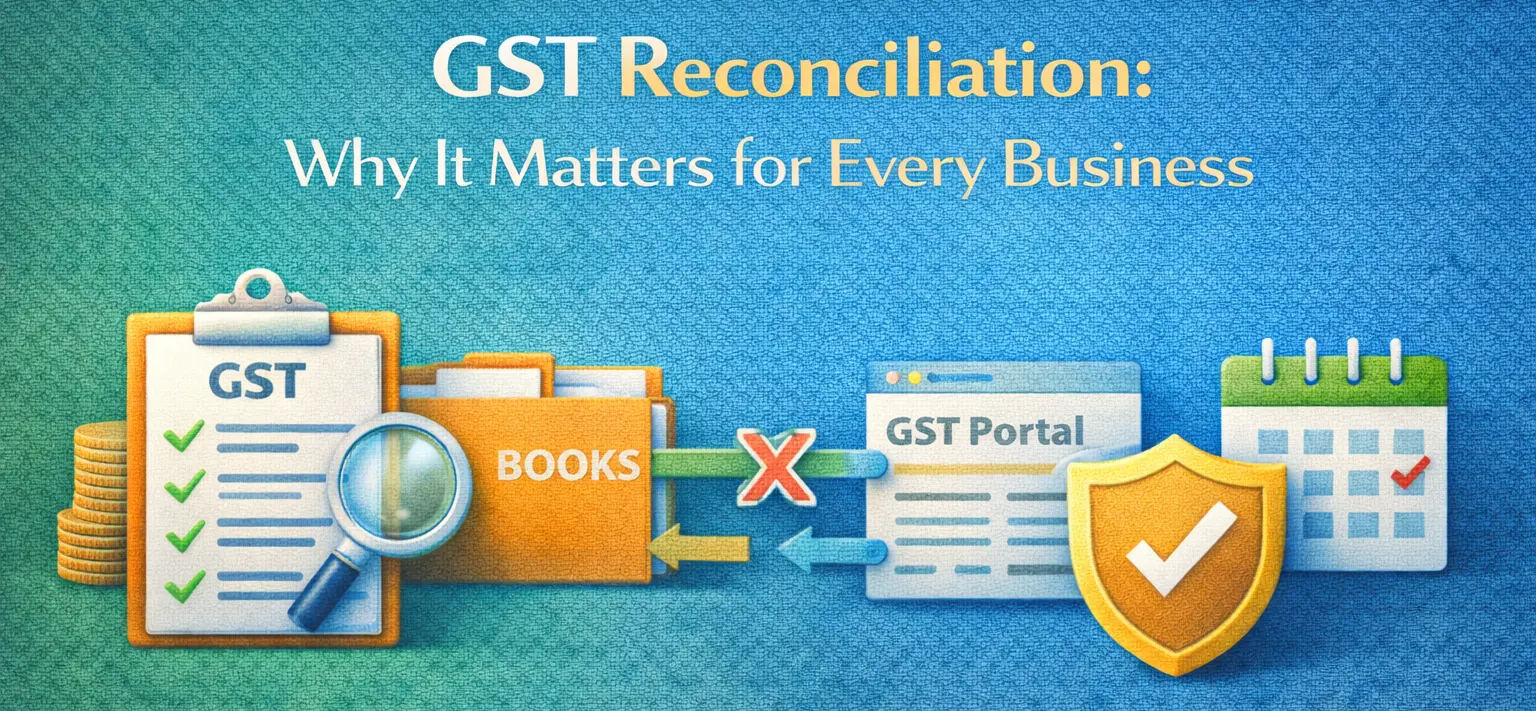
GST reconciliation is the process of matching the data related to GST filed on the GST portal with the records maintained in your business's books. This exercise is akin to a financial audit of your GST transactions, ensuring that everything aligns:
- Tax invoices issued and received
- Input Tax Credit (ITC) claims
- Tax payments and liabilities
Importance of GST Reconciliation
Accurate GST reconciliation benefits businesses in multiple ways, including ensuring accurate tax reporting, optimizing ITC claims, and being prepared for audits. Here's how each factor plays a crucial role:
1. Accurate Tax Reporting
Accurate tax reporting reduces errors in GST return filings. Mismatches can lead to notices from the tax department, resulting in penalties or interest on outstanding amounts.
2. Optimizing ITC Claims
Businesses can claim a refund on their inputs under ITC. However, ITC can only be claimed on matching invoices between the GST portal filings and the business's internal records. Discrepancies can lead to denied ITC claims.
3. Audit Readiness
Being audit-ready is critical for avoiding lengthy investigations by tax authorities. A streamlined reconciliation process facilitates hassle-free audit processes.
Risks of Non-Reconciliation
Mismatches between your business's books and the data filed on the GST portal can present several compliance risks:
- Delayed refunds due to unmatched ITC claims
- Increased scrutiny and potential audits by tax officials
- Financial penalties due to over or under-reporting of GST amounts
Real Business Scenarios
Consider a medium-sized manufacturing business. Upon reconciliation, accountants discovered discrepancies in the input invoices and the GST portal records. The misalignment halted potential ITC of thousands of dollars, affecting cash flow until the discrepancies were addressed.
Actionable Steps for Effective GST Reconciliation
Here's a practical guide to carrying out GST reconciliation effectively:
1. Schedule Regular Reconciliation
Create a monthly schedule to reconcile your GST. Routine checks prevent last-minute scrambles.
2. Automate Processes Where Possible
Leverage accounting software that integrates with GST filing portals to automate data extraction and report generation.
3. Verify Go beyond superficial numbers and ensure every invoice is matched, checked, and well-documented.
Avoid transposition errors by double-checking invoice details like GSTIN numbers, dates, and amounts.
4. Maintain Open Communication with Suppliers
Ensure your suppliers are filing their GST returns on time. This cooperative approach helps in matching tax credits accurately.
5. Prepare Contingency Plans
In cases where mismatches are identified, having a predetermined process to address and rectify these issues can save precious time.
Conclusion
GST reconciliation is more than a compliance exercise; it's a vital tool for financial optimization and risk management. Adopting a disciplined approach to reconciliation not only safeguards against potential claims or penalties but also enhances your business's credibility with tax authorities. By incorporating strategies outlined in this guide, business owners and accountants can turn reconciliation from a daunting task into a reliable source of business intelligence.
In the fast-evolving landscape of tax regulations, staying ahead of the curve with thorough GST practices is not just prudent it's imperative. Address potential mismatches proactively, foster collaborative relationships with suppliers, and leverage technological advancements to streamline your processes for ongoing success.
LEDGERS
LEDGERS simplifies your GST compliance by integrating reconciliation into your accounting workflow, enabling you to find mismatch errors in your records quickly before incurring penalties or interest. Automate the syncing of your GSTN data and invoice-level invoice tracking with LEDGERS, while eliminating the need for manual corrections and period-end follow-up with system-generated validations to streamline the revenue compliance process.