




PUGALENTHI
Updated on
30-07-2026
How to Handle GST Notices for Return Mismatches
In the complex landscape of Goods and Services Tax (GST) compliance, businesses often encounter challenges that arise from mismatches in their financial records and GST returns. One of the most common issues that GST-registered businesses face are notices from tax authorities triggered by these mismatches. This article delves into how businesses can effectively manage such notices, focusing on common scenarios, types of GST notices, and actionable steps for resolution.
Understanding GST Notices
GST notices are official communications from the tax authorities, often indicating discrepancies between filed GST returns and financial records. These discrepancies are usually identified through GST audit processes or automated reconciliation systems put in place by authorities. Mismatches between documents like GSTR-1, GSTR-3B, GSTR-2B, e-invoices, and the books of accounts can trigger these notices.
Common Mismatch Scenarios
The most frequent mismatch issues leading to GST notices include:
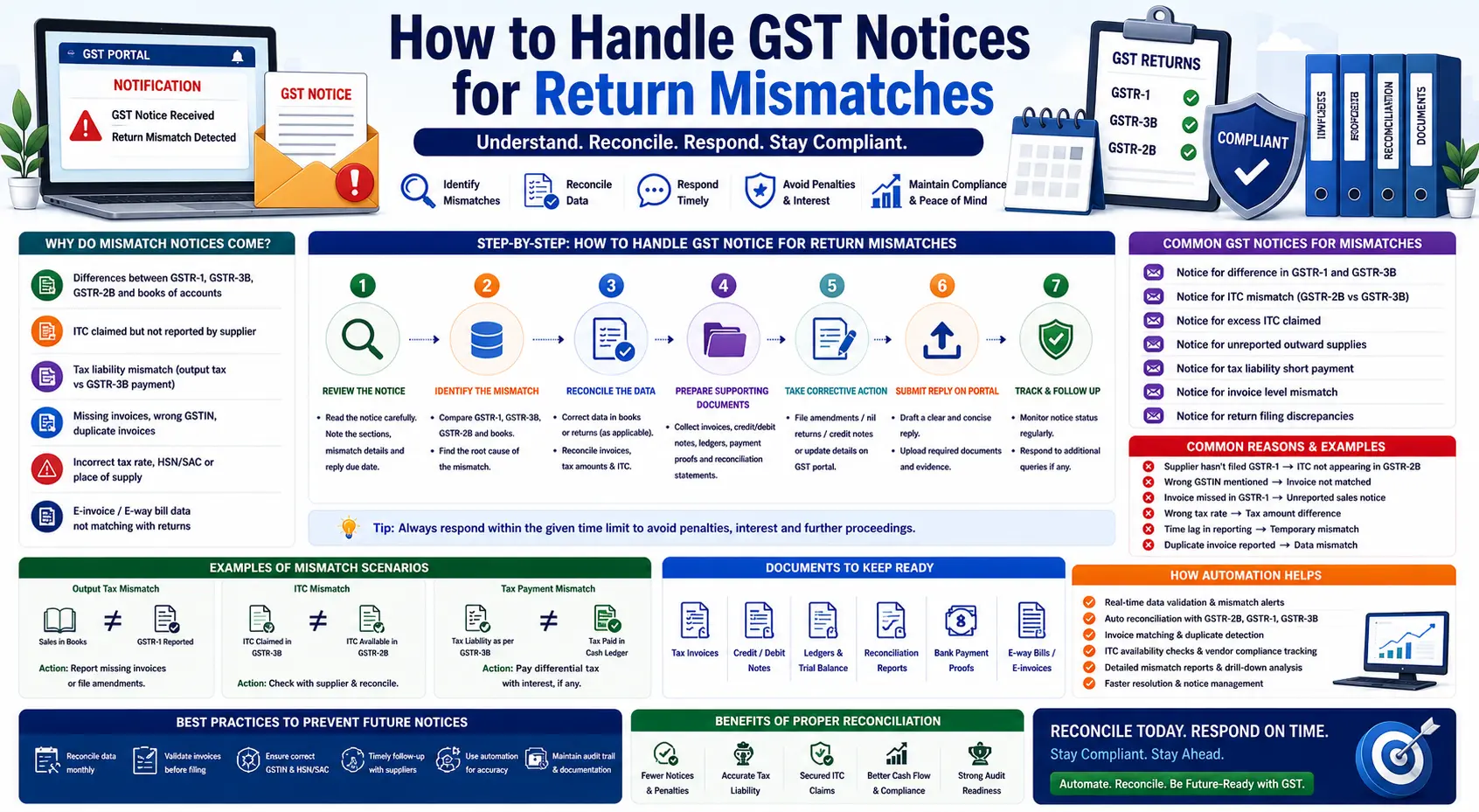
- Tax liability differences: Discrepancies in reported tax liabilities in different returns.
- ITC mismatches: Input tax credit (ITC) claimed in GSTR-3B not reflected in GSTR-2B.
- Missing invoices: Invoices missing from the returns filed.
- Incorrect GSTINs: Wrong GST identification numbers reflected in returns.
- Duplicate entries: Recurring entries detected either in invoices or reconciliations.
- Reporting errors: Errors in data entry leading to variances.
Types of GST Notices and Their Interpretations
GST notices related to mismatches may include:
- Notice for Demand and Recovery: Issued under Section 73 for non-payment or short payment due to error.
- Scrutiny Notices: Issued when returns are deemed inaccurate after scrutiny.
- Audit Notices: Issued for detailed audits due to recurrent discrepancies.
Steps to Handle GST Notices
Identify the Root Cause
Understanding the root of the discrepancy is vital. Analyze your records and returns to pinpoint the mismatch.
Reconcile the Data
Conduct a detailed reconciliation of the returns with your accounting records. Highlight areas with mismatched entries for further scrutiny.
Prepare Supporting Documents
Gather all necessary documentation to support your claims. This includes invoices, contracts, and reconciliation reports.
File Corrections
If discrepancies are identified, make necessary adjustments in your returns. Ensure you adhere to the amendment guidelines stipulated by the authorities.
Submit Proper Responses
Respond to the notice within the stipulated timelines. Your submission should be clear, concise, and supported by evidence.
Real-World Examples of GST Mismatch Resolutions
Imagine a company receives a notice for an ITC mismatch. Upon review, they discover that certain invoices were not uploaded by suppliers yet accounted for as ITC. By coordinating with suppliers and ensuring invoices were reported correctly, the issue was resolved, and the notice was withdrawn.
The Importance of Audit Trails and Reconciliation Reports
Maintaining an audit trail is crucial for compliance. Regular reconciliation reports ensure discrepancies are caught early, preventing potential GST notices. Additionally, ensure that every invoice is validated against supplier records to avoid unfortunate mismatches.
Role of Automation in Preventing GST Notices
Automation tools and GST software offer robust solutions to detect mismatches early. They provide real-time validation and reconciliation, significantly reducing the risk of notices. Implementing these tools enhances accuracy in GST reporting and compliance management.
Best Practices for Avoiding Future GST Notices
- Periodic Reconciliation: Conduct regular reconciliations between all returns and financial records.
- Master Data Management: Ensure accuracy in your records for easy tracking and validation.
- Accurate GST Reporting: Double-check all returns for accuracy before submission.
Conclusion
Handling GST notices for return mismatches requires a proactive approach to reconcile discrepancies effectively. Understanding the types of notices and implementing robust reconciliation and automation practices are crucial steps. By prioritizing accuracy and compliance, businesses can navigate the complexities of GST and minimize the occurrences of notices.
Incorporating regular checks and investing in reliable GST software can further ensure adherence, ultimately safeguarding businesses from undesirable complications and ensuring seamless GST compliance.
LEDGERS assists with compliance relating to GST through the integration of reconciliations into your accounting processes to allow the speedy identification of errors in records prior to incurring any penalties or interest. LEDGERS allows you to automate the process of synchronizing your GSTN data and tracking invoices on an invoice-by-invoice basis eliminating the need for manual corrections and the time-consuming process of verifying transactions at the end of a reporting period through the use of automatic validations from the system to facilitate revenue compliance activities.