
PUGALENTHI
Updated on 30-07-2026
The Goods and Services Tax (GST) system in India provides a unified tax framework, yet it also places significant compliance responsibilities on businesses. One critical aspect of this compliance is monitoring vendor GST performance, an essential practice for ensuring accurate Input Tax Credit (ITC) claims and mitigating compliance risks. In this article, we'll delve into the importance of vendor compliance tracking under GST, detailing its impact on ITC availability in GSTR-2B and the steps businesses can take to maintain compliance.
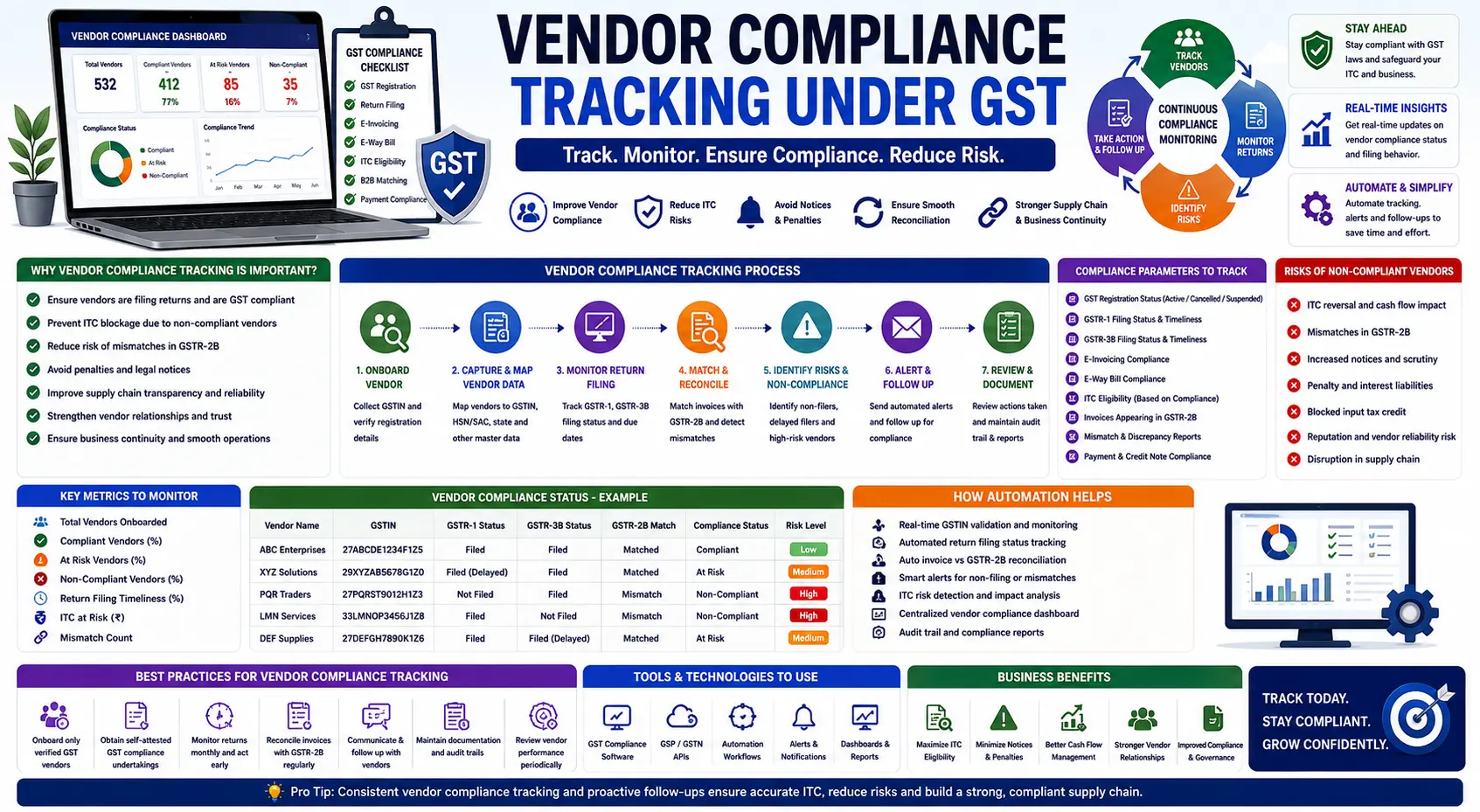
Vendor compliance under GST involves ensuring that all suppliers in your business network adhere to GST regulations. Compliance is vital because the timely and correct filing of GST returns by vendors directly affects your business's ability to claim ITC. The information shared by vendors in their GSTR-1 forms populates your GSTR-2B, impacting the credits you can claim. Non-compliance on the vendor's part can lead to blocked ITC, operational hurdles, and financial setbacks.
Businesses should focus on several critical compliance areas to ensure a seamless experience:
Non-compliance among vendors poses several risks:
For example, if a vendor mistakenly reports incorrect ITC claims on their GSTR-1, the resulting mismatch with your GSTR-2B could prevent you from availing of those credits, leading to unexpected payables and compliance complications.
Businesses can employ several strategies and tools to manage vendor compliance effectively:
Regular reconciliation of GSTR-2B with purchase records ensures identifying and rectifying discrepancies promptly. Implementing vendor rating mechanisms allows businesses to evaluate suppliers based on compliance levels, incentivizing timely and accurate filings.
Utilizing compliance dashboards provides real-time insights into vendor filing status, offering alerts for overdue filings. Coupled with automation tools and APIs, these solutions streamline the monitoring process, enabling businesses to resolve discrepancies efficiently and uphold compliance.
Advanced GST software can automate several compliance tasks, providing real-time updates on vendor status and easing the reconciliation process. These tools can detect mismatches early, generate alerts, and offer reports that streamline audits and assessments.
To enhance vendor compliance tracking, consider the following best practices:
In the complex landscape of GST compliance, monitoring vendor behavior is crucial for ensuring seamless input tax credit claims and minimizing compliance risks. By leveraging robust reconciliation practices, employing automation tools, and maintaining ongoing communication with suppliers, businesses can navigate compliance challenges with greater ease and efficiency. Ultimately, proactive vendor compliance management can safeguard against financial loss and enhance the overall tax management strategy.
LEDGERS assists with compliance relating to GST through the integration of reconciliations into your accounting processes to allow the speedy identification of errors in records prior to incurring any penalties or interest. LEDGERS allows you to automate the process of synchronizing your GSTN data and tracking invoices on an invoice-by-invoice basis eliminating the need for manual corrections and the time-consuming process of verifying transactions at the end of a reporting period through the use of automatic validations from the system to facilitate revenue compliance activities.
