




DHIBAGARAN
Updated on
30-07-2026
Understanding How e-Invoicing Works Through a GSP
In the modern business landscape, efficiency and compliance are paramount. One key advancement in this regard is e-Invoicing, which promises to streamline the tax process by automating invoice submissions to the tax authorities. While several methods exist to facilitate this transformation, the role of a GST Suvidha Provider (GSP) stands out. This article dives into the intricacies of how e-Invoicing works through a GSP, providing businesses with the knowledge to maximize this critical functionality.
What is e-Invoicing and Why is it Important?
e-Invoicing, or electronic invoicing, refers to the generation and submission of invoices via a structured digital format, allowing seamless interaction with relevant tax authorities, such as the Goods and Services Tax (GST) system. Its importance is underscored by:
- Reducing Errors: Minimizes human errors associated with manual invoicing.
- Enhancing Compliance: Ensures adherence to taxation laws by creating a digital paper trail.
- Boosting Efficiency: Streamlines processes, saving both time and resources.
The Role of a GST Suvidha Provider (GSP)
A GST Suvidha Provider (GSP) acts as an authorized intermediary, facilitating a smooth transition for businesses from manual processes to automated, GST-compliant systems. The GSP provides technological interfaces and frameworks allowing businesses to seamlessly integrate their systems with the GST network.
How GSP Enhances e-Invoicing
By serving as a bridge between taxpayers and the GST System, GSPs offer numerous advantages, such as:
- Data Security: Ensures securely managed data processing over the e-Invoicing network.
- User-Friendly Interfaces: Offers simplified tools and dashboards for easy invoice management.
- Real-Time Processing: Facilitates immediate invoice registration with the GST Network.
Step-by-Step Process of e-Invoicing through a GSP
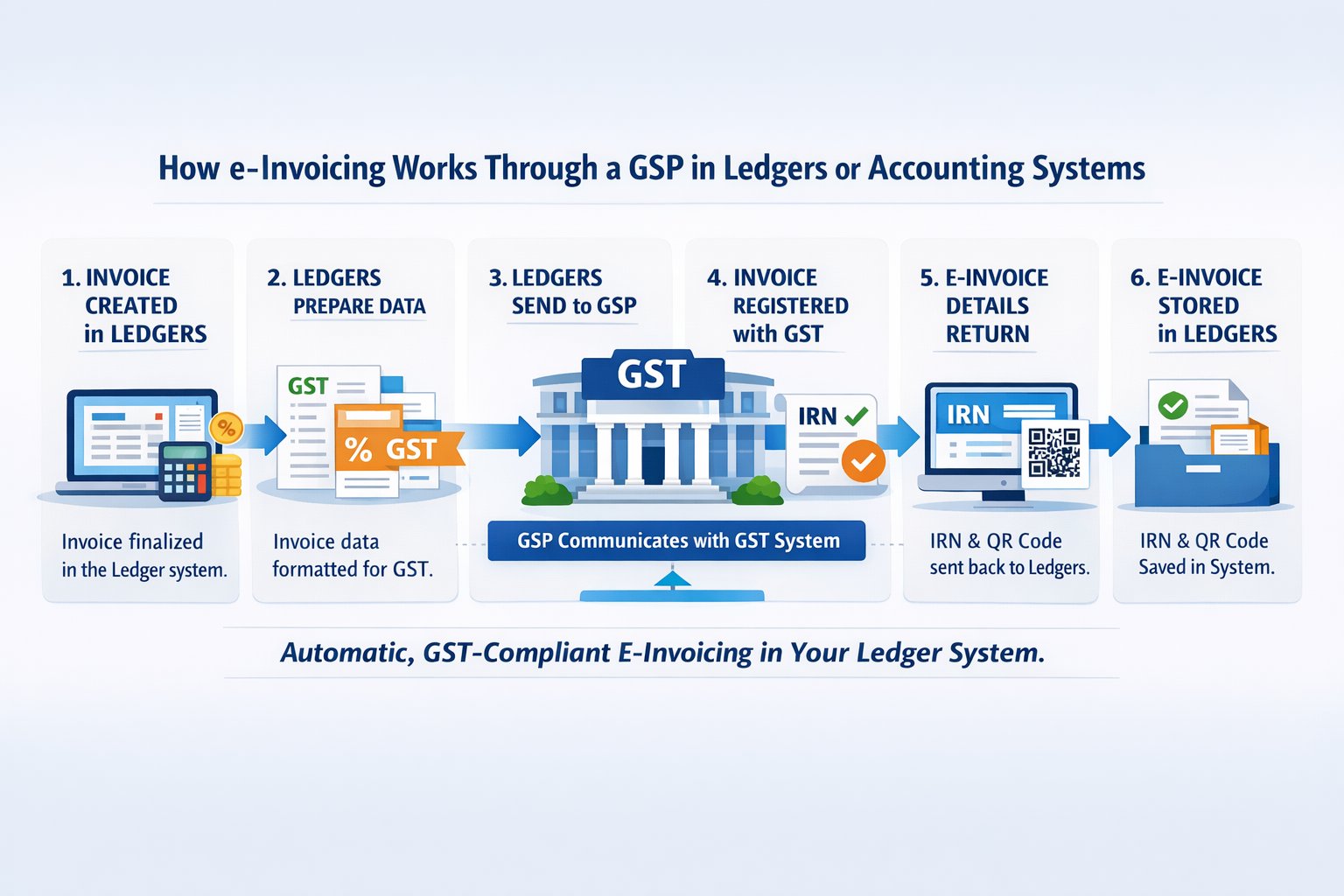
The e-Invoicing workflow through a GSP involves several steps designed to ensure efficiency and compliance:
- Invoice Generation: Businesses generate invoices as per the applicable format set by the tax authority.
- Integration with GSP: The invoice data is forwarded to the GSP system using APIs (Application Programming Interfaces) for validation.
- Validation by GSP: The GSP thoroughly validates the invoice data for errors, duplications, and compliance issues.
- IRN Generation: Once validated, the GSP forwards the data to the government's Invoice Registration Portal (IRP) for IRN (Invoice Reference Number) generation.
- Retrieval of QR Code: Along with IRN, the IRP portal provides a digitally signed QR code, which is sent back through the GSP to the business.
- Final Communication: The e-Invoice, complete with IRN and QR code, is delivered to both seller and buyer, ensuring transparency across transactions.
Benefits of Using a GSP for e-Invoicing
Choosing to work with a GSP for e-Invoicing does not only offer procedural efficiency but it also bestows significant advantages such as:
- Cost Efficiency: Reduces overhead costs associated with traditional invoice submissions.
- Comprehensive Support: Provides technical and compliance support, alleviating administrative burdens on businesses.
- Scalability: Easily accommodates growing business needs without additional infrastructural investments.
Challenges in e-Invoicing Implementation
Despite the advantages, businesses may face several challenges when adopting e-Invoicing through a GSP:
- Initial Setup: Integration with existing systems may require initial investments and adjustments.
- Employee Training: Staff need training to adapt to new e-Invoicing processes and platforms.
- Data Privacy Concerns: Businesses must ensure that the GSP adheres to data privacy and security norms.
The Future of e-Invoicing and GSP Solutions
Looking ahead, the integration of artificial intelligence (AI) and machine learning (ML) with e-Invoicing systems promises to further revolutionize the landscape. GSPs are primed to integrate these technologies, offering predictive analytics features and enhancing real-time decision-making capabilities.
The increased adoption of e-Invoicing could lead to the establishment of a more simplified and streamlined tax environment, possibly influencing global tax protocols.
Conclusion
e-Invoicing through a GSP stands as a significant milestone in automating financial compliance tasks. By leveraging technology, businesses not only align themselves with statutory requirements but also pave the way for greater operational efficiency. As the digital transformation wave sweeps across industries, embracing e-Invoicing solutions through a GSP becomes less of an option and more of a business imperative.
For any business aiming to stay ahead of compliance requirements and optimize operations, understanding and implementing e-Invoicing through a GSP is a decisive step forward.