




ATCHAYA M
Updated on
30-07-2026
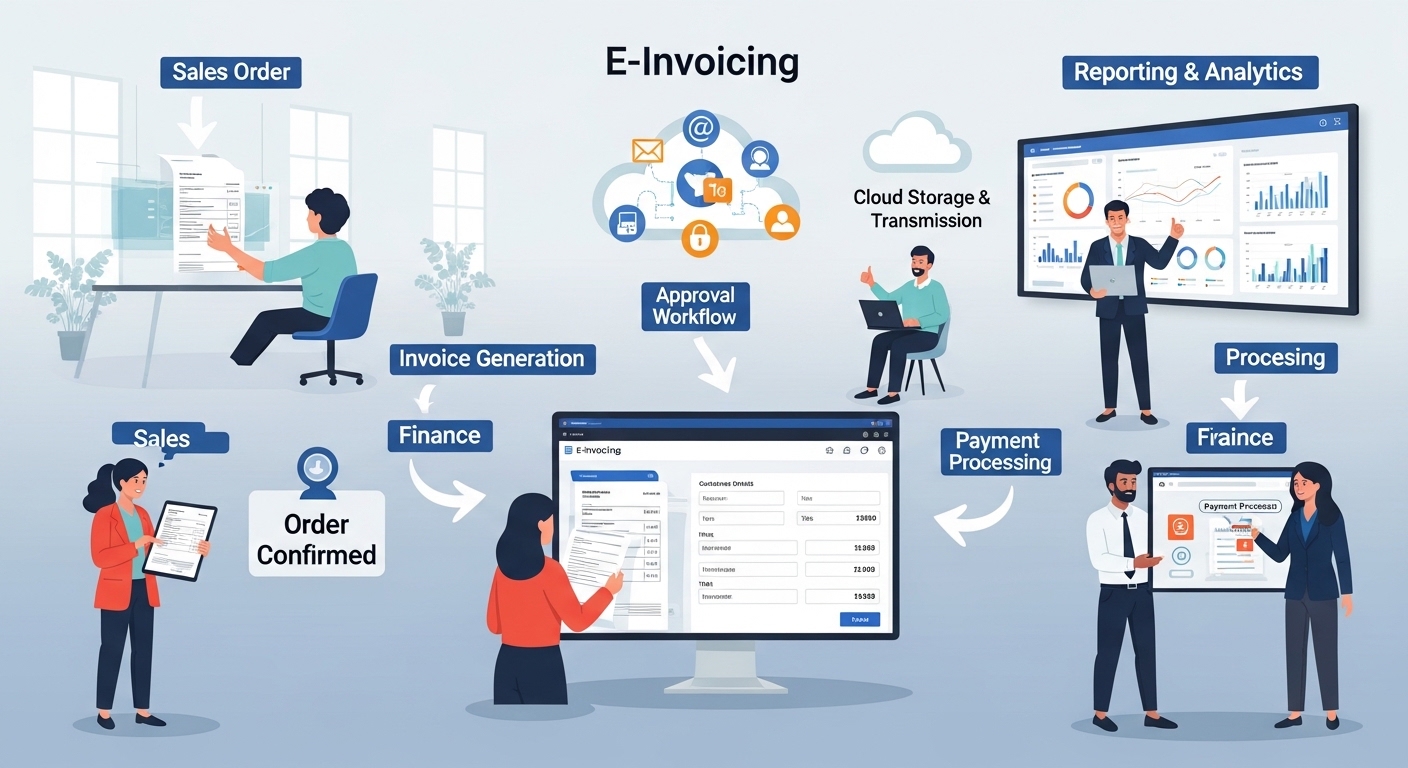
Day-to-Day Workflow of e-Invoicing in a Growing Business
The increase in growth of a business creates more formal business practices. What was once a doable task with only a few invoices daily can quickly become unmanageable as the volume of transactions increases. Invoicing, in particular, becomes more than just a simple task; as a business grows, invoicing also becomes a more complex, multi-team effort. The way businesses normally process invoices and enter them into the system has changed again since the introduction of e-invoicing.
Instead of a standalone function performed only at the end of the day, invoicing is now fully integrated with compliance requirements (regulatory, fiscal, accounting, etc.), validation, and reporting. By being able to visualize how a typical day works in an e-invoicing environment, businesses can better adapt to this new order of doing business.
Beginning the Day: Reviewing Pending Work
In many growing companies, the day often begins with the finance department or billing department making a quick review of any invoices that are outstanding from the prior day. An example of some outstanding invoices could be:
- Draft invoices that have not yet been approved
- Invoices that have missing information
- Invoices that were rejected and need to be changed prior to re-sending them to the customer
Any outstanding invoices would generally be handled on a priority basis to ensure that none of the pending invoices slip into the next day and that the workflow is clear of any pending invoices prior to the generation of any new invoices.
Invoice Creation During Business Operations
As sales and operations teams begin their day, new transactions start flowing in. Orders are confirmed, services are completed, and dispatches are scheduled. Based on these activities, invoices are created throughout the day.
Unlike earlier practices where invoices might be created in bulk at the end of the day, many growing businesses now generate invoices closer to the time of transaction. This helps in:
- Maintaining accuracy
- Avoiding last-minute rush
- Keeping compliance aligned with operations
At this stage, basic details such as customer information, item or service details, and tax values are entered.
Validation Before Finalizing Invoices
Before sending invoices for IRN generation, teams often perform a quick validation check. This step is crucial, especially in growing businesses where multiple people may be involved in invoicing.
Typical checks include:
- Correct GSTIN of the customer
- Accurate invoice value and tax calculation
- Proper classification of goods or services
- Consistent invoice numbering
Catching errors at this stage saves time later and reduces the chances of rejection from the IRP.
IRN Generation as Part of the Workflow
Once invoices are verified, they are submitted for IRN generation. This step has now become a regular part of the daily workflow rather than a separate activity.
In a smooth setup, this process feels almost automatic:
- Invoice is submitted
- Validation happens
- IRN is generated
- Status is updated
Teams usually keep an eye on the status to ensure that all invoices are successfully registered.
Handling Exceptions During the Day
No matter how structured the process is, exceptions are part of daily operations. Some invoices may get rejected, while others may require changes due to customer requests or internal corrections.
Common scenarios include:
- Incorrect customer details
- Changes in order value
- Tax recalculations
- IRP rejection errors
Instead of disrupting the workflow, these are handled alongside regular invoicing tasks. Over time, teams become comfortable dealing with such exceptions quickly.
Coordination Between Teams
In a growing business, invoicing is rarely handled by a single person. It involves coordination between:
- Sales teams (who confirm transactions)
- Operations teams (who handle delivery or service completion)
- Finance teams (who manage invoicing and compliance)
Clear communication between these teams ensures that invoices are created accurately and on time. When everyone works with the same information, errors are reduced.
End-of-Day Review and Cleanup
At the end of the day, most teams perform a quick review to ensure everything is in order. This includes:
- Checking if all invoices are generated
- Verifying IRN status
- Identifying pending or failed invoices
- Preparing for the next day
This small step helps avoid backlog and keeps the workflow organized.
How the Workflow Improves Over Time
In the early stages, e-Invoicing workflows may feel slightly slow or unfamiliar. But as the business grows and teams gain experience, the process becomes smoother.
Over time:
- Errors reduce
- Speed improves
- Coordination becomes better
- Compliance becomes part of routine work
What once felt like an additional task becomes a natural part of daily operations.
Conclusion
The day-to-day workflow of e-Invoicing in a growing business is a mix of structure, coordination, and continuous improvement. From invoice creation to IRN generation and final review, each step plays a role in maintaining compliance and operational efficiency.
As businesses scale, having a clear and consistent invoicing workflow becomes essential. With the right approach, e-Invoicing not only supports compliance but also helps businesses build more organized and reliable processes for the future.