




ATCHAYA M
Updated on
30-07-2026
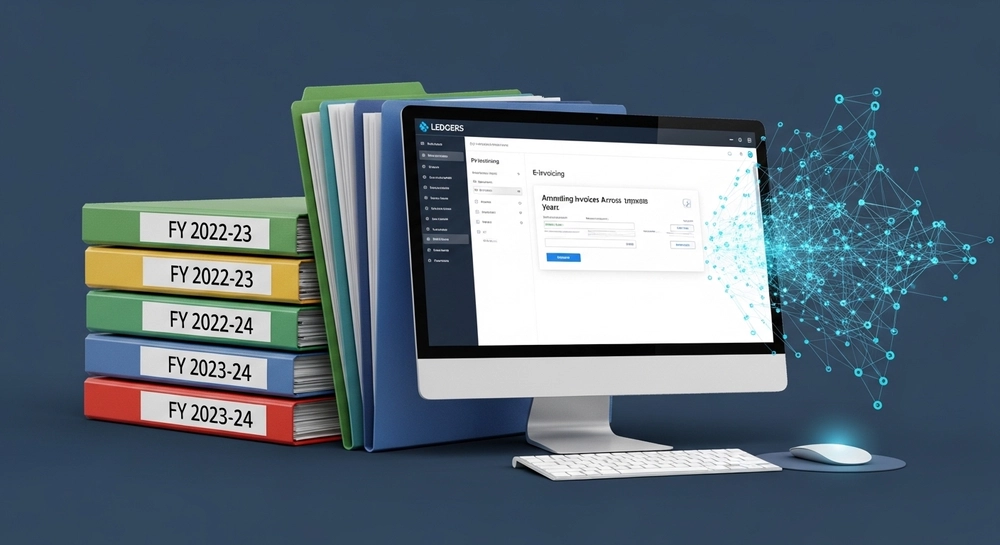
Managing Invoice Amendments Across Financial Years in e-Invoicing
In any corporation, it is standard for invoices to be created and corrected several times. Some common reasons to adjust an invoice after it is issued include charging the wrong price, taking an item back, making changes to a contract, or finding a mistake while doing your accounts reconciliation. Fixing an invoice that is still within the same financial year is usually reasonably straightforward to do; however, fixing an invoice for a previous financial year can be more complicated.
e-Invoicing makes it even more complicated because each invoice submitted through e-invoicing is assigned an Invoice Reference Number (IRN) when registered with the Invoice Registration Portal (IRP). Once your original invoice has been created, that original invoice becomes part of your compliance history and cannot be just edited or overwritten. As a result, companies should have a well-structured method to meet their compliance requirements when making adjustments.
The Sensitivity of Amending Invoices from One Financial Year to Another
The company's financial year deals with what financial boundaries exist when submitting GST returns, completing year-end reconciliations, and producing your company's financial statements. Therefore, if an invoice was issued in one financial year and amended/corrected in the next subsequent financial year, the company must ensure that:
- The original invoice has been retained.
- The adjustment is documented.
- The tax will be reported as changed accordingly.
- The audit history is maintained.
An original invoice cannot just be changed by modifying it or deleting it. Instead, documentation must be created to support the amendments that were made.
Common Situations Where Amendments Are Needed Later
Amendments across financial years often arise due to practical business scenarios such as:
- Customer disputes resolved after year-end
- Pricing revisions agreed after financial closure
- Goods returned after the original reporting period
- Errors discovered during annual reconciliation
- Contractual adjustments finalized later
These situations are normal in long-term business relationships, but they must be handled carefully from a compliance perspective.
Why Original e-Invoices Cannot Be Edited
Once an IRN is generated, the invoice details are considered final from the IRP’s perspective. This ensures document authenticity and prevents unauthorized changes.
Because of this, businesses cannot:
- Edit invoice value directly
- Change GSTIN or supply details
- Modify tax amounts
Instead, any correction must be recorded through a separate document that references the original invoice.
Using Credit Notes and Debit Notes for Amendments
The accepted method for adjusting past invoices is through credit notes or debit notes.
- A credit note is used when the original invoice value needs to be reduced
- A debit note is used when the invoice value needs to be increased
These documents create a clear adjustment trail without altering the original IRN record.
For example:
- If goods worth ₹10,000 are returned in the next financial year, a credit note can be issued referencing the original invoice.
- If additional charges of ₹5,000 are agreed later, a debit note can be issued accordingly.
This preserves compliance integrity while reflecting the revised financial reality.
Impact on GST Returns and Reporting Periods
Amendments across financial years affect the GST return of the period in which the adjustment is made — not the original invoice period.
This means:
- The original invoice remains reported in its original return
- The credit or debit note appears in the current return period
- Tax liability adjusts accordingly
Maintaining this separation ensures accurate compliance without rewriting historical records.
Importance of Proper Reference and Documentation
When issuing adjustment documents, it is important to clearly reference the original invoice. This helps maintain traceability and prevents confusion during audits.
Clear reference linkage ensures that:
- Adjustments are easy to track
- Financial records remain transparent
- GST reporting remains consistent
Poor documentation can make reconciliation difficult later.
Audit and Reconciliation Considerations
During audits, authorities often review transactions across financial years. They verify whether adjustments were made properly and whether tax reporting reflects those changes.
Businesses that maintain structured amendment records can easily explain:
- Why the adjustment was needed
- When it was made
- How it was reported
This reduces audit stress and builds compliance confidence.
Why Structured e-Invoicing Systems Make This Easier
Managing amendments manually can become complicated, especially when dealing with high invoice volumes. A structured e-Invoicing system helps maintain proper references, ensures adjustment consistency, and keeps records organized.
This improves:
- Return accuracy
- Reconciliation efficiency
- Audit readiness
- Long-term compliance stability
Instead of manually tracking adjustments across years, businesses can rely on systematic record management.
Conclusion
Invoice amendments across financial years are a normal part of business operations, but they must be handled with care under e-Invoicing. Since original invoices cannot be modified after IRN generation, adjustments must be made through proper credit or debit notes while maintaining clear reference linkage.
By following a disciplined amendment approach, businesses can ensure compliance accuracy, maintain clean audit trails, and avoid complications during GST reporting and financial reviews. A structured invoicing process helps organizations manage these adjustments smoothly, even when they occur long after the original transaction.