
ATCHAYA M
Updated on 30-07-2026
New businesses frequently have difficulty getting their invoices accepted due to rejected E-Document Invoices (EDI). Most problems happen during the early stages of implementation or busy periods of the month when electronic invoicing is at its peak. The system is designed specifically to validate and authenticate information, however, tiny mistakes in the invoice will lead to rejection.
Do not worry if this happens; rather, make sure you find out why the invoice was rejected so that you can take the appropriate corrective action to ensure business continuity in your invoicing processes. By utilizing this clear plan, businesses will be able to fix these kinds of issues quickly and easily.
E-invoice rejections typically occur because the format or validation of the data submitted to the e-invoice processing system does not comply with required standards. These are not system errors; they are issues at the data level.
Many reasons exist for invoice rejections but the most common are:
In most instances, the errors listed above are minor in nature making it easy to fix upon identifying the problem.
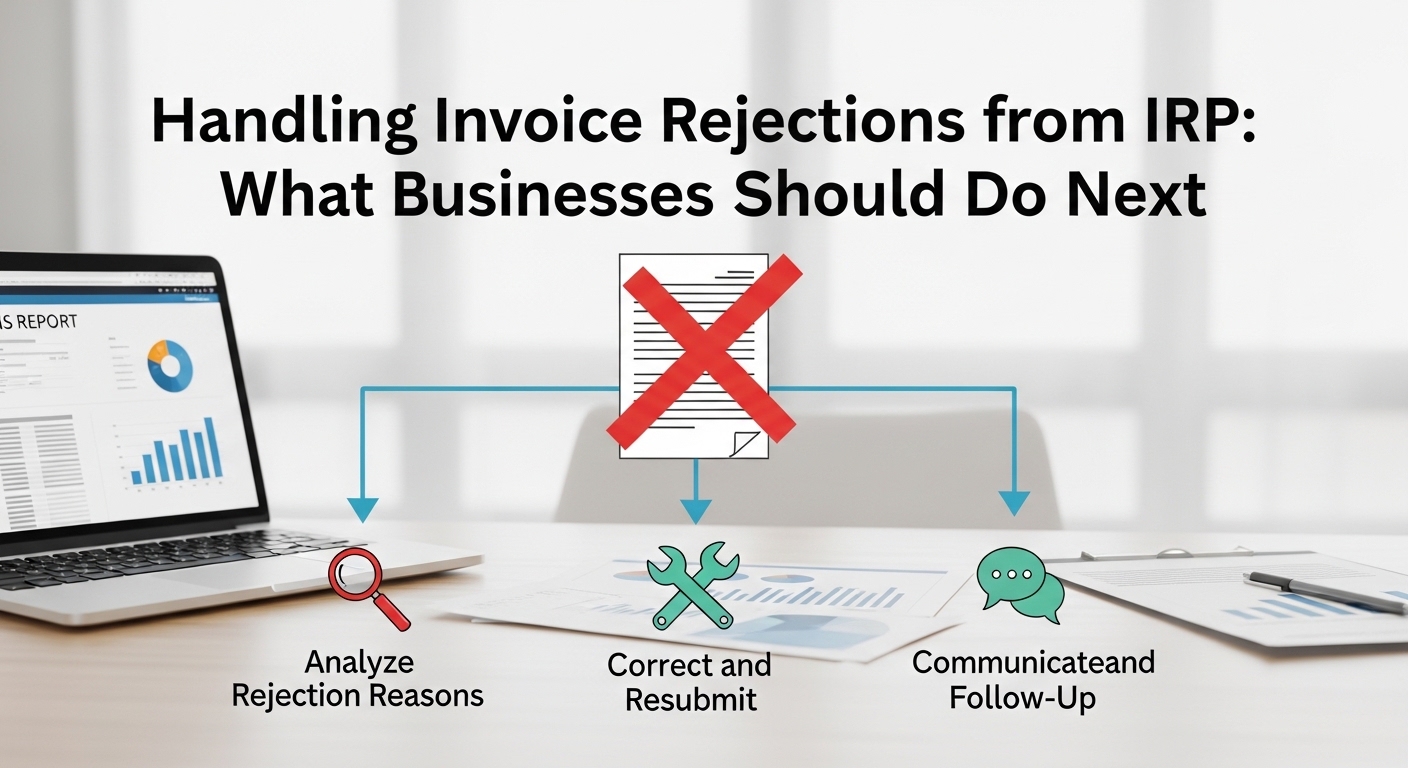
When an invoice is rejected, the IRP provides a response message explaining the reason. This message is important and should not be ignored.
Instead of treating it as a technical error, businesses should read the response carefully and identify exactly what went wrong. For example, a rejection due to “invalid GSTIN” is very different from one caused by a “duplicate invoice number.”
Understanding the exact issue helps in resolving it quickly without trial-and-error corrections.
Once the reason for rejection is identified, the next step is to correct the invoice data. This should always be done at the source—in the invoicing system—rather than trying to adjust things externally.
Common corrections include:
It’s important to ensure that all related fields are consistent after making corrections. For example, if invoice value changes, tax amounts should also be updated accordingly.
After corrections are made, the invoice can be submitted again to the IRP for validation. If the data is accurate, the system will generate the Invoice Reference Number (IRN) successfully.
Businesses should avoid rushing this step. Taking a few extra moments to review the corrected invoice helps prevent repeated rejections.
Repeated rejections usually indicate a pattern of errors rather than isolated mistakes. To avoid this, businesses should look beyond individual invoices and focus on improving their overall invoicing process.
Some practical steps include:
Over time, this reduces the frequency of rejections significantly.
Many rejections are linked to incorrect master data, such as customer details or tax classifications. If the same incorrect data is used repeatedly, it can cause repeated failures.
Keeping master data clean and updated ensures that invoices generated in the future are less likely to face validation issues.
Invoice rejections can be more stressful during high-volume periods like month-end. In such situations, delays can affect dispatch, billing cycles, and return preparation.
Having a structured approach helps teams handle rejections calmly:
Clear internal coordination between billing and finance teams also helps manage such situations smoothly.
Instead of viewing rejections as a problem, businesses can treat them as a learning opportunity. Each rejection highlights a gap in the invoicing process.
Over time, these learnings help businesses:
This leads to a more stable and efficient invoicing system.
Invoice rejections from the IRP are a normal part of the e-Invoicing process, especially when businesses are still refining their workflows. What matters is how quickly and effectively these issues are handled.
By understanding rejection reasons, correcting data at the source, and improving overall invoicing practices, businesses can minimize disruptions and maintain smooth compliance operations. With experience and structured processes, invoice rejections become less frequent and easier to manage.
