
HARI KRISHNAN S
Updated on 30-07-2026
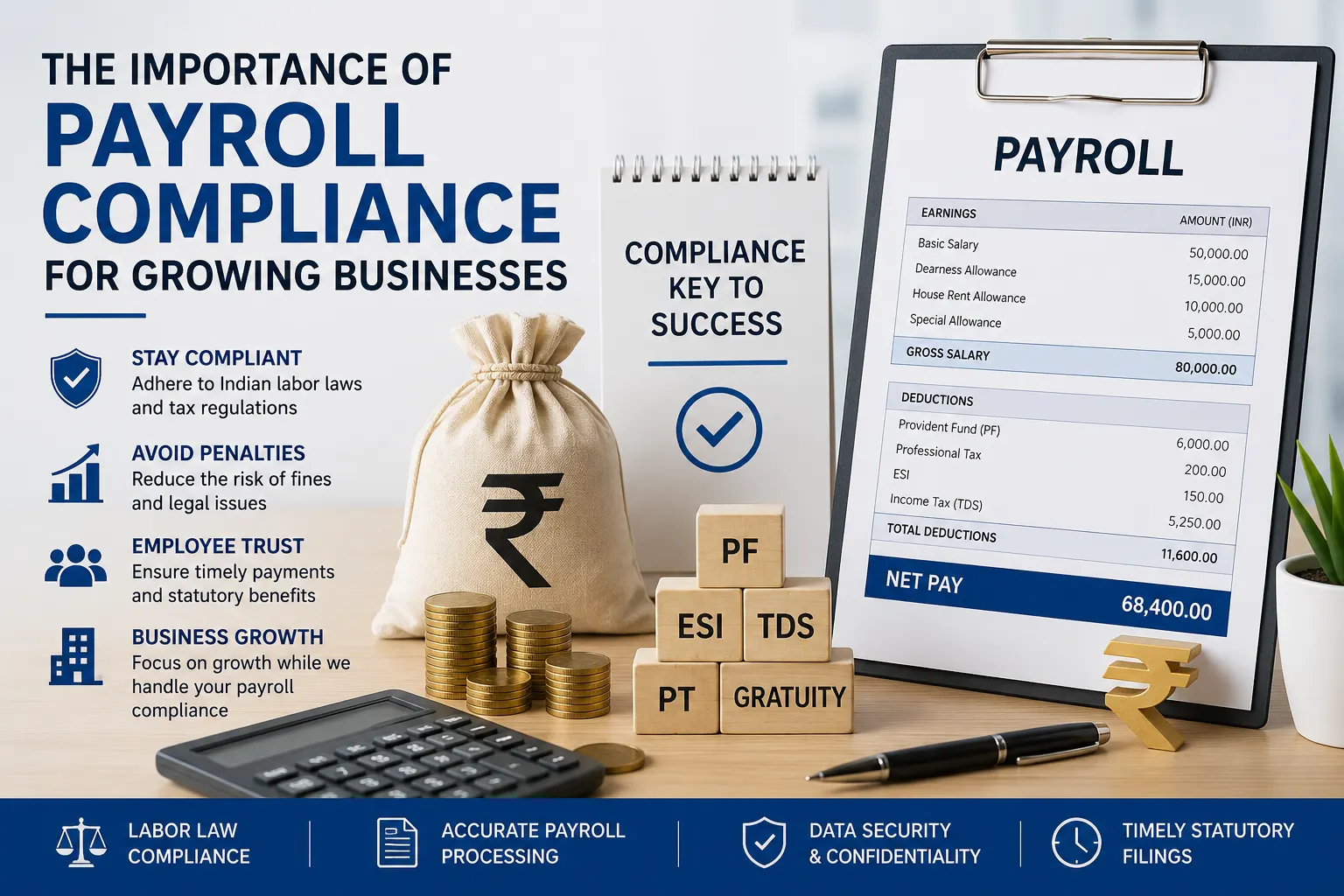
In the fast-paced world of growing businesses, one critical component often gets overlooked—payroll compliance. As your business expands, the complexities of managing payroll effectively become more pronounced. Yet, ensuring that your business adheres to all payroll regulations is vital to maintaining legal compliance, promoting employee satisfaction, and preserving your company’s reputation.
Payroll compliance refers to the adherence to laws and regulations that govern how employees are compensated for their work. This encompasses several elements, including accurately calculating wages, deducting taxes, and maintaining records. Non-compliance can lead to severe financial penalties and legal ramifications.
For emerging companies, the stakes of payroll compliance are high. Here’s why:
Understanding and implementing payroll compliance necessitates attention to various components:
Misclassification of employees (e.g., treating employees as independent contractors) can lead to violations of wage laws. Ensure that you correctly classify your workforce to abide by labor standards.
Report and pay federal and state payroll taxes accurately and on time. Late or incorrect filings can cause significant issues with tax authorities.
Adhering to minimum wage standards, overtime regulations, and other wage laws is non-negotiable. Ensure your payroll system accounts for these factors.
Maintain comprehensive payroll records for all employees, including hours worked, wages paid, and taxes withheld. This is essential for audits and dispute resolutions.
Implementing payroll compliance measures can seem daunting, but following these steps can help simplify the process:
The landscape of payroll compliance is ever-evolving. Recent trends include the increasing complexity of multi-state employment laws as remote work becomes more prevalent. Companies must address varying state regulations, which can affect tax requirements and employee benefits.
Another pivotal development is the advent of advanced payroll software. These programs offer real-time data processing, automated tax calculations, and instant reporting capabilities, making compliance more manageable for businesses of all sizes.
As companies scale, ignoring payroll compliance can prove costly. It’s essential for growing businesses to establish robust payroll systems that ensure compliance with all relevant laws and regulations. By prioritizing accurate employee classification, tax reporting, and record-keeping, companies can avoid legal troubles, enhance employee satisfaction, and strengthen their reputation. Utilize available resources, leverage technology, and engage experts to streamline your payroll processes.
In sum, payroll compliance is not just a legal necessity; it's a strategic advantage. By investing time and resources now, you can pave the way for sustainable growth and operational efficiency.
