
Jyothishwar M
Updated on 30-07-2026
The payroll process is a complicated but essential business procedure. Payroll processing in India comprises the whole cycle of computing the complete remuneration of every organisation employee. This overwhelming process includes the calculation of the following:
The payroll process is a significant task of payroll exercise. The employees of any organisation depend on the company process to receive payments without delays or hassles. Despite the organisation’s size, payroll plays quite a significant role in HRM or Human Resource Management.
Most organisations offer life insurance coverage to their employees through group insurance as an employment benefit. Such policies are meant to cover multiple employees under a single policy where the employer or the employer-employees jointly make the premium payments to keep the coverage active. If the employer pays the life insurance premiums then only they can avail of the tax* benefits, while tax benefits are available for employees, too, if they are jointly making the premium payments. This also becomes an important part of the payroll process.
What is Payroll Processing?
At its core, payroll processing involves the management of employee salaries, allowances, deductions, and net pay. It encompasses every step from determining gross wages to the final disbursement of salary. In India, the process is governed by various laws and regulations that ensure fair employee compensation while managing deductions such as tax and provident fund contributions.
For businesses operating in India, understanding the essential aspects of payroll processing is vital for several reasons:
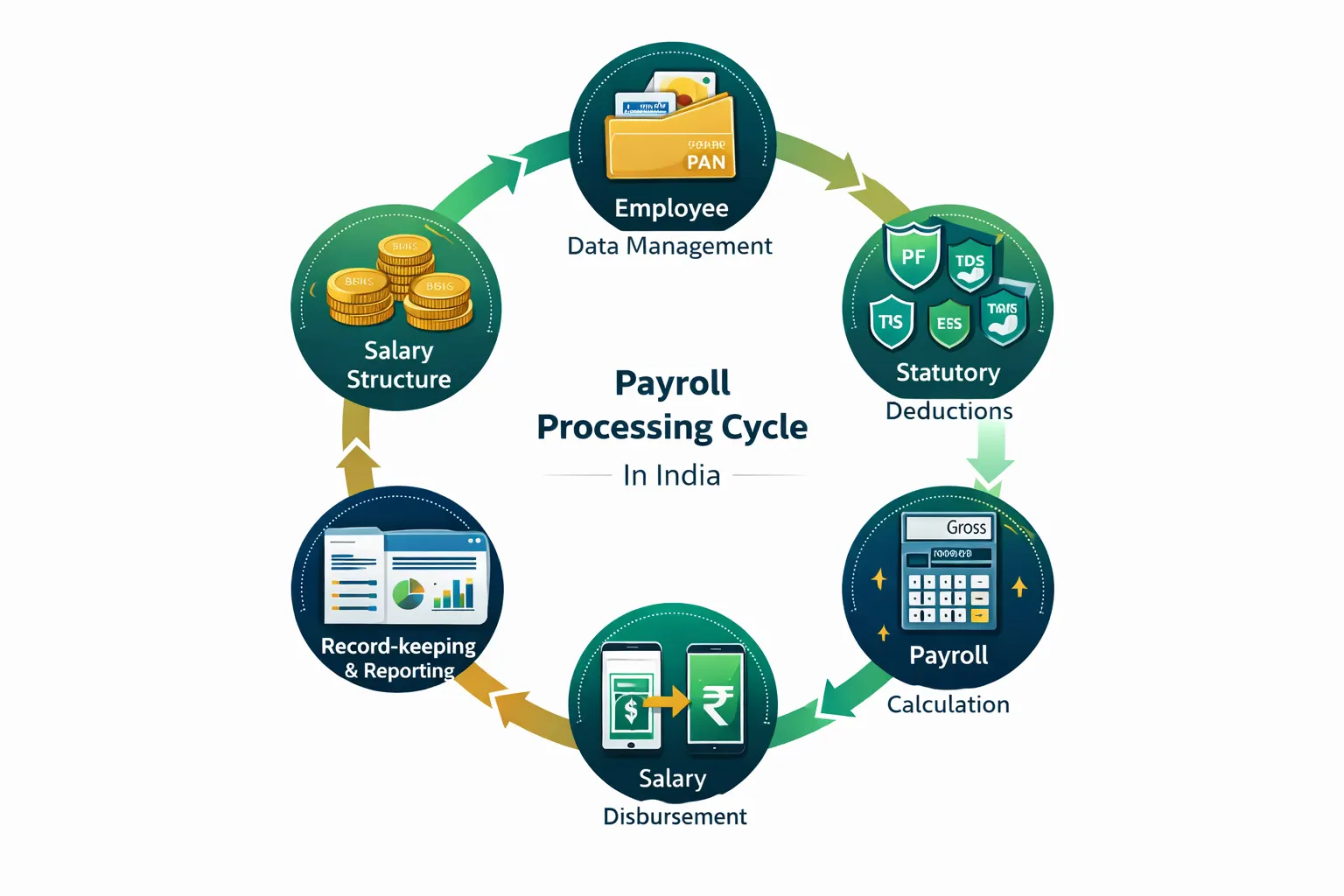
The first step involves collecting and maintaining comprehensive employee data. This includes personal details, employment history, bank account information, and tax-related documents.
A well-defined salary structure is crucial. It includes basic salary, house rent allowance (HRA), conveyance, medical allowance, and performance-based incentives. A clear structure aids in precise salary calculations and transparency.
Indian payroll processing is governed by numerous statutory mandates:
This stage involves calculating gross and net pay after adjustments for deductions. Automation tools are often employed to enhance accuracy and efficiency.
Once payroll calculations are completed, salaries are disbursed through approved banking channels. Proper documentation and timely transfers are crucial for maintaining employee trust.
A robust payroll system ensures meticulous record-keeping of salary payments and deductions. Regular reporting facilitates audits and strengthens financial transparency.
In recent times, India's payroll processing landscape has witnessed significant shifts:
Effectively managing payroll processing in India is a blend of compliance, accuracy, and efficiency. For businesses, mastering these aspects is essential to operational success and employee satisfaction. By integrating cutting-edge technology and staying updated on regulatory changes, organizations can ensure seamless payroll operations. Whether you're a small start-up or a large corporation, an understanding of the principles outlined in this guide will serve as a foundation for optimizing your payroll processes and enhancing your overall business operations.
In conclusion, the landscape of payroll processing is continuously evolving. Effective management requires staying informed and adaptable, ensuring that payroll is both a strategic advantage and a tool for fostering a positive work environment. By prioritizing accuracy and investing in advanced systems, businesses stand to gain significantly in productivity and employee morale.
With these insights, you are better equipped to navigate the challenges and opportunities that arise in the realm of payroll processing in India.
