




HARI KRISHNAN S
Updated on
30-07-2026
The ROI of Upgrading to Automated Payroll Systems
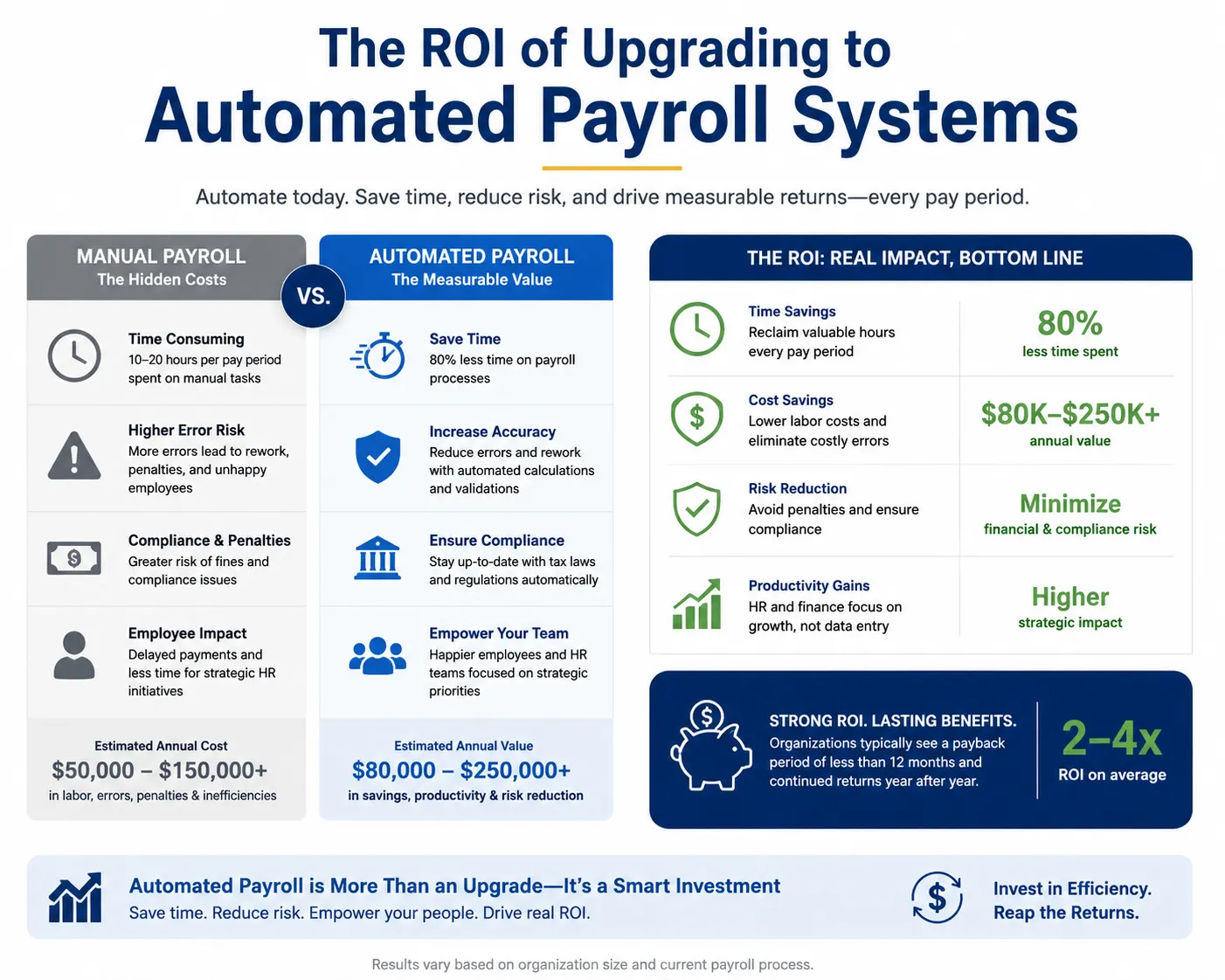
The modern business landscape is all about efficiency and effectiveness. With the rise of digitalization, businesses are quickly adapting to more streamlined operations to maintain a competitive edge. One of the easiest yet most impactful shifts is moving from traditional payroll methods to automated payroll systems. The focus keyphrase here—'The ROI of upgrading to automated payroll systems'—holds significant weight, as it encompasses improved accuracy, reduced costs, and enhanced productivity. This article delves into how automated payroll systems translate into substantial returns on investment and why they are essential for today's businesses.
Why Automate Your Payroll?
Most businesses, whether small or large, aim for improved efficiency and reduced operational costs. Automated payroll systems offer just that. They eliminate manual processes, minimize errors, and provide accurate, timely payroll management. Here's how an upgrade to automated payroll systems can benefit your business:
- Enhanced Accuracy: Automated systems dramatically reduce human errors associated with manual payroll processes.
- Time Savings: By automating repetitive tasks, employees can focus on more strategic activities that drive growth.
- Compliance Assurance: Stay updated with changing regulations, ensuring compliance and avoiding costly penalties.
- Data Security: Protect sensitive employee information with encrypted systems, reducing the risk of data breaches.
- Cost Reduction: Lower overheads by reducing the need for extensive paperwork and manual labor.
Financial Benefits of Automated Payroll Systems
Let's explore the financial implications more thoroughly, illustrating how an automated system directly contributes to your company's bottom line:
Significant Reduction in Payroll Processing Costs: Traditional payroll processes are labor-intensive and require substantial human resources. Transitioning to an automated system means fewer hours spent on payroll, leading to lower labor costs and increased ROI.
Reduced Mistakes and Penalties: Inefficiencies and errors in payroll processing can lead to penalties due to non-compliance and incorrect tax filings. Automated systems minimize these risks, potentially saving thousands in fines and interest charges. This reduction in errors ensures that employee morale remains high, nurturing a positive work environment.
Improved Cash Flow Management: With precise, real-time financial reporting, automated payroll systems help manage cash flow more effectively. They provide insights that allow for better financial planning, budgeting, and scheduling of payouts. By keeping the business on solid financial footing, these systems support sustained profitability and growth.
Implementing Automated Payroll: Steps and Considerations
While the benefits of switching to an automated payroll system are clear, the implementation process requires careful planning and strategic consideration. Here’s a step-by-step guide for a smooth transition:
Evaluate Needs and Set Goals: Define your business's specific needs, understand the current payroll workflow inefficiencies, and outline clear goals for what you aim to achieve with automation.
Research Solutions: Conduct thorough research to find a payroll solution that fits your business size and industry. Look for features that address your primary pain points and offer excellent customer support.
Data Migration Strategy: Carefully plan the data migration process. Ensure that all existing data is accurately transferred without disruptions, safeguarding important financial records.
Employee Training: Train your staff to utilize the new system effectively. Keeping your team informed and comfortable with the new workflow is crucial to maximizing the system’s benefits.
Monitor and Evaluate: After implementation, regularly monitor the system's performance. Conduct periodic evaluations to ensure it continues to meet your business needs and identify areas for potential improvement.
The Long-term Impact on Business Growth
Automated payroll systems do more than just streamline operations; they fundamentally alter the trajectory of business growth. Enhanced efficiency and accuracy lay the foundation for scaling operations smoothly, supporting expansion into new markets without the growing pains associated with manual processes.
Moreover, by liberating resources previously tied up in cumbersome payroll processes, businesses can redirect them towards innovation and customer service improvements, generating additional revenue streams and maximizing business potential.
Conclusion
In conclusion, the ROI of upgrading to automated payroll systems extends far beyond immediate cost savings. It plays a critical role in future-proofing businesses against a dynamic market landscape. By ensuring heightened efficiency, accuracy, and security, automated payroll systems provide a substantial return on investment, ultimately leading to holistic business growth.
As companies grow in scale and scope, embracing digital transformation becomes not just a competitive advantage but a necessity. Investing in automated payroll systems today can set the stage for a prosperous tomorrow, underpinning long-term success and sustainability.