




PUGALENTHI
Updated on
30-07-2026
Understanding the Difference Between GSTR-2A and GSTR-2B
In the realm of Goods and Services Tax (GST) in India, understanding the reports GSTR-2A and GSTR-2B is crucial for businesses looking to streamline their tax processes. This guide elucidates their differences, specifically focusing on dynamic versus static data, their usage, and their impact on Input Tax Credit (ITC) claims. With real business examples, we'll define how these reports influence GST reconciliation and compliance.
What are GSTR-2A and GSTR-2B?
Both GSTR-2A and GSTR-2B serve as auto-drafted statements reflecting inward supplies of goods or services. These reports aid businesses in ITC claims under the GST framework.
GSTR-2A
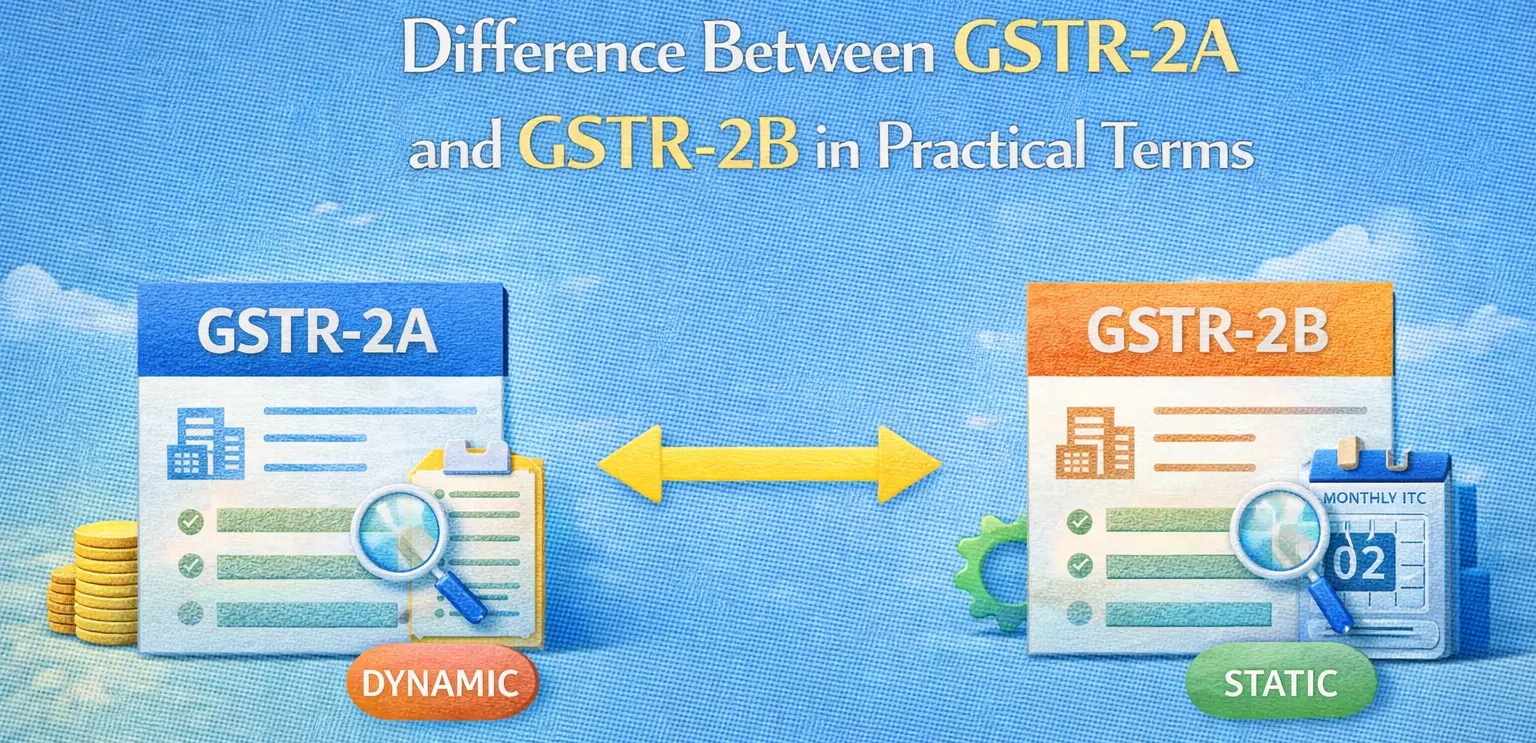
GSTR-2A is a dynamic document. Here's what you need to know:
- Auto-Populated: It fetches data from the supplier's GSTR-1, GSTR-5, and other returns.
- Dynamic Nature: As a live document, GSTR-2A gets updated regularly as suppliers update their invoices.
- Use: Meant for reconciliation of input tax credit, aiding businesses in aligning with supplier invoices.
GSTR-2B
GSTR-2B, on the other hand, is a static document. Here's what sets it apart:
- Static Form: Unlike GSTR-2A, GSTR-2B is a non-dynamic form generated monthly.
- Fixed Data: It is generated on the 14th of every month, reflecting data from the previous period without any subsequent alterations.
- Purpose: Primarily used for final GST reconciliation and accurate ITC claims, thanks to its unchanging nature.
Dynamic Data vs. Static Data
The dichotomy between dynamic and static data in these reports is pivotal:
- Dynamic (GSTR-2A): Reflects real-time changes, influenced by supplier's continuous updates.
- Static (GSTR-2B): Offers consistency, which is critical for filing accurate ITC claims as data remain unaltered past a certain date.
Understanding the distinction helps businesses choose which report to rely on, based on the nature of transactions and reconciliation deadlines.
Usage and Impact on ITC Claims
The primary role of GSTR-2A and GSTR-2B lies in facilitating ITC claims. Here's how each impacts the process:
GSTR-2A in Practice
GSTR-2A assists in initial stages of ITC reconciliation:
- Real-Time Adjustments: Businesses can gauge ongoing compliance as various supplier invoices feed into the system.
- Verification Tool: Acts as a verification point for purchase records daily or periodically before deciding on ITC claims.
Example: A retail business cross-verifies its purchase receipts daily against GSTR-2A to ensure no discrepancies arise over time. Any mismatches in invoices can be swiftly addressed by contacting suppliers for updates.
GSTR-2B in Practice
GSTR-2B is crucial for final ITC claims:
- Time-bound Reference: It locks in the input data at a monthly cut-off, essential for closing books and claims.
- Prevention of Errors: As a static document with no changes, it allows businesses to file returns without errors due to unanticipated amendments.
Example: A manufacturing company primarily uses GSTR-2B snapshots for month-end reconciliation ensuring ITC claims reflect the most orderly set of supplier's data.
When to Use GSTR-2A and GSTR-2B?
Choosing between the two depends on business strategies and reconciliation needs:
- GSTR-2A: Best for real-time checks and aligning invoices throughout the tax period.
- GSTR-2B: Optimal for firms requiring a stable source to file accurate returns without last-minute surprises.
GST Reconciliation and Compliance
Effective reconciliation requires diligent monitoring and timely action based on these reports:
- Reconciliation Process: Regular checks with GSTR-2A ensure ongoing alignment, while GSTR-2B facilitates conclusive filings.
- Compliance Assurance: Ensures businesses remain compliant by basing claims on thorough reconciliations, reducing errors, and optimizing ITC, thereby maintaining smooth GST operations.
Conclusion
In summary, both GSTR-2A and GSTR-2B hold their unique purposes within the GST framework. While GSTR-2A offers a dynamic tool for ongoing reconciliation, GSTR-2B assures businesses of a static basis for final ITC claims and compliance. Understanding their differences, and applications will empower organizations to manage their tax processes more efficiently, leading to optimized operations and strategic financial planning.
By utilizing this guide, businesses can leverage these reports effectively, ensuring both accuracy in tax filings and alignment with legislative requirements.
LEDGERS
LEDGERS assists with compliance relating to GST through the integration of reconciliations into your accounting processes to allow the speedy identification of errors in records prior to incurring any penalties or interest. LEDGERS allows you to automate the process of synchronizing your GSTN data and tracking invoices on an invoice-by-invoice basis eliminating the need for manual corrections and the time-consuming process of verifying transactions at the end of a reporting period through the use of automatic validations from the system to facilitate revenue compliance activities.