




ATCHAYA M
Updated on
19-03-2026
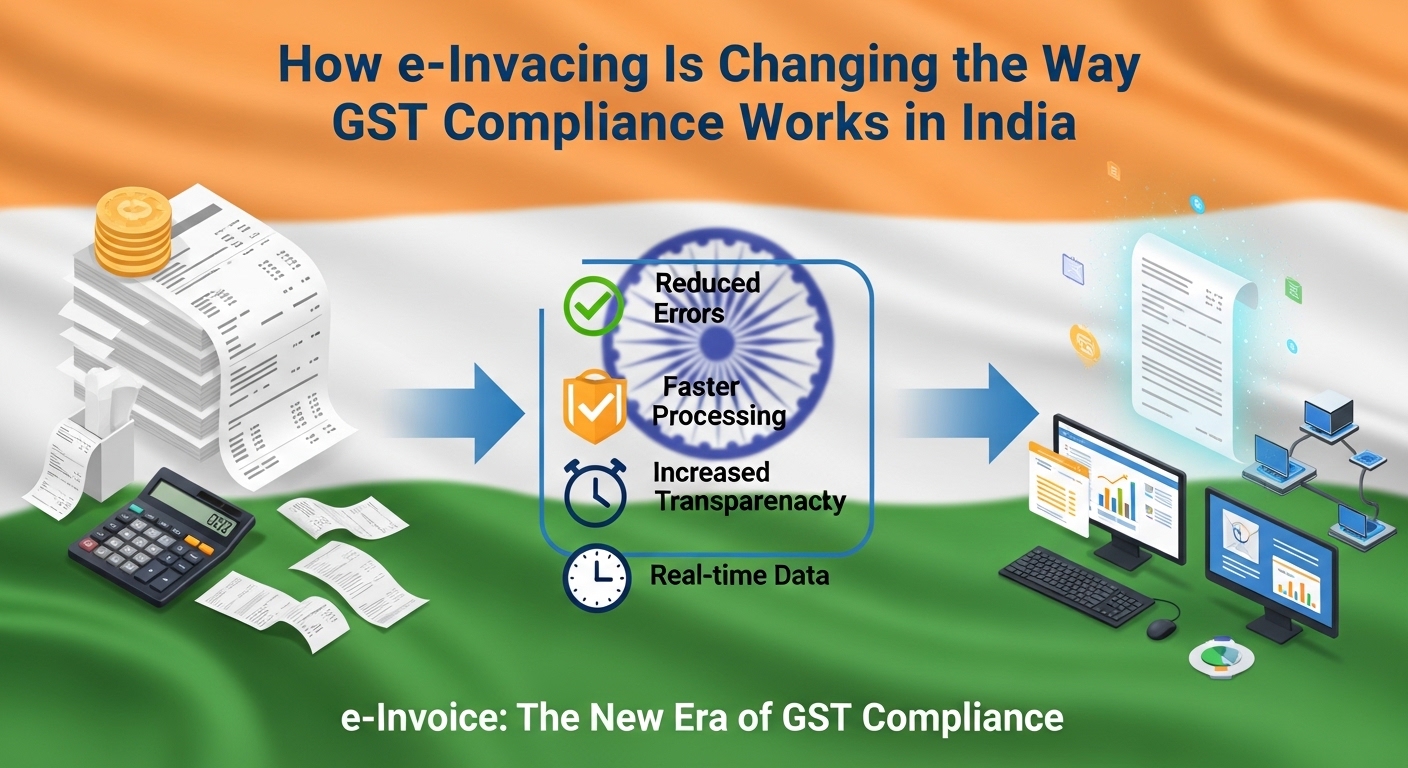
How e-Invoicing Is Changing the Way GST Compliance Works in India
The Goods and Services Tax (GST) system in India has seen a lot of improvements and changes over the past few years. The changes have gone from manual processes that required filing sales returns periodically, to digital processes that are driven by data and allow for real-time filing. At the heart of all these changes is the introduction of electronic invoicing (e-invoicing).
When e-invoicing was first introduced, many organizations thought it was just another way of complying with the law, but now it has become clear that it is changing the entire way GST compliance is done. E-invoicing changes not only how invoices are created, but also how data moves throughout the entire GST process.
Moving to Real-Time Validation from Post-Transaction Reporting
Historically, the GST compliance process required organizations to report their sales after the tax transaction had occurred. This meant that businesses would generate their invoices for the sales transaction and then later report that sales transaction information to the tax authorities via filing their GST returns. Thereby, this created a disconnect between when the sale occurred and when the sale was validated from a compliance perspective.
E-invoicing has greatly diminished that disconnect. E-invoicing provides real-time validation of the invoice data when it is generated, through the use of the Invoice Registration Portal (IRP).
This shift from post-reporting to near real-time validation is one of the most important changes introduced by e-Invoicing.
Data Consistency Improved Across Systems
In the old GST system, one of the most frequent issues was that the invoice data within the different systems (accounting systems, GST returns in the GST system, and GST reconciliation reports) rarely matched exactly. As a consequence, this resulted in lots of mismatches, issues relating to input tax credits, and additional compliance work to correct.
With e-Invoicing, before invoice data becomes part of the system, it has been standardized and validated so that a common set of data flows through multiple compliance processes:
- GST return filing
- Reconciliation
- Audit checks
This improves overall data consistency and reduces the need for repeated corrections.
Greater Transparency in Transactions
e-Invoicing introduces a higher level of transparency into business transactions. Each invoice is registered with the IRP and assigned a unique Invoice Reference Number (IRN), along with a QR code.
This ensures that:
- Every invoice has a verifiable identity
- Transactions can be traced more easily
- The risk of duplicate or fake invoices is reduced
For businesses, this transparency improves credibility. For regulators, it provides better visibility into the flow of goods and services.
Reduction in Manual Intervention
In traditional workflows, GST compliance involved multiple manual steps — preparing data, reviewing invoices, compiling reports, and correcting errors. This not only consumed time but also increased the chances of human error.
e-Invoicing reduces manual intervention by introducing structured data and automated validation. Once invoices are generated correctly, much of the compliance work becomes more streamlined.
Over time, businesses can move from reactive correction-based workflows to more proactive and controlled processes.
Stronger Link Between Businesses
Another important impact of e-Invoicing is the stronger connection it creates between suppliers and customers. Since invoice data affects Input Tax Credit (ITC), both parties depend on accurate and timely invoicing.
This encourages better coordination and more disciplined invoicing practices across the business ecosystem. Vendors who maintain clean invoicing processes are more likely to build trust with their customers.
Shift Towards Digital Compliance Culture
e-Invoicing is part of a broader shift toward digital compliance in India. Businesses are gradually moving away from manual processes and adopting technology-driven systems.
This shift encourages:
- Better record-keeping
- Improved reporting accuracy
- Faster compliance cycles
- Greater operational efficiency
Over time, compliance becomes an integrated part of daily business operations rather than a separate activity handled at the end of the month.
Making sure that companies are ready for their future changes
The implementation of e-Invoicing also basically gears up for enhancements in the GST System; companies already using structured invoice techniques will be set up (in terms of compliance) to be prepared for upcoming changes in regulations through:
- An increase in the automation of the return filing process
- More sophisticated methods of reconciliating accounts
- Real-time compliance auditing
Companies that adjust quickly will have an easier time adapting to these new developments.
Conclusion
e-Invoicing is more than just a compliance requirement—it is transforming the way GST compliance works in India. By introducing real-time validation, improving data consistency, and reducing manual effort, it is helping businesses move toward more structured and reliable processes.
As the GST system continues to evolve, e-Invoicing will play an increasingly important role in shaping compliance practices. Businesses that embrace this change will not only stay compliant but also benefit from improved efficiency and better control over their financial operations.