
PUGALENTHI
Updated on 30-07-2026
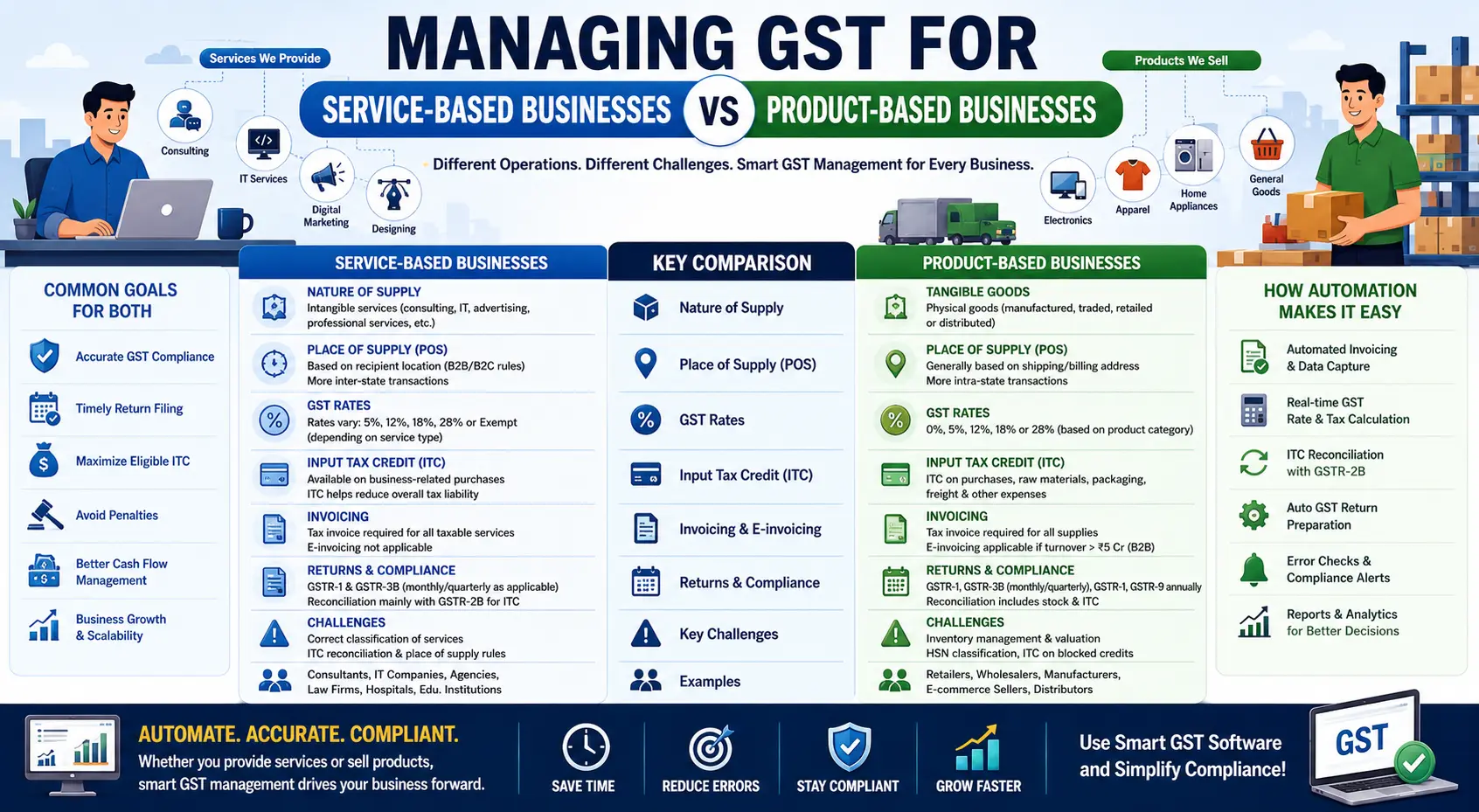
In India, GST is levied on both goods and services, but its treatment varies significantly between the two. It's essential for businesses to understand these differences to ensure compliance and optimize their tax strategies.
Goods and Services Tax (GST) has become an integral part of India's taxation landscape, affecting businesses across the spectrum—whether service-based or product-based. This article explores the nuanced differences in GST compliance, taxation, and operational challenges between these two types of businesses.
Understanding GST application through practical examples can provide insight into the daily challenges faced by businesses.
Consultants and Software Companies: These service-based sectors often grapple with client location complexities affecting place of supply and GST classification.
Retailers and Manufacturers: Managing multiple GST rates across various product categories can be taxing, alongside maintaining an accurate ITC register.
E-commerce Businesses: These operations involve both goods and services, complicating GST compliance with dual reporting requirements.
Each business type faces unique GST challenges. Here's a breakdown:
Adopting GST software solutions can streamline several processes:
These tools help maintain accurate records, reduce classification errors, and ensure timely compliance, making them indispensable for modern businesses.
Businesses should adopt the following best practices for effective GST management:
Managing GST effectively for service-based and product-based businesses involves understanding their unique challenges and employing the right tools. Automation has emerged as a crucial component, offering significant benefits in compliance and efficiency. By adhering to best practices, businesses can navigate the complexities of GST with confidence and precision, ensuring seamless operations and financial health.
LEDGERS assists with compliance relating to GST through the integration of reconciliations into your accounting processes to allow the speedy identification of errors in records prior to incurring any penalties or interest. LEDGERS allows you to automate the process of synchronizing your GSTN data and tracking invoices on an invoice-by-invoice basis eliminating the need for manual corrections and the time-consuming process of verifying transactions at the end of a reporting period through the use of automatic validations from the system to facilitate revenue compliance activities.
