




PUGALENTHI
Updated on
30-07-2026
How SMEs Can Simplify GST Compliance Using Automation
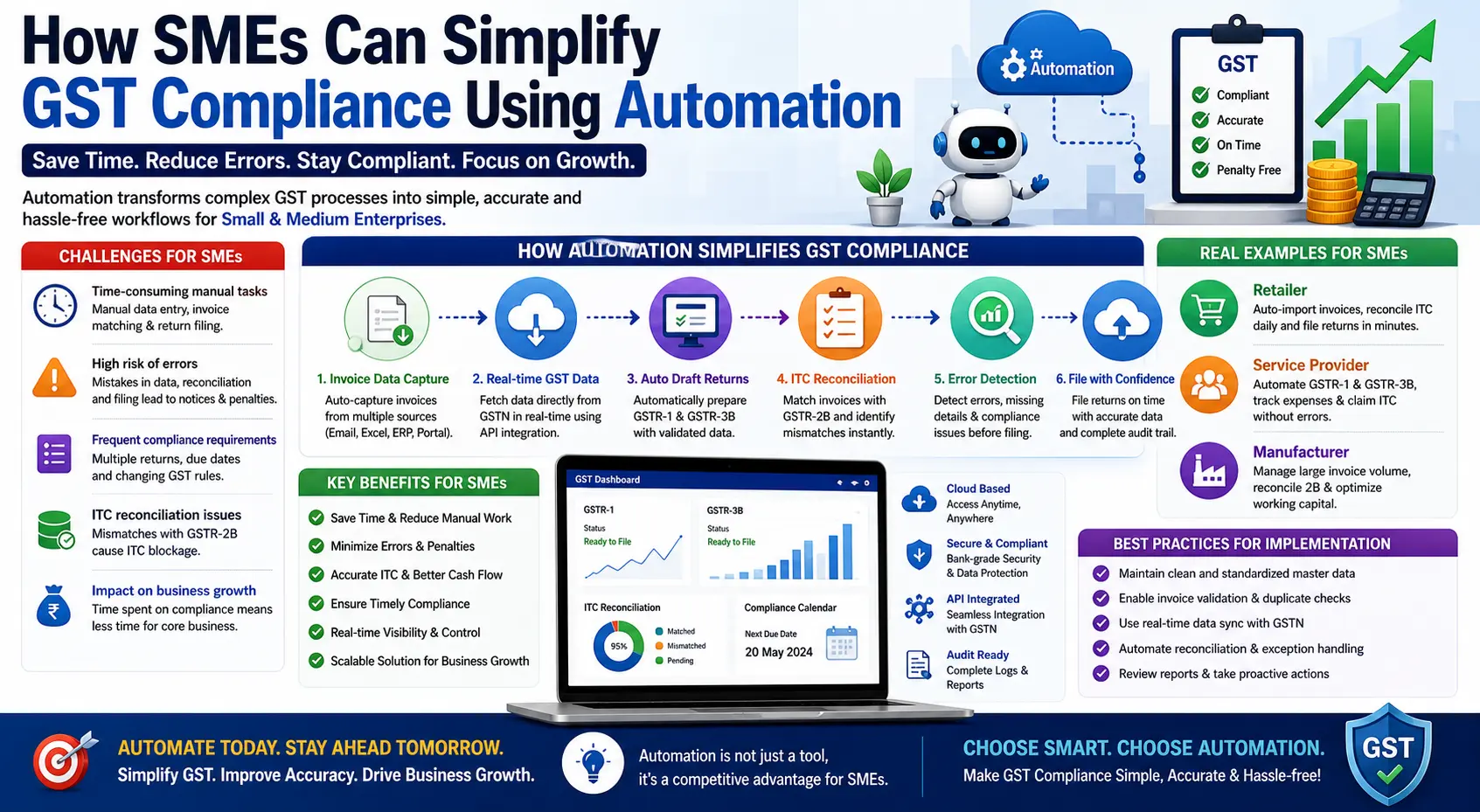
The Goods and Services Tax (GST) has revolutionized the tax structure in India, but for small and medium enterprises (SMEs), compliance can be daunting. This article explores how automation can simplify these processes, making GST compliance manageable and accurate for SMEs.
The Challenges SMEs Face in GST Compliance
GST compliance presents numerous challenges for SMEs, including:
- Manual Data Entry: Traditional methods involve tedious and error-prone manual data capturing.
- Frequent Filing Requirements: SMEs must adhere to regular filing schedules, demanding more administration.
- Reconciliation Errors: With multiple transactions, reconciliation errors are common, leading to potential discrepancies.
- Risk of Penalties: Non-compliance or errors in filings can result in hefty penalties, impacting financial stability.
Automation as a Solution
Automation emerges as a pivotal solution to address these challenges. By integrating automation tools, SMEs can reduce complexity, improve accuracy, and ensure timely compliance.
Benefits of Automation
- Time Savings: Streamlining processes frees up valuable time for strategic activities.
- Reduced Human Errors: Automation minimizes manual input, leading to fewer mistakes.
- Improved Compliance: Ensures that filings are timely and accurate.
- Better Cash Flow Management: Provides real-time insights into cash flow and tax liabilities.
- Scalability: As businesses grow, automated systems scale easily without a proportional increase in overhead.
Key Automation Use Cases
Automation in GST compliance can be applied in various areas:
Invoice Data Capture
Automation tools can capture invoice data seamlessly, reducing manual intervention and errors. These tools can read data directly from invoices and automatically input it into accounting software, saving time and improving accuracy.
Real-Time GST Data Fetching
APIs enable real-time fetching of GST data, ensuring that SMEs are always up-to-date with their compliance status and making necessary adjustments instantly.
GSTR-1 and GSTR-3B Auto-Drafting
Automated systems can draft GSTR-1 and GSTR-3B returns using accurate data, reducing the need for manual entry and potential errors associated with it.
ITC Reconciliation with GSTR-2B
Input Tax Credit (ITC) reconciliation is crucial. Automation tools can match purchase invoices with GSTR-2B details, highlighting discrepancies and ensuring accurate credit claims.
Error Detection
Automated systems can identify anomalies and discrepancies in real-time, providing early alerts to potential issues, thereby avoiding penalties.
Practical Examples and Implementation
Many SMEs and service providers in India have reaped the benefits of implementing GST automation. Let's consider a garment exporter using an automated GST software:
- Example 1: The exporter experiences a 30% reduction in processing time for tax returns, allowing the finance team to focus on business growth strategies.
- Example 2: A tech startup employs automation tools to synchronize their sales data with GST compliance, ensuring accuracy and avoiding last-minute hassles.
Challenges and Best Practices
While automation offers numerous advantages, there are challenges:
- Initial Setup: The upfront cost and effort of setting up automation systems can be a barrier.
- Data Quality: Automated systems require clean, accurate data for optimal performance.
- Integration Concerns: Ensuring seamless integration with existing systems can be challenging.
Best Practices for Implementation
- Clean Data Structure: Ensure data is organized and accurate at source.
- Validation Workflows: Implement checks and balances to maintain data integrity.
- Secure API Usage: Opt for secure API integrations to protect sensitive financial data.
Conclusion
Today’s rapidly changing rules concerning taxes mean that automating how your Small or Medium Enterprise (SME) complies with Goods and Services Tax (GST) is no longer just desirable; it is now necessary to succeed in business in India. Using technology enables your company to submit accurate and timely returns so it can direct resources toward developing growth strategies rather than worrying about meeting regulatory obligations. As automation becomes part of doing business, you will be able to leverage that to better manage your ongoing compliance requirements, which will ultimately lead to long-term success.
In short, automation represents both an upgrade from a technology perspective but also from a business strategy perspective as automation allows for improvements in efficiencies and compliance of operations. By utilizing a proven best practice framework to address common challenges associated with GST compliance, and by implementing changes as presented with this guide, SMEs can improve their GST compliance processes resulting in greater operational resilience and stronger financial performance.
LEDGERS assists with compliance relating to GST through the integration of reconciliations into your accounting processes to allow the speedy identification of errors in records prior to incurring any penalties or interest. LEDGERS allows you to automate the process of synchronizing your GSTN data and tracking invoices on an invoice-by-invoice basis eliminating the need for manual corrections and the time-consuming process of verifying transactions at the end of a reporting period through the use of automatic validations from the system to facilitate revenue compliance activities.