Common Reasons for GST Notices and How Businesses Can Avoid Them
The Goods and Services Tax (GST) is a crucial component of a nation’s economy, and compliance with its regulations is imperative for businesses. Receiving a GST notice can be a daunting experience, as it implies discrepancies or violations in tax filings. Understanding the common reasons behind these notices and adopting practices to avoid them is essential for the financial health and reputation of any business.
Why Businesses Receive GST Notices
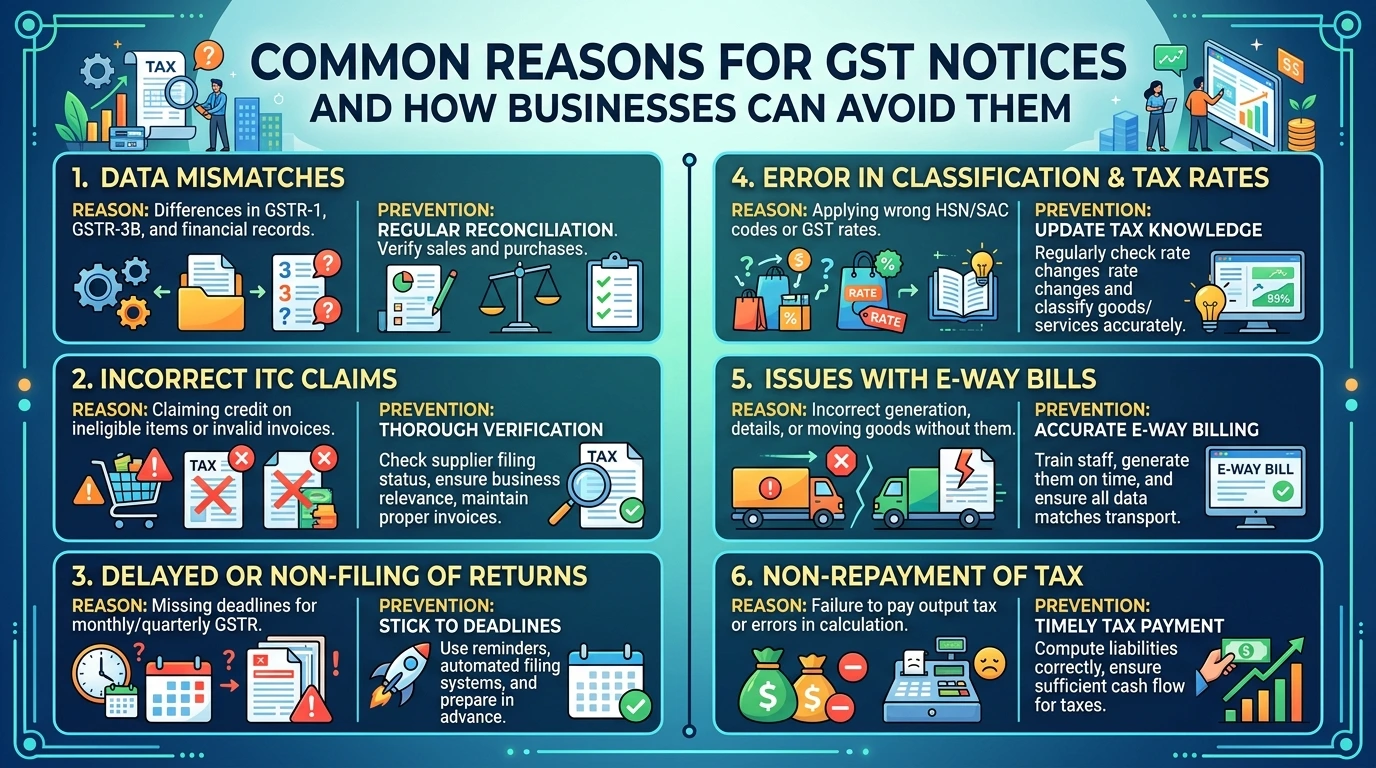
GST notices can be triggered by multiple reasons. Most of these notices are issued due to errors or lapses in compliance with GST regulations. Here are some of the common reasons:
- Mismatched Invoices: Discrepancies between the invoices uploaded by suppliers and the details reported by businesses.
- Late Returns Filing: Delays in filing GST returns lead to penalties and interest, prompting notices.
- Tax Credit Discrepancies: Incorrect claims in Input Tax Credit (ITC) calculations versus what is available.
- Excess Tax Payment or Refund Claims: Overpayment of taxes can result in refund claims, which are scrutinized closely by the authorities.
- Non-Compliance with E-Way Bill Regulations: Failing to adhere to e-way billing can result in strict action and notices from GST authorities.
- Tax Liability Discrepancies: Differences in tax liability calculations as per GST returns filed could result in notices.
How to Avoid Receiving GST Notices
It is better to proactively manage compliance than to deal with a notice after the fact. Here’s how businesses can avoid GST notices:
Maintain Accurate Documentation
Accurate and systematic record-keeping is vital. Businesses must ensure:
- Invoice Management: Record all sales and purchase invoices accurately, matching them with reported figures.
- Periodic Reconciliation: Conduct regular reconciliation of accounts to match books with GST data.
- ITC Ledger Maintenance: Maintain a clean ITC ledger to avoid calculation discrepancies. Frequently reconcile ITC claims with GSTR-2A/2B.
Timely Compliance and Filing
Ensure all GST filings and payments are made within deadlines to evade notices related to delays:
- Strict Adherence to Deadlines: Familiarize yourself with the GST calendar and adhere to filing deadlines diligently.
- Advanced Returns Preparation: Prepare returns well before the due date to avoid rush and last-minute errors.
Understand E-Way Bill Requirements
The E-Way bill system is integral to ':
- Stay Updated: Keep abreast of the latest e-way bill rules and mandates.
- Real-Time Tracking: Implement a system for real-time tracking and monitoring of e-way bill compliance.
The Importance of ERP Systems in GST Compliance
The adoption of robust Enterprise Resource Planning (ERP) software can significantly streamline GST compliance. It can help in:
- Automated Updates: Allow updates of GST rates and changes, minimizing errors.
- Integrated Data Management: Centralize data for seamless access and reconciliation.
- Efficiency in Filing: Automate the filing process, reducing manual errors and saving time.
Engaging Professional Help
Consider consulting professionals to manage GST filings effectively:
- Expert Advisory: Leverage the expertise of tax consultants for complex GST matters.
- Regular Audits: Conduct regular GST audits to ensure compliance.
- Training and Communication: Conduct periodic training for employees on GST laws and compliance requirements.
Staying Updated with GST Regulations
Tax laws are dynamic and frequently updated. Staying informed can prevent compliance issues:
- Continuous Learning: Follow GST council updates, and participate in webinars or workshops.
- Subscribe to Updates: Enroll in newsletters or forums that provide insights on current GST developments.
Conclusion
Receiving a GST notice can disrupt business operations and lead to financial or reputational risks. By understanding the common reasons for these notices and implementing proactive strategies to ensure compliance, businesses can safeguard themselves from potential pitfalls. Prioritizing accurate document maintenance, timely filings, embracing technology such as ERP systems, and securing professional guidance are critical steps towards seamless GST management. Staying informed and adapting to evolving GST regulations ensures a business is always on top of its compliance game.
Adopting these practices not only aids in avoiding GST notices but also fosters a more organized, compliant, and successful business environment.